
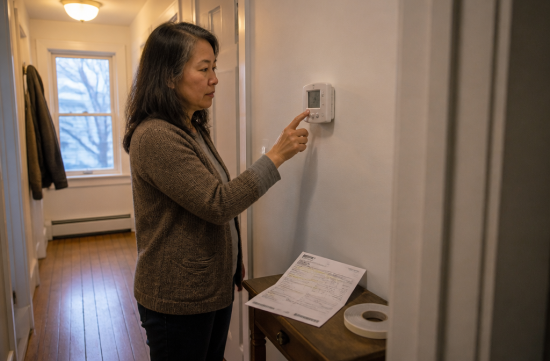
Have you received your October bill? Many of you may have paused for a moment when you saw the number at the bottom of your electricity statement.
This winter, Rhode Island Energy's supply rate is set to increase. Today, I will break down where this number comes from and what we can do in our homes.
First, let's look at the facts. The winter rate proposal submitted to the PUC, or Public Utilities Commission, on July 22 is 17.03 cents per kWh.
Last winter, the rate during the same period was 14.77 cents. Doing the math, that's about a 15% increase, and the application period is from October 1 to March of next year, totaling six months. The final applicable rate can be confirmed again in the supply section of your individual bill.
One important point to note is that the 15% increase only applies to the supply rate portion of the bill, not the entire bill.
Electric bills are generally divided into two parts: the supply cost, which is the price of the electricity purchased, and the delivery cost, which is the price for using the wires and infrastructure.
According to the company, for an average household using 500 kWh per month, this means an increase of about $12 per month. You might feel that's not much, but for homes using electric heating, the situation is completely different.
Why did this happen? The company cites the primary reason as increased management costs due to new regulations from ISO New England, the operator of the New England power grid.
Additionally, rising wholesale electricity prices due to natural gas prices and international circumstances, along with constraints on gas supply in the New England region, have contributed to this increase. There's also a slight increase in the renewable energy compliance costs set by the state government.
To be honest, from a consumer's perspective, the burden remains the same regardless of the reasons. However, it's good to know that the supply rate doesn't easily decrease due to a single policy.
That said, there's no need to sit back and do nothing. There's some good news as well.
According to a statement from the governor's office, the PUC approved a rate credit of over $170 million on August 21. This credit will be reflected on bills over the next 12 months starting in October.
This money comes from tax-related compensation promised when PPL acquired the company in 2022. You don't need to apply for it; it will be automatically credited, so check your bill this month for a credit item.
In addition, there's winter emergency assistance funded by the RGGI fund. Between January and March, an average credit of about $61 will be provided for typical households.
Now, let's get practical. My first recommendation is Budget Billing.
This method spreads your annual bill evenly over 12 months, so the total amount doesn't decrease. However, it helps prevent spikes in your bills during January and February, which is really helpful for managing your household budget.
The second option is a free Home Energy Assessment. An expert will come to your home and identify areas where insulation is leaking, old light fixtures, and inefficient appliances.
I had this done before and discovered that the drafts around my windows were worse than I thought. Just adding a few weather strips made a noticeable difference.
The third recommendation is for those who meet income criteria to check out the Discount Rate. Households receiving benefits like SNAP or Medicaid may qualify for discounted rates.
The company has also announced that it will start a program to enhance low-income discount rates this winter. Be sure to check for LIHEAP heating assistance through local CAP agencies as well.
The fourth point is for those who have contracts with competitive suppliers. These individuals will not be charged the 17.03 cents but rather the rate they contracted for.
Make sure to compare whether your contracted rate is higher or lower than the basic rate and when your contract expires, as it's common for rates to jump significantly after automatic renewals.
Lastly, consider your lifestyle habits. Lower the thermostat a few degrees at night and only use electric heaters in rooms where people are present.
It's better to run the dryer and dishwasher together. While it may seem small, over six months, it adds up to a significant difference. Switching the bulbs in rooms that are on for long periods to LED can also help in the long run.
In summary, the supply rate has increased by 15%, and the average household will see an increase of around $12 per month.
However, with the automatic credit and by effectively using Budget Billing and discount programs, you can significantly reduce the impact.
No one welcomes rising rates. Still, understanding the reasons and utilizing available programs can greatly alleviate anxiety.
If I were you, I would spread out my bills this weekend and check for credit items and supply rates. Then, applying for Budget Billing would mean you're halfway prepared for this winter.
 WhaleJamBand




 Way to easy |
 holy cow |

 Soy Angelino |

 SKy Face |

 gleeful |

 pixelhaven |

 USALATU BLOG |



 Tamfa Fan |
 Sunny Sunday |
 mini hometown |
 torvia |
 Chichiki Chicago Train |
 Univ Student |
 See It |
 Con Cheese |
 softmoony |
 Breaking Bad Drama |
 New York Queens Native Blog |
 Shinbaram Dr. Blog |
 vivavida |
 limestone |
 oster |
 daddyyo |
 neapolis |
 seadoll |
 ansdal |