

Last weekend, I took my two kids to the local pharmacy to get flu shots, and while waiting in line, I found myself momentarily lost in thought. The man in front of me asked the pharmacist, "So who is supposed to get the COVID vaccine this year?" and the pharmacist couldn't answer right away.
Honestly, I was curious about the same thing. Every fall, I would just check the CDC announcement, but this year, there isn't one.
So, when I got home and put the kids to bed, I started looking into it. To cut to the chase, saying "the CDC hasn't said anything" is half right and half wrong.
First, let's understand why this happened. The CDC's vaccine recommendations are typically based on votes from an advisory committee called ACIP, which the CDC then accepts, but this committee is currently tied up in litigation.
In a lawsuit filed by medical organizations like the American Academy of Pediatrics (AAP) against the Secretary of Health, a federal court in Massachusetts issued an order on March 16, 2026. This order suspended the new pediatric vaccination schedule that changed in January, the appointments of 13 newly appointed ACIP members, and all votes made by that committee.
The government has appealed, and the case is now in the First Circuit Court of Appeals. The government argues that because of this order, no one can set vaccine policy.
I can understand both sides of the argument. However, in the middle of this are parents like us waiting in line at the pharmacy.
So what about the flu? This is relatively straightforward.
According to temporary guidelines issued by the CDC on September 1, 2026, the flu recommendations from July 2025 will remain in effect this season due to the court order. It states that everyone aged 6 months and older without contraindications is recommended to get a flu shot annually.
So, for the flu, it's not "no recommendation" but rather an "extension of last year's recommendation." This part shouldn't be confusing.
The real gap is with COVID and RSV. The ACIP hasn't reviewed any new vaccines this year, so there are no separate CDC recommendations for the 2026-27 season.
The vaccines themselves are available. The FDA approved four updated COVID vaccines from Moderna, Novavax-Sanofi, and Pfizer-BioNTech on August 27, all targeting the XFG variant.
However, the approval scope is narrow. It targets adults aged 65 and older, and younger individuals with high-risk underlying conditions. This continues the restrictions set by the FDA last year.
Each product has different age criteria. Pfizer's Comirnaty is available for those aged 5 and older with underlying conditions, while Moderna's Spikevax is open for those aged 6 months and older with underlying conditions.
People outside these criteria can still get vaccinated. This is known as "off-label" vaccination, but the issue is how pharmacies or insurance will handle this.
Medical organizations have filled this gap. On September 2, 2026, the AAP, American Academy of Family Physicians (AAFP), American College of Obstetricians and Gynecologists (ACOG), and Infectious Diseases Society of America (IDSA) each released their own vaccination recommendations for this respiratory season.
From a dad's perspective, the AAP's recommendations stood out to me. They recommend flu shots for all children aged 6 months and older, and for COVID, they suggest routine vaccinations for children aged 6 to 23 months, and for older children based on risk, allowing anyone who wants to get vaccinated.
For RSV, they recommend vaccination for infants under 8 months old in their first season, excluding those already protected due to maternal vaccination during pregnancy.
Some places, like New York State or New York City, have officially announced they will follow these medical organization recommendations. Ultimately, it seems that standards will vary from state to state.
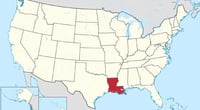
Louisiana needs to be more cautious. Reports from last fall indicated that major chains like Walmart, CVS, and Walgreens required prescriptions for COVID vaccinations for those under 65.
The reason was state pharmacy laws. The basis for pharmacists to administer vaccines without a prescription is tied to "CDC recommendations," and since those recommendations are in flux, pharmacies are being cautious.
The situation for the flu is a bit better. In Louisiana, starting January 1, 2025, pharmacists will be allowed to administer flu shots to those aged 7 and older.
So, before I went this time, I called the pharmacy first. I asked three things: whether a prescription was needed, if insurance would cover it, and if there were age restrictions for the kids. It took just five minutes.
Honestly, it's a bit frustrating. Politically, regardless of who is right, the guidance that used to be summarized in one page has now split into multiple directions, which is tiring for parents.
That said, it's also tricky to just trust one side and follow it. So, I've set one standard for myself.
For the flu, I will follow the CDC's extended recommendations, and for COVID, I will consider the FDA's approval scope and the AAP's recommendations and consult with our pediatrician. For our family, that seemed to be the least confusing approach.
The answers may vary based on the child's underlying conditions, age, and past vaccination records. So, please make sure to consult with your regular doctor or pharmacist before making a final decision.
If you ask me who to listen to, I would say, right now, it's "the person who sees our child directly." Let's all stay strong and hope for a winter with fewer coughs from the kids amidst the southern fall humidity.
 CurryBotJump


 Top Beaches |

 Diana Blues |

 Dragon Lee |

 Churros Train Conductor |

 Tora Tora |
 AUTO OK |

 butter 90 |

 biscuit90 |

 melon90 |

 Jazz Queen |
 oster |
 daddyyo |
 neapolis |
 seadoll |
 ansdal |
 Vivid U.S. Regional Information |
 Vasila's Newlywed Blog |
 Arizona Cowboy |
 merry merry |
 Hoorah Ooorah |
 Fragile Me |
 Rowland Mama |
 foxtree |
 bayaa |
 loveyom |
 Coastal city |
 Spaghetti Flying Religion |
 My Town My Way Blog |
 holy cow |
 endone |