

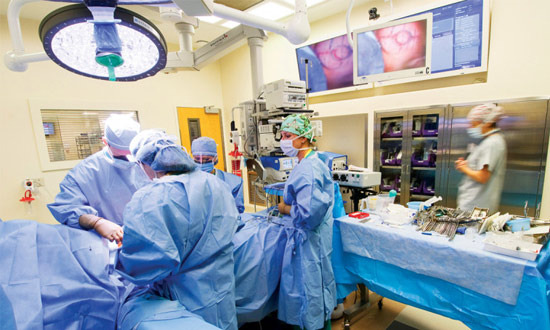
Located on the Upper East Side of Manhattan, Memorial Sloan Kettering Cancer Center (MSK) is regarded as one of the most prestigious cancer hospitals in the world, beyond just the United States.
Founded in 1884, over 140 years ago, this hospital has led the way in cancer research and treatment, consistently ranking among the top cancer hospitals in the U.S.
Among the Korean community in New York, it is widely recognized as the first hospital that comes to mind for cancer treatment.
The primary reason MSK receives high praise is that it does not view cancer merely as a single disease. While the general public may think of 'cancer' as one term, in reality, medicine categorizes cancer into hundreds of different types.
Even lung cancer varies in treatment methods depending on the type of cells and genetic mutations, and even among breast cancer patients, the medications and treatment strategies can differ significantly.
Ultimately, the difficulty in cancer treatment lies in the fact that it is not just about dealing with one disease called "cancer," but rather researching hundreds of diseases that are entirely different in nature at the same time.
One of the reasons cancer treatment is particularly challenging is that cancer cells originate from the body's own normal cells.
If it were an invasion by bacteria or viruses from outside, it would be relatively clear to define the target for attack, but cancer cells are originally our body's cells, making them very similar to normal cells.
This is why it is difficult to precisely remove cancer while not damaging normal tissue.
The reason patients undergoing chemotherapy experience hair loss and a rapid decline in strength is that rapidly dividing normal cells are also affected.

Another challenge is the adaptability of cancer cells. Cancer can respond to treatment but often develops mutations over time, leading to drug resistance.
There are cases where a chemotherapy drug that was initially effective suddenly stops working after a few months.
This is why doctors describe cancer treatment as a marathon.
It is much more common to need to continuously adjust treatment strategies based on changing circumstances than to have a single surgery or one type of medication resolve the issue.
MSK operates a specialized team system for different types of cancer to address these complex treatments. Specialists in breast cancer, lung cancer, colorectal cancer, blood cancers, and brain tumors are organized separately, and experts in surgery, chemotherapy, radiation, and immunotherapy collaborate to determine treatment directions.
The method of having multiple specialists review a single patient's data simultaneously is a common feature among the top cancer centers in the U.S.
One of the most significant changes in cancer treatment recently is immunotherapy. While past chemotherapy directly attacked cancer cells, immunotherapy encourages the patient's own immune cells to attack the cancer.
MSK is one of the leading institutions in this field. Among melanoma and some lung cancer patients, there are cases where patients who previously had very low survival rates are now surviving for extended periods.
Of course, it is not effective for all cancers, and much research is still ongoing.
The reason cancer has not yet been completely conquered is ultimately that it is an incredibly complex disease. Cancer cells constantly change, and each person has different genetic structures and immune responses.
Even with the same medication, some may experience dramatic effects while others may see little to no effect.
This is why even the world's top hospitals use the term "cure" very cautiously.
Nevertheless, over the past 20 to 30 years, cancer treatment has undoubtedly made significant progress.
Survival rates have greatly increased for cancers that previously had almost no treatment options, and early detection technologies continue to advance.
Institutions like MSK are important because they are research-focused hospitals that are creating future treatment methods.
In the Korean community in New York, there are many cases of individuals seeking a second opinion at MSK after a cancer diagnosis.
With Korean interpretation services available and some Korean medical professionals active, access for overseas patients is relatively good.
Cancer treatment is ultimately not a problem that can be solved by just one hospital; it is a process that requires a long-term fight between medical staff and patients.
In that regard, MSK is evaluated as one of the hospitals with the highest level of expertise and research capability within the U.S. healthcare system.
 foxriverbuilder1975
 SailorRadish
 TexasMan




 Karina's Blog |
 Jimbeam 88 |
 Taco Bell Candy Note Blog |
 Splendid Mission |
 Florida Gario |
 newyorker 101 |
 Things to Do to Buy a House |
 Poppin News |
 Encyclopedia of New York and Surrounding Areas |
 Moo Tang Clan |
  Haha and Bomi Blog |
  glenview 89 |
  Valley Hong |
  novapixel |
  Idaho's Sumi's House |
  Mr. Midwest America |
  wildfire |
  legalway |
  postcard |
  cheesecake07 |
  My Miami Stories |
  windylotus |
  Mia Flori |
  velaro29 |
  velaro |
  foxtrot83 |
  moname |
  mapleline |
  US Legal Consultation on Trials |
  UNI Lover |