
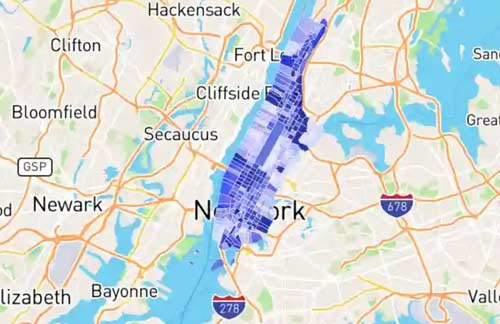
When the topic of crime in New York comes up, many people still respond with, "Isn't it dangerous there?"
But honestly, that perception is stuck in the 90s.
Back then, it was true. Crime rates were high, and there were many neighborhoods that felt unsafe at night.
However, starting in the 2000s, the New York City Police Department completely changed its approach to public safety.
With increased enforcement, street management, and data-driven crime pattern analysis, New York has become one of the safer large cities in the U.S.
Currently, key indicators like the murder rate are still relatively low.
Compared to other major cities, the claim that "New York is more dangerous" often doesn't hold up when looking at the numbers.
That said, the atmosphere has shifted slightly in recent years.
Rather than a dramatic increase in crime, there has been a rise in noticeable incidents, making people more sensitive to safety concerns.
There are definitely differences by area. For example, The Bronx still has neighborhoods that require caution.
Particularly, areas like Mott Haven and Hunts Point statistically have higher rates of violent crime. Not all of Brooklyn is the same either. Neighborhoods like Bed-Stuy, Brownsville, and East New York have earned their reputation for being places to avoid at night.
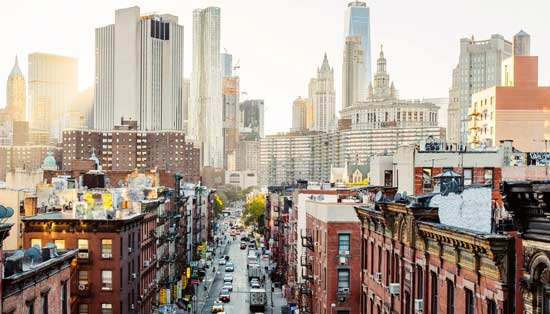
In Manhattan, you shouldn't assume that "all of Manhattan is safe."
While the tourist-heavy Midtown is relatively well-managed, areas like East Harlem and parts of Harlem still show significant variation in safety.
New York is a city where the atmosphere can change dramatically from one block to the next, so being unaware can lead to surprises.
Recently, vehicle theft has been a hot topic. Specific model years of Hyundai and Kia vehicles have become targets in incidents nationwide, and New York is no exception.
There have been cases where cars parked on the street were simply stolen, so if you own one of these models, you need to be vigilant. Thinking, "Surely not in New York?" can lead to unfortunate outcomes.
Another area where people feel an increase in danger is the subway. The New York subway has always been a place where anything can happen, but recently, random assaults and shoving incidents have made headlines, raising public anxiety.
Especially during early morning or late-night hours, it's not wise to zone out with earbuds in. The New York City Police Department is increasing personnel and patrols, but ultimately, you need to assess the situation yourself.
But does that mean all of New York is dangerous? Not at all. Areas in Queens with a large Korean population, like Flushing, Bayside, Little Neck, and Forest Hills, are relatively stable. They have good school districts and a residential focus, creating a different atmosphere. In Brooklyn, the reason Bay Ridge is often described as "a decent place to live" is because it offers a family-friendly environment.
In fact, long-time residents of New York share one common trait: "They avoid dangerous areas."
New York is a battle of information. If you know where is safe and where isn't, you will rarely encounter problems.
On the other hand, wandering around without a thought makes you an obvious target as a tourist.
In summary, New York is no longer the "inherently dangerous city" it once was, nor is it completely safe. It's a city where if you move around without awareness, you might get into trouble, but if you know what you're doing, you'll be fine.








 US Regional Information Local News |
 nero kim |
 OC Real Estate Business Information |
 Nevada Vegas UNLV |
 My Love DS |
 Things to Do to Buy a House |
 International Court |
 Yonori Nori |
 TungTung's Dad Blog |
 ShyShy dating |
  My Town My Way Blog |
  Hawaiian Dooly Mom |
  Roman Pan |
  Key spots |
  Community Cross |
  Oz's Wow Company |
  Wenda |
  Nuchuhan Exploration BLOG |
  Who's watching? |
  Strawberry Pancake Warrior |
  What can make money? |
  Egg Steamed Pot |
  New Jersey News Local Stories |
  Study Abroad Life Know-How Tips |
  Leapfrog Move |
  Finding Superfoods |
  COLO COLO |