

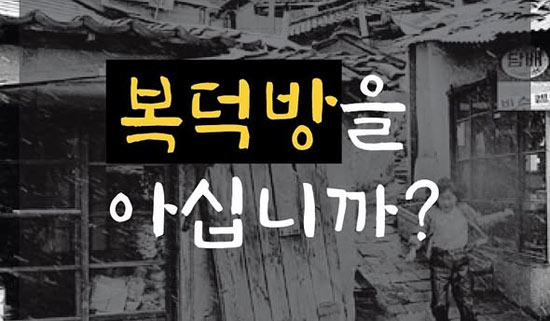
Bok. Deok. Bang. (福德房)
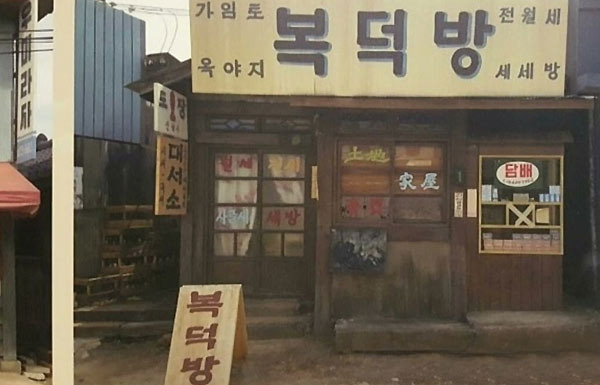
In the 1970s and 1980s, as Korea was undergoing the Saemaul Movement and experiencing economic growth, there was always at least one Bokdeokbang in the alleys of suburban neighborhoods. The signs were often handwritten and crooked, and on the glass doors, papers saying 'rooms available', 'jeonse', and 'wolse' were haphazardly taped on. When you pushed the door open halfway, the floor was covered with worn linoleum, the walls had maps stained with fingerprints and crumpled blueprints, and on one side, there was a telephone and a ledger.
Bokdeokbang was not just a place for real estate transactions; it was a spot where locals would gently push the door open, take a moment to catch their breath, and share the stories they had bottled up inside. Conversations about finding a room naturally flowed into discussions about salaries, children's school matters, and complaints about the hardships of factory work, and such talks were completely normal within the Bokdeokbang. It was a place where people came to discuss housing but ended up sharing life stories.
Even if a deal didn't go through, the elderly gentleman would say, "There's no rush, just wait a little longer," calming people down first, and only after closing the ledger would he offer advice starting with, "You know, people living in this neighborhood..." It was a space where information was exchanged, but more importantly, it was a place where hearts connected, a small refuge in the neighborhood that considered each person's circumstances before urging quick decisions.
So, on days when I visited Bokdeokbang, even if I couldn't find a home, I strangely felt a little lighter and returned with renewed strength to continue living. Some wanted to move from a one-room to a two-room apartment after saving their wages from factory work, others were looking for a house with a big room for their three children but were short on the deposit, and some, having just come from the countryside, learned the word 'jeonse' for the first time and asked, "So, does that mean I don't have to pay rent?"
Looking back, the elderly gentleman at Bokdeokbang felt more like a neighborhood data center than a real estate agent. "That house at the end of the alley? It gets windy in winter, so you need to save on coal." "The owner's wife is very punctual with appointments." "This house gets good sunlight, making it great for raising kids." Sometimes, those words felt more trustworthy than the contracts themselves.
There were many houses with the smell of coal clinging to clothes and cold drafts rising from under the linoleum, but people still knew each other, and housing prices didn't feel like the monstrous numbers we see in the news today. Above all, Bokdeokbang held the 'expressions of people.' Faces that sighed in relief when the deposit was settled, faces staring blankly at the ceiling when they couldn't find a jeonse, faces trembling while holding the deposit envelope, and faces that softened after a dispute over the moving date with just a simple, "It's for the kids." All those countless expressions collided in one space, and the neighborhood's day rolled on.






 moo moo |
 ultron78 |
 garlic bread |
 Sugar Cream Door Bulletproof Noodles |
 urbanmint |
 Famous Attractions in the United States |

 Rowland Mama |
 American History This and That |
 People Moon |
  laro90 |
  MEDBIO American Doctor Blog |
  SWAT TEAM BLK |
  DREAM BIG |
  frostbite |
  330 Forever My Love |
  El Dorado |
  dralix58 |
  Gorama Round |
  Skydiving |
  dreamport |
  Yellow Snowman |
  Toaster Pizza Magic Show |
  velvetnom |
  Anytime Journey |
  Mrs. Duluth |
  jaxter |
  Atlanta Mama |
  Baguette Blog |
  Tan Sol |