

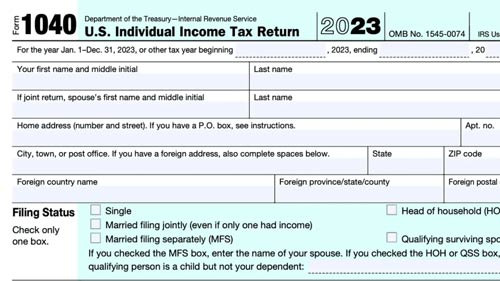
When living in the United States, the period from February to April can be quite busy with business and personal tax filing.
In Korea, most companies handle year-end tax adjustments, but in the U.S., individuals often have the obligation to file their own taxes.
Newcomers to the U.S. may wonder, "If taxes have already been withheld from my paycheck, why do I need to file separately?" However, the U.S. system requires a comparison between the withheld amount and the final tax due, necessitating a separate filing process.
If you are a resident of Georgia, you must file both federal taxes and Georgia state taxes separately. The annual filing deadline is typically April 15, and if that date falls on a weekend or holiday, it is extended to the next business day.
If you find it difficult to prepare your documents by the deadline, you can apply for an extension, which allows you to postpone the submission deadline to October 15. However, it is important to note that the extension applies only to the 'submission deadline' and not the 'tax payment deadline.' If you expect to owe taxes, you should pay an estimated amount by April 15 to avoid interest and penalties.
In Georgia, the personal income tax rate has been restructured to a single rate of 5.49%, slightly easing the tax burden. However, when combined with federal taxes, the total amount can still be significant, so it is beneficial to review your income structure and deductions early in the year.
The method of filing can be chosen based on individual income situations.
For single W-2 earners: You can easily file your taxes using tax software like TurboTax, H&R Block, or TaxAct. If you qualify, you can also file for free through the IRS Free File program.
For more complex income situations: Self-employed individuals, those with multiple investment accounts, stock and real estate traders, and those with foreign income should seek assistance from a professional CPA or tax advisor to avoid errors.
In areas with a high concentration of Koreans, such as Gwinnett County or Buckhead in Georgia, there are many tax professionals available who can provide consultations in Korean.
Especially for those who travel between Korea and the U.S., it is crucial to thoroughly check the regulations regarding the reporting of foreign financial accounts and assets.
FBAR (Foreign Bank Account Report): If the total balance of all foreign accounts exceeds a certain threshold (USD $10,000) at any point during the year, you are required to report it.
FATCA (Form 8938): If you hold foreign financial assets above a certain threshold, you must submit this form along with your federal tax return.
Reporting these foreign assets is more about 'reporting obligations' than taxation itself, so failing to report can result in significant penalties.
If you expect a refund, using electronic filing (e-file) and Direct Deposit is the fastest way, rather than mailing paper documents. If there are no issues with your documents, refunds are typically issued within three weeks, and you can check the status on the IRS website under the 'Where's My Refund?' section.
It is essential to keep your documentation organized throughout the year rather than waiting until the deadline to file your taxes. If you have foreign assets or complex income items, consulting with a professional is recommended for accurate processing.
 BraveWarriors
 Diadromes
 ItsJoyce







 Agenda Center |
 Texas Migration Story |
 Moo Tang Clan |
 Peter Pan Pet |
 timemachine |
 Always Atlanta |
 Strawberry Candy Smoothie |
 SPACE SHIP |
 SAY YOU SAY ME |
 Gondola IT |
  There Are Such Things in the World |
  digital |
  Starry Eyes |
  Desert King |
  Texas Real Estate Blog |
  U.S. Retirement Pension Information |
  Seattle - Emerald City |
  Unknown Dog Walk blog |
  California Dreamer |
  Bearded Strawberry Smoothie |
  JESIKYEOALBA BLOG |
  Heart Ticker |
  Jellia Angel |
  Khan Film Blog Production |
  yenne |
  neroyo |