

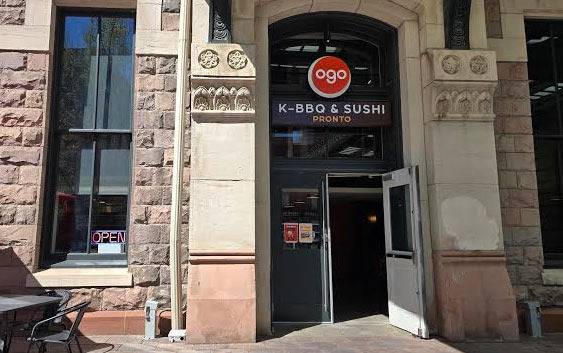
When you ask Korean people who have lived in Denver for a long time, "What kind of businesses did Koreans run here in the past?" the answers are usually quite similar.
Even if they didn't speak English well, they could start early and work diligently until late in businesses like laundries, liquor stores, sandwich shops, and small restaurants.
In fact, there wasn't much difference from LA or New York. The first generation of immigrants who came to the U.S. in the 1980s and 90s didn't speak English very well, and it wasn't easy to get jobs in American companies.
Ultimately, opening their own shop and working tirelessly from morning to night was the most realistic way to make a living.
Interestingly, in the 1990s, quite a few Koreans moved from California to this area.
This was especially true after the 1992 LA riots. Many Koreans were disillusioned with Koreatown due to the riots, and with the Northridge earthquake causing freeway closures, some decided to leave California for Denver. They opened businesses here like laundries, sandwich shops, liquor stores, gift shops, and fast food places.
At that time, a Korean liquor store owner in Denver mentioned that the number of Korean liquor store owners he knew had increased from about 10 to around 100.
When you think about it, it makes sense.
Compared to housing prices in California at that time, real estate in Denver was about half the price, and some families moved here for safety and better schools for their children.
For Koreans back then, Denver was not so much a city to strike it rich, but rather a place where they felt they could work hard and make a living.
However, looking at the Korean business landscape in Denver now, it has completely changed.
First of all, the center is no longer downtown Denver but Aurora.
If you head towards South Havana Street or Parker Road, you'll find plenty of Korean restaurants, markets, hair salons, and various Korean businesses.
They even use the name 'Koreatown Aurora.'
The markets are the same. M Mart opened in 1983, so it has been over 40 years.
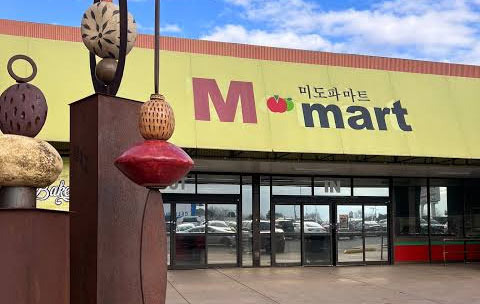
Like the California Gaju Market, it is a familiar place for Koreans in Denver.
Now, there are even large Korean markets like H Mart, making life so much easier.
In the past, if you wanted to buy Korean food, you had to search for where to go, but now you can find just about anything.
The restaurants have changed even more. In the past, a Korean restaurant's menu would list bulgogi, galbi, bibimbap, and doenjang jjigae.
Now, there are specialized places for sundubu, sundae soup, Korean fried chicken, Korean BBQ, hot pot, and dessert cafes.
And the customers are not just Koreans anymore. This seems to be the biggest change.
In the past, if a Korean opened a store, they catered to Korean customers, but now Americans come looking for Korean food.
Young Americans who listen to K-pop and watch Korean dramas, as well as Americans working at military bases, bring their colleagues and friends to grill meat and order soju.
Could Korean immigrants 30 years ago have imagined this?
Conversely, traditional Korean businesses like laundries and liquor stores are gradually declining.
In fact, how many children who grew up watching their parents work 12 hours a day in a store would say, "I want to do that when I grow up"?
So, looking at the Korean economy in Denver reflects the history of Korean immigration in the U.S.
In the past, even if they spoke little English, a couple working hard to open a store was considered a success, but now their children are pursuing professional careers, and Korean restaurants are not just serving Koreans but are businesses selling Korean culture to Americans.
If the signs of the Korean economy in old Denver were laundries and liquor stores, now Korean BBQ and Korean markets in Aurora have taken their place.
 QUODUO
 mintcoastbuilder1963
 FryRiceLaser




 Investment Campus Home Ownership |
 zenvior |
 El Dorado |
 SAY YOU SAY ME |
 California Dreamer |
 Your Curiosity Resolved |
 Arong and Darong |
 COLO COLO |
 Illinois alpaca |
 Univ Student |
  Texas Migration Story |
  Bearded Strawberry Smoothie |
  Heart Ticker |
  Jellia Angel |
  Moo Tang Clan |
  Khan Film Blog Production |
  Unknown Dog Walk blog |
  yenne |
  Peter Pan Pet |
  virex |
  Yoyma |
  timemachine |
  Taco Seattle |
  breaddough |
  Fortress K |
  arion9 |