

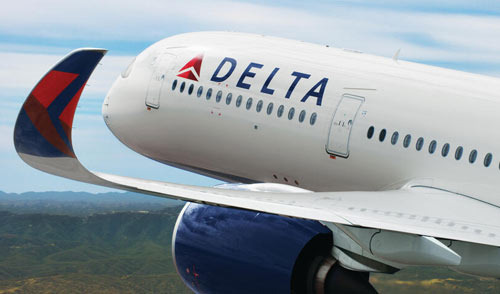
Delta Airlines is famous for its image as the most reliable and practical airline among U.S. carriers.
When flying with Delta, there is a strong focus on operating without mistakes and ensuring passengers are well taken care of, rather than on flashy marketing or extravagance.
So, if people ask, "What is the secret to being the number one airline?" it can be said that it is not just about size, but rather 'trustworthy operations' that are key. In reality, Delta did not become number one simply because it has many routes, but because it takes off on time, has a low cancellation rate, loses fewer bags, and has a well-established system for quickly resolving passenger issues. In other words, it can be said that Delta is an airline that thrives on its systems rather than just business.
The most interesting point is that Delta has an enormous hub airport. Notably, Atlanta Airport is Delta's main base and is often referred to as a 'Delta Republic' due to its dense presence of lounges, routes, staff, and gates. Additionally, cities like Minneapolis, Detroit, Salt Lake City, New York JFK and LaGuardia, Seattle, and LA serve as Delta's hubs.
Having a balanced presence in the East, West, and Midwest means that wherever you are in the U.S., there are many destinations available when flying Delta, and transfers are relatively smooth. While larger airlines can often have more accidents, Delta's strength lies in its size combined with fewer mistakes.
Moreover, there is another point that differentiates Delta from other airlines: employee management and investment. Airlines are ultimately about people, so well-trained staff are essential for a good passenger experience. Delta does not outsource maintenance work but operates it in-house, and it tends to invest aggressively in employee welfare and training.
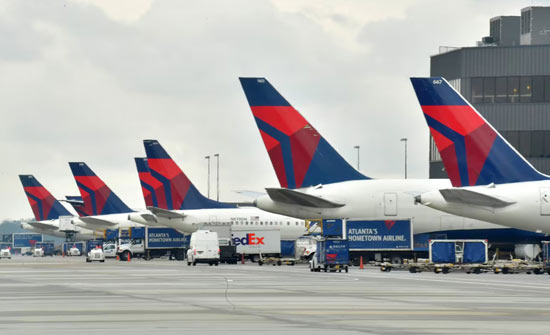
These factors contribute to reducing airline accidents and consistently improving baggage management and service quality. Instead of aggressively selling tickets at low prices or attracting passengers through events, Delta spends more on stable operations.
From a Korean perspective, one question arises: why is the relationship between Delta and Korean Air "close yet somewhat ambiguous?" Both are part of the SkyTeam alliance and help each other during transfers at Incheon Airport, but airline alliances are not as tightly knit as family-like relationships.
Each airline competes and collaborates with one another. Especially on routes between the U.S. and Asia, their interests differ, and practical issues like ticket sales priority and fare pricing are intertwined, so they do not operate as a single entity. In simple terms, it can be said that they are like colleagues at work but not from the same company.
However, recently, the two companies have been getting a bit closer. Korean Air's Incheon hub is essential for operating Asia-Pacific routes, and from Delta's perspective, working with Korean Air in the Korean and Japanese markets is beneficial. In fact, transferring on U.S. routes via Incheon is quite decent, as it combines Korean Air's hub competitiveness with Delta's global network. They compete and collaborate, but it can be seen as a relationship where they join forces when necessary.
Ultimately, the secret to Delta Airlines' number one status lies not in flashy services or low-cost competition, but in consistency and stability. With fewer delays, less passenger fatigue, and the ability to quickly address small issues, combined with a wide network and maintenance capabilities, trust is built.
What is most important for an airline is ultimately 'to fly well and land safely,' and Delta is a company that diligently takes care of all aspects in that regard. Therefore, it is understandable that they have good airline ratings and high passenger loyalty.





 fortbliss |
 Folding Instructions |
 yentra |
 Cali M Law Group |
 quanta7 |
 Cherokee Rose |
 Dingho and USA News |
 moonshine 7 |
 Let's Be Like a Salt-like City Person |
 Gimmi207 Blog |
  Korean Mom |
  My NYC |
  moo moo |
  Mr Oh |
  forevergee |
  festival |
  manchester |
  constant |
  Leapfrog Move |
  vibranto |
  Tora Tora |
  yellowbutter |
  Dolly |
  US Embassy |
  NYC saladbar |
  Finding Superfoods |
  lightyear |
  song bang |
  vexomo |
  Indiana Jones |