

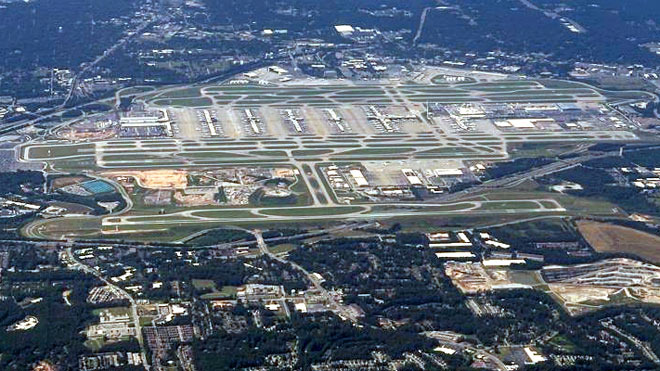
Hartsfield-Jackson Atlanta International Airport (ATL) is widely known as one of the busiest airports in the world based on passenger numbers.
Using the airport makes it easy to understand why. Planes take off and land continuously throughout the day, and countless passengers are constantly on the move for transfers and departures. This airport serves as a domestic connection hub in the U.S. and a key transportation center in the Southeast, functioning not just as an airport but as a massive hub for human movement.
All day long, takeoffs and landings occur without a break, with numerous passengers flocking to connect to other states and international destinations. With over 192 gates, the airport is overwhelming just by the numbers, and walking through it reveals endless corridors and a vast transportation system that impresses visitors.
However, it is important to view it with a bit of flexibility rather than declaring it as "always the absolute number one." Rankings can vary slightly depending on which statistics are used. Depending on the criteria—such as passenger numbers, aircraft takeoff and landing counts, international passenger numbers, or airline seat capacity—other airports may excel in specific categories.
For example, when considering only international flights, there are cases where airports with a higher proportion of international travelers take the top spot. Additionally, during times of rapid changes in air travel demand, rankings can shift temporarily.
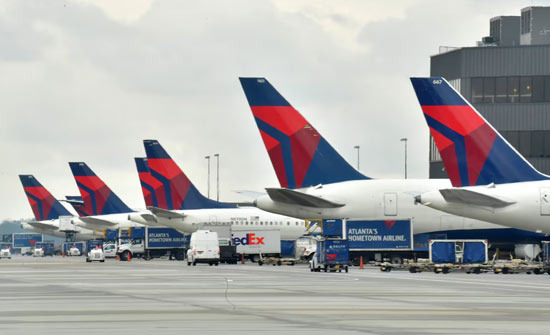
This airport is special because of its unique airline composition. Delta Airlines' headquarters and largest hub is located here, and U.S. low-cost carriers like Southwest, Frontier, and Spirit also use it as an important base.
So when you arrive at ATL and look at the signs, the Delta logo is visible from almost any direction. From the airline's perspective, this is the center of the Southeast aviation market, and for passengers, it is like a "mecca of connections."
The terminal structure is also designed efficiently. There are two terminals for domestic and international flights, followed by seven massive concourses labeled T, A, B, C, D, E, and F. Movement between terminals is handled by an underground automated train called the 'Plane Train,' which is fast and well-connected, making transfers convenient.
Thanks to this connection system, despite its enormous size, the airport is rated as having relatively low transfer stress. In fact, it is reported that about 80% of the U.S. population lives within a two-hour flight of this airport, making ATL a prime location for domestic transfers.
This airport also offers a variety of dining and shopping options, so even with a long wait, you won't get bored. Notably, the upscale restaurant 'One Flew South' is famous for providing a restaurant-quality experience within a layover airport, while popular choices like Chick-fil-A and Shake Shack are also available, allowing travelers to choose according to their tastes and budgets.
Ultimately, ATL is a central hub where planes and people continuously flow, driving the economy and travel patterns in the Southeastern U.S.
Considering various factors, it is quite accurate to describe Atlanta Airport as "the busiest airport in the world." However, when discussing airport rankings, it is essential to consider the criteria for determining busyness and which aspects are being compared. Still, in general perception, ATL holds the title of the busiest airport in the world quite naturally.





 candytip |
 Gold Bar |
 Pirate Ship Popcorn Maker |
 Montgomery Mom |
 Anjollinya Blog |
 Cherokee Rose |
 Dingho and USA News |
 moonshine 7 |

 Gimmi207 Blog |
  Atlanta Mama |
  Baguette Blog |
  US Embassy |
  Korean Mom |
  My NYC |
  moo moo |
  Mr Oh |
  forevergee |
  festival |
  manchester |
  constant |
  Leapfrog Move |
  vibranto |
  Tora Tora |
  yellowbutter |
  Dolly |
  NYC saladbar |
  Finding Superfoods |
  lightyear |
  song bang |