
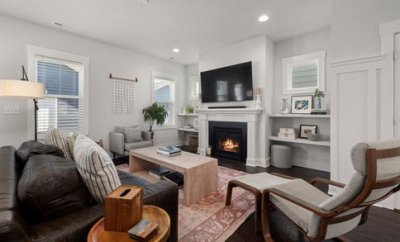
When dividing the rental market in San Antonio, Texas by unit type, it becomes clear that there are quite a few options depending on lifestyle, even within the same city. By examining the rent prices and square footage from studios to three-bedroom units, as well as who typically occupies these spaces, the residential landscape of this city becomes a bit clearer.
Studios have an average rent ranging from $950 to $1,000, with square footage around 450 to 500 square feet. This type is mainly preferred by single-person households, young professionals who have just moved in, and short-term residents associated with nearby military bases. The fact that the costs, even including management fees, are not too burdensome is considered the biggest strength of this unit type.
Moving on to one-bedroom units, the average rent is between $1,100 and $1,200, with square footage around 650 to 750 square feet. This configuration is primarily sought after by singles needing a separate bedroom or newly married couples, and as an additional room is added compared to a studio, the rent naturally increases.
Two-bedroom units average between $1,350 and $1,450, with square footage around 1,000 square feet. This range attracts demand from roommates looking to share costs and small families with one or two children. When calculated per person, it can even be cheaper than a one-bedroom, making it popular among budget-conscious tenants.
Three-bedroom units average between $1,650 and $1,800, with square footage expanding to 1,250 to 1,400 square feet. Families considering school districts, larger families, or groups of roommates sharing a house make up the primary demand. It's also worth noting that the rental burden for three-bedroom units in San Antonio is relatively lower compared to other major cities.
Looking at the supply composition of recently constructed complexes, one-bedroom and two-bedroom units still make up the highest proportion. Three-bedroom units are relatively less available, which can be interpreted as developers finding it more profitable to place more units of smaller types in the same area. However, as family relocations increase, some new complexes are also introducing townhome-style three-bedroom units.
- Studio: approximately $950–$1,000 / 450–500 sqft
- One-bedroom: approximately $1,100–$1,200 / 650–750 sqft
- Two-bedroom: approximately $1,350–$1,450 / around 1,000 sqft
- Three-bedroom: approximately $1,650–$1,800 / 1,250–1,400 sqft
Looking at the rent gaps between unit types, moving from a studio to a one-bedroom typically costs around $150 more, from a one-bedroom to a two-bedroom about $200 more, and from a two-bedroom to a three-bedroom over $300 more. The burden increases significantly with each additional room, which can be interpreted as a need for careful budget planning as family size grows.
For Korean households, if you are in the initial settling stage, starting with a one-bedroom to assess your living radius and budget before moving to a two-bedroom or three-bedroom when child planning or school district issues arise seems like a reasonable approach. If planning to live with a roommate, it's also worth noting that the per-person cost of a two-bedroom is not as high as one might think.
 HotteokStlth
 330iforever






 moo moo |
 ultron78 |
 garlic bread |
 Sugar Cream Door Bulletproof Noodles |
 urbanmint |
 Make My Day |
 Helpful Life Stories |
 History Repeats Itself |
  Augusta Univ |
  B.I.G. Victor |
  Victory 1988 |
  Swift Falcon |
  venture |
  SPAM 101 |
  choi family |
  zoryan |
  cloud0 |
  SKy Face |
  wonder |
  Dragon Lee |
  productionblog |
  What can make money? |
  Oklahoma Hoya OK |
  prixon74 |
  Roman Pan |
  USALATU BLOG |
  Sunshine Blog |
  Minnesota Small Business |