

It's always surprising to hear news of an attorney involved in a crime in the United States.
While movies often depict lawyers aiding villains, and shows like 'Better Call Saul' or 'Breaking Bad' feature lawyers involved in money laundering, it's not common for an attorney to be arrested for serious criminal charges in real life. This is because a career built through years of hard work in law school and passing the Bar Exam can be destroyed in an instant.
Losing a license due to misconduct is a significant issue for both lawyers and doctors. It must feel like the sky is falling.
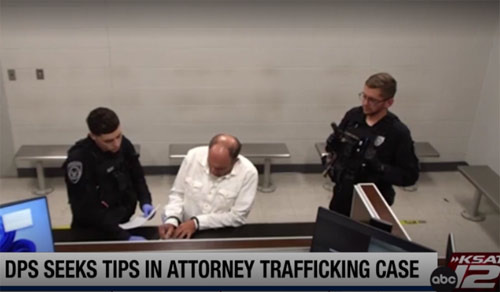
However, a current criminal defense attorney in San Antonio, Neil Calfas, has been arrested on charges of solicitation of prostitution and human trafficking.
On August 12, 2026, Texas DPS investigators executed a search warrant at the Calfas Law Group office in downtown San Antonio and arrested attorney Calfas on charges of solicitation of prostitution and human trafficking.
When I first heard the news, I even visited the Calfas Law Group website, which looked like a typical American attorney's site. It's ironic that someone who defends others in criminal cases has now become a suspect in a criminal case themselves. Attorneys in the U.S. are licensed to practice in each state, and in Texas, they are subject to the oversight and discipline of the State Bar of Texas.
If found guilty of a felony or serious ethical violations, an attorney could face suspension or, in the worst case, lose their license. This means that a career built over years of law school and passing the Bar Exam could be lost in an instant. Therefore, it's hard to understand why a lawyer, who knows the law better than anyone, would take such risks.
The most striking aspect of this case is the human trafficking charge. In Korea, human trafficking often brings to mind the crime of kidnapping and selling people.
However, in U.S. law, human trafficking has a broader scope. It doesn't necessarily require kidnapping or confinement. If someone uses another person's difficult situation, deceives them, or pressures them into engaging in sexual acts for money or other compensation, they can be charged with human trafficking.
In simpler terms, it's not just about "selling people"; it also involves whether someone exploited another's situation to provide sexual services.
According to investigators, a woman sought help from Calfas regarding her brother's issues at the Guadalupe County jail.
However, instead of discussing legal fees in cash, "other methods (requesting sexual acts)" were mentioned, and authorities view this as a crime that exploits the woman's desperate situation. The actual conversations and whether they meet the legal criteria for human trafficking will ultimately need to be determined in court. Even more shocking, there are claims of video evidence. The arrest warrant affidavit mentions Snapchat videos and Cash App transaction records.
In the past, there was a high-profile case involving an attorney named Mark Benavides in San Antonio, who received an 80-year sentence for soliciting sexual favors from female clients instead of legal fees. It's a life sentence for something that isn't even murder. Whether there was a learning effect or not, a similar case has emerged in the San Antonio area in less than a decade, making this incident particularly sensitive for the local legal community.
Of course, it's important to note that the Neil Calfas case is still at the charge stage. The arrest warrant affidavit is a summary of the evidence and claims gathered by investigators, not a conviction. Calfas has the right to contest the allegations and evidence, and the final judgment will be made by the court.
It's quite ironic. He appears to be a specialized attorney helping those in trouble with criminal cases, yet he now finds himself in a position where he must defend against criminal charges.
This case illustrates the bitter reality that an attorney's license, a respectable office, and social status do not guarantee a person's morality.
 ChocoJoyful
 Castle99







 NEXT ROUND |
 Encyclopedia of New York and Surrounding Areas |
 washington mom |
 California Dreamer |
 Sugar Cream Door Bulletproof Noodles |
 solvix18 |
 TEXAS Fishing Boat |
 Coding Elf |
 alamo |
 Always Dreaming of Big Success |
  Helpful Life Stories |
  Healthy Local Fresh Information |
  molten |
  Way to easy |
  intact |
  happy 9 |
  Park M.Y. |
  tredon |
  Poppin News |
  metsoo |
  dewyo |
  Casa Mia |
  Asparagus Blog |
  dorange |
  hiddenkong |
  some fame |
  Godory Life |
  Lime Juice |