
Recently, I went to a local dentist because I was experiencing pain in my molar, and when I received the estimate, I was at a loss for words.
I was told that a root canal and a crown would cost over $2,000, and I said I would think about it right there.
I knew dental treatment in the U.S. was expensive, but seeing the numbers made it feel completely different.
If you receive a root canal without insurance, it can cost between $700 and $1,200 for front teeth, and for molars, it can exceed $1,000 and go up to $2,000.
If you need a crown separately, that adds a significant amount, so the total cost for a single root canal can balloon.
Even a cavity treatment can vary widely from $100 to $400 depending on the materials used, and a regular scaling and check-up can average around $203 according to some studies.
Even with dental insurance, you can't be too comfortable, as many plans have an annual coverage limit of around $1,000 to $1,500.
So, when it comes to major procedures like crowns or root canals, even with insurance, you often end up having to pay a large amount out of pocket.
When I shared this in a Korean community group chat, the women suggested I look into university dental clinics.
These clinics are run by dental schools, and since students need to complete their practice hours, they offer the same treatments at much lower prices.
At first, I was a bit hesitant to let a student without a license treat me.
However, I found out that professors supervise the procedures, so there's no need to worry about safety, which was a common point in many reviews.
When I looked into it, the cost for a new patient exam, X-rays, and cleaning at a dental school clinic was between $75 and $175.
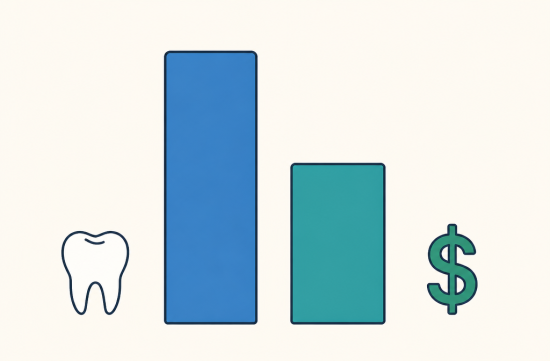
In a regular private practice, the same services would cost around $300 to $600, so it's less than half the price.
I've also seen data showing that dental schools in New York are 40 to 60 percent cheaper compared to private practices, and in other regions, they can be up to 70 percent less expensive, which is quite enticing.
However, there are clear downsides; each appointment can take quite a bit of time.
Since students are still learning and need to get approval from professors, it can take two to three hours for just an exam.
Appointments are also scheduled according to the academic calendar, so it's not a place you can just go to immediately if you have a sudden toothache.
Some schools don't operate clinics during breaks, so it's best to check the academic schedule in advance.
If you're in a large city with a dental school, you can find several options just by searching for the city name along with "dental school clinic."
Schools like Rutgers, NYU, and Columbia all have their own dental clinics accepting new patients.
Some of them even have initial exam fees as low as $55, so it's worth getting a consultation and comparing estimates.
If you have insurance, some clinics accept it, so it's recommended to call or email ahead to ask and make an appointment.
If you have money saved in an FSA or HSA account, you can also pay for dental school clinic services directly, effectively saving you money twice.
One of my friends had a molar crown done at a dental school clinic and finished for less than half of what a private practice quoted, and she keeps talking about it.
Dental costs don't just disappear if you put them off, so I believe that for treatments that require a significant amount of money, doing your research pays off in the end.
If it's a treatment you can plan for rather than an urgent pain, saving a few hundred dollars is definitely worth it.
 SassyCherry



 holy cheese |
 Softy |
 Michigan Enthusiast |
 Anna Life |
 JESIKYEOALBA BLOG |
 Ishiyoung Forever 208 |

 eatontown blog |
 Google Idea |
 Anytime Journey |
 Kim You Shin |
  legalway |
  postcard |
  cheesecake07 |
  My Miami Stories |
  windylotus |
  Mia Flori |
  velaro29 |
  velaro |
  foxtrot83 |
  moname |
  mapleline |
  US Legal Consultation on Trials |
  UNI Lover |
  Karina's Blog |
  California Dreamer |
  Choco Mint Creator |
  Chili Boy Club |
  NE Hodori Preik |
  Giant Squid and Sweet Potato Soup |
  torvik |