
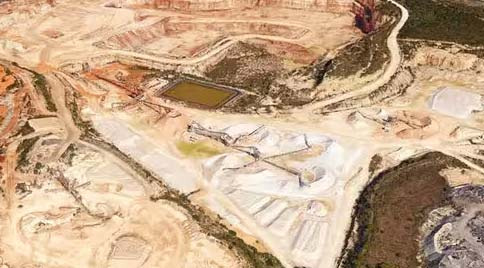
San Antonio has an unusually high number of limestone quarries.
This is because the city is located directly on the Balcones Fault Zone, where thick layers of Cretaceous limestone are found.
The stone extracted here has been widely used for cement, roads, and construction materials since the late 19th century, and it continues to be a vital resource for the local economy, serving as a key raw material for regional construction.
Active Quarries
-
Beckmann Quarry
This is a large limestone extraction site located next to Northwest Military Highway. It is operated by Martin Marietta and operates from 6 AM daily for excavation, crushing, and sorting. There is a rail spur that allows gravel and crushed stone to be shipped throughout Texas, and the quarry depth reaches several meters.The company's website offers a noisy blasting alert service, so you can receive a warning message before the blasting sounds occur.
-
Nearby Quarries: Helotes, Highway 211, and Rio Medina
All are located along the limestone belt of the Balcones Fault Zone. They are operated by the same company or Vulcan Materials, and most start operations between 5 and 6 AM and stop before evening.
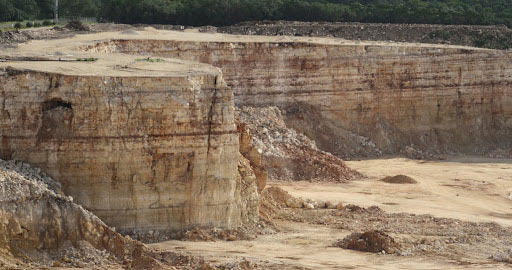
Quarries Reborn After Closure
-
Alamo Cement Plant → The Quarry Market
This is an example of a cement quarry that closed in 1908 and was transformed into a shopping mall, golf course, and cinema. The four chimneys remain intact, making it an iconic landmark in San Antonio. -
Japanese Tea Garden in Brackenridge Park
The same factory site has been landscaped into a Japanese-style garden and pond, serving as a place for citizens to relax.
Thus, the renewal of "quarry sites into cultural and commercial spaces" forms a significant part of San Antonio's development efforts.
Environmental and Community Issues
-
Protection of the Edwards Aquifer
Many quarries are located above aquifer recharge zones, so dust and wastewater management standards are strict. The city and county mandate the installation of leachate prevention dams and dust suppression systems. -
Noise and Dust Complaints
Residents in the northern suburban areas have ongoing complaints due to blasting vibrations and truck traffic. In Comal County, residents and environmental groups have been protesting against new quarry permits from Vulcan since 2017. -
Restoration Obligations
State regulations require slope restoration and vegetation recovery after mining ends. Beckmann Quarry has also announced plans to gradually convert some areas into lakes and parks.
Helpful Tips
-
Tours: Martin Marietta occasionally offers safety training programs and site tours for students and groups. Advance registration is required, and protective gear is mandatory when accessing restricted areas.
-
Photo Spots: The cement smokestacks at Alamo Quarry Market and the limestone cliffs at Brackenridge Tea Garden are famous photo locations.
-
Redevelopment Trends: As private proposals to convert large quarry sites into mixed-use residential and commercial complexes continue, there is a possibility of another "Quarry Market 2" emerging in the next 10 to 20 years.
-
Safety: Hiking and biking trails around active quarries are prone to rockfalls and truck traffic, so be cautious not to enter beyond signs and sound barriers.
The quarries in San Antonio create a unique local character by extracting limestone to build the city and transforming closed quarry sites into cultural and commercial spaces.








 Helpful Life Stories |
 American Man in a Mask |
 Texas Migration Story |
 Make My Day |
 USA Pharmacy Pharmacist |
  Cherokee Rose |
  Kor. Master |
  Holey Moley |
  Conflite Teacher |
  Hodong Prince Over Flex |
  Mist inn |
  citrus pop |
  Onion Ring |
  phoenixia |
  viewtop |
  loverun |
  Kim Do Sun |
  SEVEN SEVEN |
  yentra |
  Victory 1988 |
  Tonky |
  viroma |
  cookie |
  Live and that's it |