

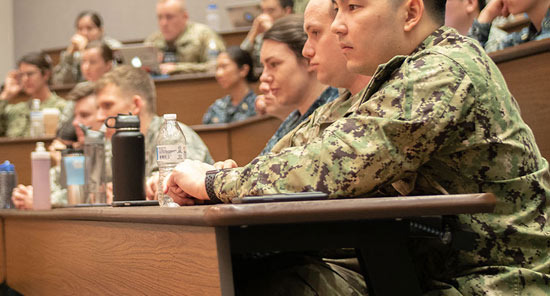
I immigrated to the U.S. after attending the second year of middle school in Korea and am now a U.S. citizen.
I work in the administration department related to DAV (Disabled American Veterans) at the VA hospital in San Antonio, Texas, which is a military veterans hospital.
While I don't treat patients directly like doctors or nurses, I support the hospital system to run smoothly. I have been involved in administration, patient registration, insurance processing, and medical record management for 7 years, during which I have observed numerous military doctors and talked with young people who are diligently preparing to become doctors.
The reason I am taking the time to write this blog post is simple.
If you know someone who wants to go to medical school in the U.S. but is struggling financially yet has excellent grades and a genuine desire to become a doctor, there is still an opportunity.
And that is through the 'military' system.
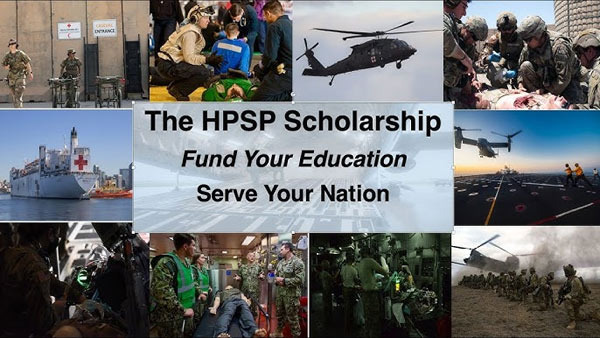
While working in administration related to U.S. military hospitals, I came across the HPSP and USUHS programs.
HPSP is a scholarship program run by the military that fully supports tuition for students attending private medical schools and also provides living expenses. At first, I thought, "Why would the military sponsor medical students?" but the U.S. is more practical than you might think. They invest in capable students to cultivate military doctors who will serve the country.
If you receive this scholarship, the military pays your entire medical school tuition. Not only that, but you also receive over $2,000 a month for living expenses, along with costs for textbooks, practical training, and even health insurance. So, friends who receive HPSP have almost no financial burden, even though they are private medical students. However, there is a condition. After graduation, you must serve as a doctor in a military hospital for a certain period, usually around 4 years. This is a contract, meaning it's not just about receiving money and being done.
There is also a different path from HPSP. It is USUHS, officially known as the Uniformed Services University of the Health Sciences. The name itself reeks of 'military,' as it is a real military medical school. It is located in Bethesda, Maryland, right next to the NIH. Once you get in, you are registered as a military officer from the moment of admission.
As soon as you start, you are given the rank of Second Lieutenant (O-1). You also receive a salary. While attending classes and studying, you have a base salary, housing assistance, and military health insurance provided. However, it is more demanding here. You will undergo military training intermittently during school life, and in the summer, you must also receive leadership training. After graduation, the service commitment is over 7 years. However, upon graduation, you can immediately receive a residency in a military hospital, which is not a bad option if you are considering a long-term career.
These days, while working at the VA hospital, I see many doctors who came through HPSP. They usually finish their 4-year service and then transition to careers in VA or private hospitals, and there are no significant disadvantages in their careers. In fact, because they encounter a wide variety of patients in military hospitals, they gain a lot of practical experience and are well-trained in leadership, which hospital administrators appreciate. In private hospitals, there is a sentiment that "this person is from the military, so they can be trusted."
However, the training process in the military is somewhat different from that in civilian settings. There may be restrictions when choosing specialties, or the competition for applications may be fierce. For example, popular specialties like dermatology or ophthalmology can be difficult to enter even within the military. However, essential fields like family medicine, internal medicine, surgery, and anesthesiology have high demand, so training can be relatively stable.
Another point is that your duty station is not random. There are some choices, but you will be assigned to one of the U.S. military bases spread around the world. This includes locations within the U.S., as well as Germany, Japan, Korea (Pyeongtaek, Osan, etc.), and Hawaii, and if you are in the Navy, you may also be stationed on a ship. While the likelihood of being sent to a war zone is low, it is not impossible. In any case, since it is military service, there are aspects that you must accept to some extent.
In my work, I have often seen 'smart but poor young people' change their lives through the U.S. military system.
Children of immigrants often struggle with enormous tuition fees or student loans, and there have been cases where they received scholarships from the military, completed their service, and became successful specialists in hospitals.
That friend said, "I know that I became a doctor in the U.S. thanks to the system, so I work hard."
So the reason I am writing this is that if you are currently broke, feeling stuck in life, and have a dream but don't know how to achieve it... I want to let you know.
The U.S. is a country that opens doors for capable people, even through the military.
If you are truly desperate and have the intellect, skills, and stamina to endure the challenging process of becoming a doctor, I encourage you to look for a recruiter now.
Your life can truly change.
In America, there are still fair opportunities for those who strive.







 Helpful Life Stories |
 American Man in a Mask |
 USA Pharmacy Pharmacist |
 Texas Migration Story |
 Texas Migration Story |
  Tonky |
  viroma |
  cookie |
  Live and that's it |
  Alright Twain |
  eatontown blog |
  HAWAII Korean Church News |
  Amore |
  linex |
  Balancework |
  laro90 |
  MEDBIO American Doctor Blog |
  SWAT TEAM BLK |
  DREAM BIG |
  frostbite |
  330 Forever My Love |
  El Dorado |
  dralix58 |
  Gorama Round |
  Skydiving |