

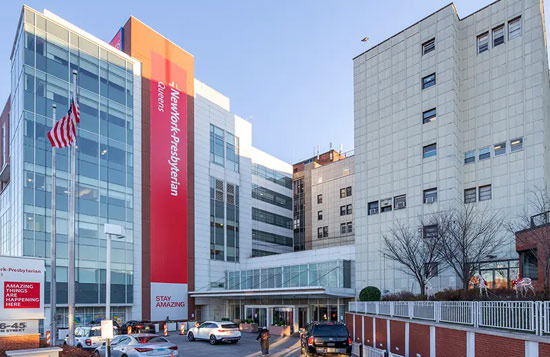
When talking about healthcare in New York, one place that cannot be overlooked is NewYork-Presbyterian Hospital.
It is not just a large hospital; it consistently competes for the top 1-2 spots in the US News & World Report hospital rankings, making it one of the best hospitals in the country.
In 1998, The New York Hospital and The Presbyterian Hospital merged, and it has since grown into a healthcare network that covers all of New York.
The reason this hospital is special is that it operates as both an educational and medical facility.
It serves as a key teaching hospital for two Ivy League medical schools: Columbia University Vagelos College of Physicians and Surgeons and Weill Cornell Medicine.
In simple terms, it is a place where some of the brightest medical students in the U.S. train by seeing real patients.
NewYork-Presbyterian Hospital is recognized in a wide range of fields.
It ranks at the top nationally in almost all specialties, including cardiology, neuroscience, oncology (cancer treatment), orthopedics, pediatrics, and obstetrics and gynecology.
Notably, the Columbia campus located in Washington Heights excels in cardiology and neurology.
On the other hand, the Weill Cornell campus on the Upper East Side is particularly well-known for its burn treatment center and pediatric hospital.
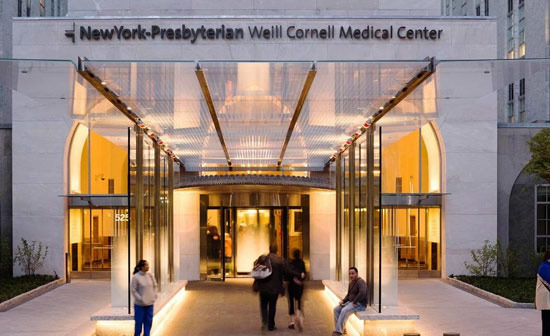
Pediatric care is so important that it deserves special mention.
Morgan Stanley Children's Hospital operates the only pediatric Level 1 trauma center in Manhattan, equipped to provide top-level responses in emergencies.
There are also major facilities in the Brooklyn area. Brooklyn Methodist Hospital serves as a community-based acute care hospital, while Lower Manhattan Hospital is the only full-service hospital south of 14th Street.
This means that in case of emergencies in the downtown area, this hospital plays a crucial role.
This healthcare system extends beyond New York City into the surrounding areas.
It connects to Westchester and the Hudson Valley, providing high-quality healthcare services within commuting distance.
This is a characteristic of the New York healthcare system, which operates as a network rather than a single hospital.
Looking at the specialties, the hospital's competitiveness becomes even clearer.
In the field of cardiac surgery, it ranks among the top 5 in the U.S., and the number of procedures performed is also among the highest in the country. This is directly related to the accumulated clinical experience.
The fields of neurology and neurosurgery are also globally recognized, providing comprehensive treatment for various conditions such as stroke, epilepsy, and Alzheimer's.
The oncology department also shows strengths. The Herbert Irving Comprehensive Cancer Center plays a central role, equipped with a verified system for research, treatment, and clinical practices as a nationally designated cancer center.
The orthopedics department maintains top-level treatment outcomes in collaboration with the Hospital for Special Surgery.
The mental health field is also noteworthy.
The Westchester Behavioral Health Center is well-known for its patient-centered design, providing an environment that considers patients' psychological stability during treatment.
Additionally, it is the first facility in the U.S. to receive Planetree certification, recognized as a prime example of patient-centered care.
Overall, this hospital is not just a large institution but is close to a complete healthcare system.
Education, research, and treatment are organically connected, and facilities distributed by region operate as a unified network.
While NewYork-Presbyterian Hospital offers a top-tier healthcare system, it also has its drawbacks. First, the cost burden is very high.
Even with insurance, the out-of-pocket expenses can be significant, making the perceived costs high for patients. Additionally, due to the nature of large hospitals, there can be long wait times for appointments, and it often takes time to see specialists. Because of the high patient volume, individual patient care may feel somewhat mechanical.
Furthermore, the hospital's location in the heart of Manhattan presents practical inconveniences regarding accessibility and parking.
 VegasBoss






 Diana Blues |

 Dragon Lee |
 Churros Train Conductor |

 Tora Tora |

 neroyo |

 newyorker 101 |
 PPAP Pineapple Pen |

 NYC saladbar |

 Encyclopedia of New York and Surrounding Areas |

 Eating Gukbap and Working Hard Deer |
 urban legend |
 coolriver |
 Good Neighborhood, Wealthy District Information |
 Ro Ro Car |
 Amber H |
 new sugar |
 Palm 1000 |
 loran |
 donutfield |
 Tennis City |
 sunny7 |
 Questions about firearms while living in America |
 Shoot Me |
 mochifox |
 zucchini |
 Anna Life |
 Exciting FM Radio |
 pet dog |
 toodin |
 rosed |