

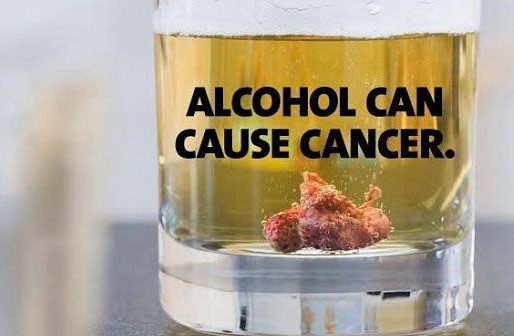
Recently, someone at a gathering of friends mentioned while pouring a glass of wine that drinking a glass of wine a day is actually good for the heart, but these days, it's said to increase cancer risk.
Everyone chuckled and moved on, but I went home and looked up some information.
On January 3, 2025, the U.S. Surgeon General released a recommendation.
At that time, the Surgeon General issued an advisory titled Alcohol and Cancer Risk.
The key message is simple: alcohol increases the risk of at least seven types of cancer.
The seven types are breast cancer, colorectal cancer, esophageal cancer, liver cancer, oral cancer, pharyngeal cancer, and laryngeal cancer.
It is also clearly stated that this applies regardless of whether it's beer, wine, or distilled spirits like soju.
The advisory ranks alcohol as the third leading preventable cause of cancer, following tobacco and obesity.
It also noted that there are an estimated 100,000 alcohol-related cancers and 20,000 deaths each year in the U.S.
Now, returning to the question in the title: is even one drink a risk? Many people overlook the difference between relative risk and absolute risk.
According to the advisory, a woman who drinks less than one drink per week has a cumulative probability of 16.5% of developing an alcohol-related cancer by age 80.
If she drinks one drink a day, that probability rises to 19.0%, and to 21.8% if she drinks two drinks a day.
Honestly, I was a bit surprised by how significant the difference is.
Why is that? The advisory explains the pathways in a few steps.
First, when the body breaks down alcohol, it produces a substance called acetaldehyde, which damages DNA.
Second, oxidative stress damages cells.
Third, alcohol alters hormone levels, such as estrogen, which is linked to breast cancer.
Fourth, it helps other carcinogens, like tobacco smoke, to be absorbed more easily by the body.
There's a particular point that our Korean community should pay attention to. There are definitely people around who turn red in the face after just one drink.
This is a common reaction in individuals with a weaker enzyme (ALDH2) that breaks down acetaldehyde, and it is known to be relatively common among East Asians.
If the breakdown is slow, that substance stays in the body longer, and studies consistently suggest that these individuals should be more cautious regarding the risk of esophageal cancer.
Currently, the warning label on alcohol bottles in the U.S. addresses risks related to drinking during pregnancy and impaired driving ability.
However, changing the label requires Congress to amend the law. It's not a structure where the Surgeon General's recommendations lead to immediate changes.
As of the time I'm writing this, I have not confirmed any news about the label actually changing.
Dr. Murthy also completed his term in the same month he issued the advisory.
Additionally, the USDA has officially summarized the message as a brief statement encouraging reduced alcohol consumption.
The recommendation for pregnant individuals, those recovering from alcohol use disorder, and those who struggle to control their drinking remains unchanged.
I'm not particularly fond of the government dictating whether people should drink or not.
Adults should have the freedom and responsibility to make choices about their own bodies.
However, for those choices to be made correctly, accurate information is essential.
Starting by reducing that habitual daily drink, and if you have a tendency to flush easily, I would suggest being more conservative with your intake.
Just remember this one sentence: the less you drink, the lower the risk.
 ChickenNap







 Dragon Lee |
 Churros Train Conductor |

 Tora Tora |

 neroyo |

 nivex85 |

 Now or Never |

 Indiana Jones |

 U.S. Weather Bureau News |


 Yellow Snowman |
 Helpful Life Stories |
 Kitchen Ideas |
 Diana Blues |
 Agenda Center |
 Community Cross |
 journey |
 heeve |
 leman |
 corner kick |
 treasure |
 strawberry |
 Augusta Univ |
 B.I.G. Victor |
 Victory 1988 |
 Swift Falcon |
 venture |
 SPAM 101 |
 choi family |
 zoryan |