
Many people have experienced going into a grocery store with a short list and ending up at the checkout with a full cart. This happens not because of a lack of willpower, but because the store layout is designed that way.
In fact, research shows that 80 percent of American consumers buy at least one unplanned item every time they go to the grocery store. The placement of products at eye level, the order of displays, and even the layout around the checkout are all designed to encourage more purchases, a well-known fact in the retail industry.
One consumer study found that these unplanned purchases add up to an average of $281 per month, which is not a small amount when calculated over a year.
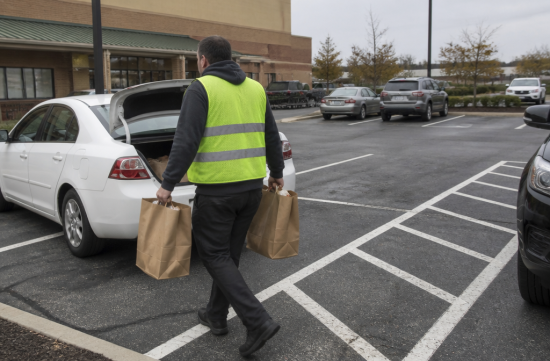
The first reason online order pickup saves you money compared to in-store shopping is that it removes these temptations from your view. The online shopping cart doesn't include sampling stations or candy displays at the checkout, so those items don't even catch your eye.
In fact, 46 percent of consumers using pickup services reported that they chose this method to reduce impulse buying. When looking at all online shoppers, 51 percent said they experienced a decrease in unplanned purchases.
Reducing the number of visits to the store is also a significant factor in saving money. The more often you visit the store, the more you are exposed to temptations, but with pickup, you can gather everything you need in one order, reducing that exposure.
When you factor in gas costs, parking, and waiting time, the savings become even more pronounced. This is not just about impulse buying.
Of course, pickup isn't always free, so you need to consider the minimum order amount. Walmart requires a minimum order of $35 for free pickup, and if you order less, there's a $6.99 service fee. Safeway operates similarly with a $30 minimum.
One caution here is the potential negative effect of adding an unnecessary item just to meet the minimum order. What starts as a way to save money with pickup could end up increasing your spending.
One study found that the average online order payment was $113.58, which is 44 percent higher than the $78.88 spent on impulse purchases in-store. At first glance, this might seem surprising, suggesting that online shopping is more expensive.
However, this difference is likely due to the habit of reducing the number of visits and buying in bulk. In fact, research shows that the average amount spent on pickup orders is $119, while in-store purchases are only $47, indicating a 2.6 times difference.
The real savings effect is seen in the composition of items purchased. Studies have shown that online grocery shoppers significantly reduce spending on unplanned snacks like candy, frozen desserts, and bakery items.
Ultimately, whether pickup orders save you money should be judged not by the total payment amount but by how much unnecessary spending is reduced. This is not just a service issue; it's about how well you can control your own spending habits.
Therefore, if you are someone who already shops with a list and avoids impulse buys, the pickup fees and minimum order pressure might actually be a disadvantage. Conversely, if you tend to throw various items into your cart when you go to the store, pickup is definitely advantageous.
In the end, it's not about the government or stores saving you money; it's about managing your own spending habits first. Whether it's about skills or savings, it ultimately depends on how systematically you manage your finances.
If it were me, I would set a monthly food budget in advance and prioritize using pickup orders within that range. Ultimately, I believe that honestly understanding your own spending patterns is the starting point for saving money, regardless of the method you choose.






 Softy |
 Michigan Enthusiast |
 Anna Life |
 JESIKYEOALBA BLOG |
 Dad's Tribute TC |
 Infinite Style |
 Living Economy Information Blog |
 Koreab Date |
 Only Dentalbay |
 US Home Buying Information Home Insurance |
  Soy Angelino |
  San Jose Pop |
  Pronunciation Yo |
  hamooo |
  Entip |
  Yavrix 92 |
  cherry cherry |
  Coastal city |
  There Are Such Things in the World |
  Mazinger Z Rocket Punch |
  celtics |
  shinee cho |
  Kondae Garusong Blog |
  quiet river |
  alamo |
  Lol Life |
  Waiting for Godot |
  parlon |
  Say Yes in English |
  Sayonara H |