
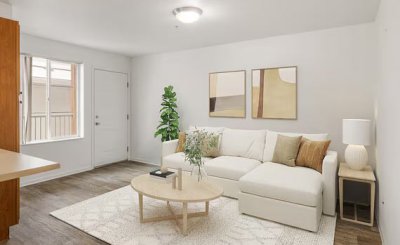
Walking along the complexes lined up by the Palm Springs golf courses, you can notice that there are many condos managed by associations that take care of pools, spas, and landscaping. In this city, condos are not an exceptional choice but rather close to the mainstream.
Recent market data reveals the reasons behind this trend. As of June 2026, the median home price in Palm Springs is $679,630, which is a 1.5 percent decrease from a year ago (Redfin). Condos are priced significantly lower, around $439,000, which helps pull down the overall median price (paulkaplanhomes.com).
When looking at single-family homes alone, the price is around $1,152,500, which is more than double that of condos. In contrast, townhomes are a notably rare type in this city. Recently, only six townhomes were listed, with a median asking price of $798,000 (Redfin).
The scarcity of townhomes is tied to the development history of Palm Springs. This area has long been active in developing condo complexes centered around golf and leisure, while larger single-family homes have been established as vacation homes or for retirement. Consequently, there has been relatively little room for townhomes that share walls.
The primary reason for choosing a condo is the amenities. With the association managing pools, spas, fitness centers, and landscaping, they are particularly well-suited for second-home owners who do not reside year-round but visit seasonally. However, this also means that the maintenance fees tend to be higher, with the national average condo HOA fee around $400 per month, while those in Palm Springs, which include golf course maintenance, often exceed this amount (Condo Control data).
More Korean families are looking into Palm Springs as they prepare for retirement. The desire to reduce management burdens and save on initial costs often leads them toward condos. However, it is essential to check the management fee increases and the financial status of the association before signing a contract.
Families that prioritize school districts often compare Palm Springs with nearby cities. Since school district boundaries frequently change, it is advisable to refer to GreatSchools ratings but also verify the assigned school for the specific address before purchasing.
For those moving from out of state, it is important to keep in mind that California's property tax and insurance calculation methods may differ from their previous residence. Specific criteria can vary by county, so verification is necessary. Particularly, communities that include golf courses may have higher insurance rates than standard homes, so obtaining a preliminary quote is recommended.
Families choosing single-family homes typically desire large yards and private pools. Palm Springs offers relatively spacious properties, allowing for more room within the same budget compared to other Southern California cities, but this also means that owners must fully bear the costs of cooling and landscaping maintenance.
Families looking for townhomes should be aware that the inventory is limited. It may take time to find a townhome that meets their desired criteria, leading many to naturally consider condos or single-family homes instead. Given the seasonal population in Palm Springs, both inventory and prices can fluctuate significantly during the summer, so timing visits for negotiations can be a strategy.
For investors seeking rental income, condos with steady short-term rental demand may seem attractive, but many complexes have restrictions on short-term rentals. Income cannot be guaranteed, and risks of vacancies and changes in regulations should also be considered.
In Palm Springs, condos emphasizing amenities and low maintenance burdens remain central, while single-family homes cater to those seeking larger spaces, and townhomes occupy a relatively smaller niche. This article does not constitute investment or legal advice, and it is recommended to consult with professionals before making any contracts.
 GymForPhotos
 StarLight







 |
| 
 Premium Gas Camp |
 CA Real Estate |
 cheesepup |
 breezem |
 Casa Mia |
 Sarah's Blog |
 US Regional Information Local News |
 USA Hyundai Kia |
 Sammy Beach |
  Bliss O |
  blue ocean |
  greenlight |
  Watanaka Karametibaksa |
  castle |
  xelton52 |
  carefree |
  vrixen73 |
  AZ Road Master |
  Victory 1988 |
  summita |
  business lim |
  Colorado Lee |
  Make My Day |
  Fros Pro |
  lioness |
  La Bean |
  American History This and That |
  Monte Sori |