

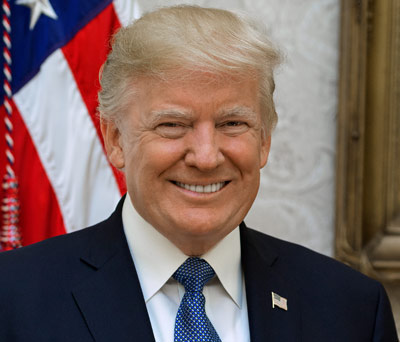
President Trump's reelection was closely tied to the overall trends in American society.
First and foremost, the most noticeable factor was the deepening polarization. Over the past few years, the moderate segment of the population has been shrinking, leading to a stronger attachment to their respective parties and ideologies. In this context, Trump's direct and hardline style provided reassurance and unity to his supporters. While opinions are sharply divided between those who like him and those who do not, having a solid base of support is a powerful weapon in elections.
Another important aspect was the emphasis on conservative values. President Trump relied on the religious conservative base as his core support, and they appreciated his message of 'protecting religious freedom and upholding traditional values.' This helped alleviate the anxieties stemming from rapid societal changes.
Immigration policy is also a crucial factor. The controversial promises of strict enforcement against illegal immigration and the construction of a border wall, which Trump pushed throughout his presidency, garnered significant attention. For voters concerned about economic instability or security issues, these points were strong appeals and helped build the image of someone who could 'protect the country.'
The use of social media cannot be overlooked. Trump communicated policies directly through Twitter, appearing to engage with the public without going through the media. Supporters felt a sense of closeness, as if the president was speaking directly to them, which fostered a strong bond.
Lastly, the thoroughness of the campaign strategy played a significant role. The reelection campaign mobilized supporters through large rallies and regional events while focusing on precision targeting using data analysis to draw necessary votes from swing states. As a result, the message was consistently delivered, successfully securing voter trust.
In summary, Trump's reelection can be attributed to the interplay of expectations for economic recovery, emphasis on conservative values, strong foreign and immigration policies, social media communication, and meticulous campaign strategy. It was not merely due to Trump's personal charisma, but rather the social atmosphere and political environment that led to his reelection.
The remaining challenge will be whether the Republican Party can continue this momentum during the four years Trump will lead, and how the extreme polarization in American politics will evolve. As an immigrant observing American politics on the ground, I find it fascinating, and I believe I will continue to witness significant changes in the future.







 Moscow Kim |
 coloradoman |
 Montgomery Mom |
 GOGO SING |
 Hajiwon Blog Hair Salon |
 Star Blog |

 Sarah's Blog |
 Casa Mia |
 Tora Tora |
  yellowbutter |
  Dolly |
  US Embassy |
  NYC saladbar |
  Finding Superfoods |
  lightyear |
  song bang |
  vexomo |
  Indiana Jones |
  meloncat |
  novapixel |
  mortrix |
  Esther 1983 |
  fortbliss |
  My Two Way |
  toastyfox |
  FLORIDA Acus |
  tracker |