

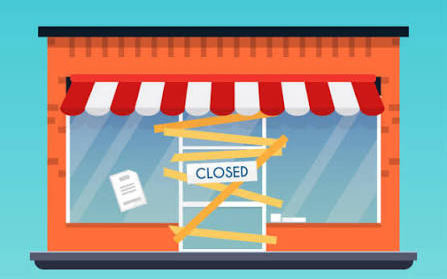
There's a reason why LA is often mentioned when discussing difficult cities for business in the U.S.
Business owners in LA must also contend with California's notoriously high costs.
In the 2026 State Tax Competitiveness Index, California ranks 48th among the 50 states in the U.S.
It ranks 49th in personal income tax, 41st in corporate tax, and 46th in sales tax, placing it at the bottom of the list. The highest personal income tax rate in California reaches 13.3%.
On top of that, LA faces high rent, labor costs, various business regulations, permits, and insurance fees.
Even businesses with strong sales can see their cash flow deteriorate quickly due to high fixed costs.
Thus, while LA boasts a massive population and consumer market, it is also one of the most burdensome places to maintain a business in the U.S.
Surviving five years in LA means more than just running a successful business; it signifies enduring high costs, taxes, and fierce competition.
However, the reasons businesses fail are often more complex than simply "not making sales."
The first reason is cash flow issues. There are many instances where profits appear on the books, but there's no money in the bank.
If sales of $50,000 are recorded but the money from customers hasn't come in yet, bills for employee salaries, rent, and insurance won't wait.
The second reason is rapidly increasing fixed costs. When a business starts to do well, owners may lease a large office, hire employees, and lease vehicles.
Initially, it may seem like the company is growing, but a mere 20% drop in sales can create problems. While sales can be reduced, rent, salaries, and insurance costs cannot be easily cut.
The third reason is when owners are unaware of their numbers. They may know how much they earn in a month but not what their actual net profit is.
It's essential to see what remains after deducting advertising costs, credit card fees, taxes, insurance, and software expenses.
In fact, a company with $300,000 in sales and solid net profits can be much healthier than one with $1 million in sales.
The fourth reason is over-reliance on one or two customers. If one customer accounts for half of a company's revenue, losing that customer can shake the entire business.
Initially, it may feel good to land a big client, but this structure can be quite risky in the long run.
The fifth reason is charging too little. Especially when starting out, businesses may offer lower prices to attract customers compared to competitors.
The problem is that it's difficult to raise prices once they've been set low. As orders increase and staff grows, a strange situation arises where the owner ends up with little to no profit.
The sixth reason is a structure where the owner does everything. Sales, customer service, estimates, and problem-solving all fall on the owner.
It's manageable for the first one or two years, but as the business grows, the owner becomes a bottleneck, leading to burnout or a decline in service quality.
The seventh reason is being slow to adapt to change. The U.S. market changes rapidly. Online advertising methods evolve, and consumers change how they seek products.
With new technologies like search engines, social media, and AI emerging, sticking to old methods just because they worked in the past can gradually erode competitiveness.
Lastly, an often-overlooked but crucial factor is the owner's patience.
Business growth isn't guaranteed every year. Sales may drop after a successful year, trusted employees may leave, or major clients may suddenly terminate contracts.
Thus, the difference between a company that survives five years and one that doesn't often lies in whether it has built a structure capable of withstanding crises, rather than how great the initial idea was.
While the ability to increase sales is important, controlling costs, maintaining cash reserves, diversifying customers, and adapting to change can sometimes be even more critical.
Ultimately, the real challenge of starting a business in the U.S. isn't just "getting started."
It's surviving for five years. And only after surpassing that five-year mark does a business begin to transform from the founder's idea into a system.
 SaladBase
 BenzPalace
 vibetowntraveler1989






 loran |

 DeArizona Blog |

 Swift Falcon |

 Tonky |

 My NYC |

 Weekend Movie Blog |

 Superman Cat Blog |

 Victory 1988 |

 Beauty, Health, Lifestyle Blog |

 coloradoman |
 The Gelaton |
 Twist Kim |
 berlon93 |
 Physical Laws and Science |
 good thinking |
 Solo Yolo |
 Mr Oh |
 laro90 |
 San Diego TOP Idol |
 Round and Round Children's Song Kingdom |
 American Golf Course Travelogue |
 MEDBIO American Doctor Blog |
 Hot Seat Driver |
 bryvexi |
 koala organic farm |
 riverstone |
 My Antonio |
 California Information News |
 chilli chilli |
 Moon Su San |