

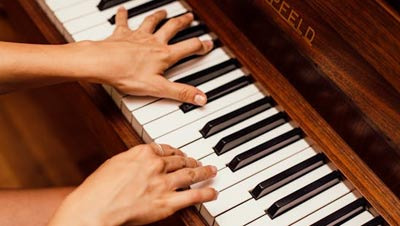
Piano is one of the instruments that many people start learning from childhood. Here are five reasons why learning piano at a young age is beneficial.
Helps Brain Development
Playing the piano requires complex movements that engage both hands and feet simultaneously. This can activate various areas of the brain at the same time, particularly helping to balance the left brain (logical thinking and language processing) and the right brain (creativity and sensory processing). Research shows that children who learn piano often excel in language skills, mathematical thinking, and creativity.
Improves Concentration
When playing the piano, reading sheet music and pressing keys with fingers requires a high level of concentration. Since one must consider multiple aspects while playing music, it greatly aids in developing concentration and memory. The consistent process of learning and practicing piano naturally enhances children's concentration, positively impacting their academic and daily life.
Enhances Emotional Expression
Learning piano allows children to develop the ability to understand and express emotions through music. Music is an important means of expressing emotions, and through piano, children learn to feel and express a variety of emotions. This helps improve emotional regulation and expression, which can have a positive impact on social interactions.
Patience and Self-Discipline
The piano is not an instrument that can be mastered in a short time. Consistent practice and patience are required. Children who learn piano from a young age can learn how to set goals and work towards achieving them. Additionally, through learning from mistakes and gradually growing, they can develop self-discipline and perseverance.
Boosts Confidence
As children learn piano and improve their skills at a young age, their confidence naturally builds. Achieving small goals and performing at concerts or recitals provides a sense of accomplishment that greatly motivates children. In this process, they realize that they can achieve results proportional to their efforts, which positively influences various other areas of their lives.
Learning piano at a young age goes beyond simple music education; it positively impacts children's brain development, emotional expression, concentration, and patience. The piano can be an important tool for children to develop various skills as they grow, and this experience significantly helps enhance their confidence and self-efficacy.







 Magic Cabbage School of Martial Arts |
 Vacation on Hawaii |
 morvex37 |
 Ari Songhan American Immigration Life |
 Bearded Strawberry Smoothie |
 U.S. Supreme Court Judge Kim |
 Egg Steamed Pot |
 Learn English Accurately |
 Korea News Economic News |
  Korean Mom |
  My NYC |
  moo moo |
  Mr Oh |
  forevergee |
  festival |
  manchester |
  constant |
  Leapfrog Move |
  vibranto |
  Tora Tora |
  yellowbutter |
  Dolly |
  US Embassy |
  NYC saladbar |
  Finding Superfoods |
  lightyear |
  song bang |
  vexomo |
  Indiana Jones |