


As a Hollywood star and the eternal hero of 'Die Hard,' Bruce Willis' health struggles have come as a shock to fans around the world.
In particular, the frontotemporal dementia (FTD) he is suffering from is completely different from the Alzheimer's we commonly know, sparking curiosity among many.
Is this disease caused by 'unmanaged habits in youth' or 'lack of sleep'?
And what is Bruce Willis' current condition? Let's take a look based on the latest news and medical facts.
Frontotemporal Dementia (FTD), Is It Caused by Partying and Drinking All Night?
To put it simply, frontotemporal dementia is not a disease that arises from an individual's 'lifestyle habits' or 'reckless past.'
Typical Alzheimer's dementia is more likely to develop due to various environmental factors such as aging, high blood pressure, diabetes, lack of sleep, and alcohol consumption accumulating over time.
In contrast, frontotemporal dementia is primarily caused by 'genetics' and 'mutations in brain cells,' making it a degenerative brain disease.
Strong Genetic Factors: About 40% of all frontotemporal dementia patients are reported to have a family history. Variations in specific genes (C9orf72, MAPT, GRN, etc.) are often passed down through generations.
Unknown Protein Accumulation: Even without genetic factors, abnormal proteins like Tau or TDP-43 can accumulate in the frontal lobe (which controls reasoning and personality) and the temporal lobe (which controls language and memory), leading to cell destruction.
Therefore, enjoying parties in youth or getting little sleep does not cause this disease. Unfortunately, it is closer to an 'incurable disease' caused by genetic predisposition or unfortunate mutations in brain cells.
How Is Dementia Different?
Typical dementia (Alzheimer's) first manifests as memory loss, such as "What did I just do?" because the hippocampus at the back of the brain is damaged first.
However, frontotemporal dementia is different. Since the front part of the brain (the frontal lobe) deteriorates first, memory remains intact initially. Instead, changes in personality, impulse control issues, emotional blunting, and loss of language ability (aphasia) appear first.
A patient who was once very patient may suddenly become irritable, or they may lose their moral compass and behave in ways that defy common sense. This can lead those around them to mistakenly believe that it is not dementia but rather that their 'personality has changed' or that they have 'depression or a mental illness.'
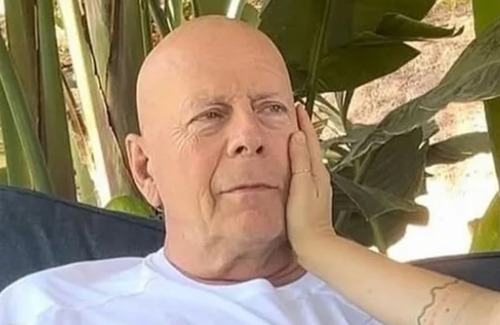
Bruce Willis' Current Condition
Bruce Willis, who announced his retirement in 2022 due to aphasia and was diagnosed with frontotemporal dementia in 2023, is now in his third to fourth year of battling the disease. Unfortunately, his recent condition has reportedly progressed significantly. According to interviews with foreign media and family, he has moved from the home he shared with his family to a single-story specialized care facility.
Due to declining cognitive and motor skills, the risk of falls has increased, so he is receiving 24-hour close care from professional caregivers. Recently, he has been spotted walking along the Los Angeles beach holding hands with a caregiver.
His wife, Emma Heming Willis, appeared on a broadcast and revealed that Bruce is currently experiencing 'anosognosia,' a condition where the brain does not recognize that it is deteriorating. Because he is unaware of his illness, he feels a sense of calm, which is a 'blessing in disguise,' but it breaks the hearts of his family members watching him. It is even reported that he has forgotten that he was once a top actor who traveled the world.
Currently, he can hardly speak and has lost the ability to read. He is unable to communicate verbally.
Additionally, his mobility is becoming increasingly unstable, making it essential for him to have someone assist him or use railings when moving.
Despite this, there is a silver lining: unlike Alzheimer's, the areas of the brain responsible for emotions operate differently, allowing him to still emotionally recognize and bond with his wife Emma, his ex-wife Demi Moore, and his five daughters. His daughter, Rumer Willis, recently stated in an interview, "Whenever I go to see my father, I always feel sweetness and gentle affection."
The family has decided to donate his brain for medical research after his passing, taking the lead in raising awareness about the cruel disease of frontotemporal dementia.
In short, the frontotemporal dementia that Bruce Willis is suffering from is not caused by lifestyle habits like drinking or lack of sleep in youth, but rather is a harsh disease arising from genetics and brain cell mutations. Although he is losing memories of his action hero days, it is said that his final journey is being filled with love from his devoted family.
 RocketFox







 xylora |
 Anjollinya Blog |
 vegas mom |
 Coco and Lulu |
 There Are Such Things in the World |
 Learn English Accurately |
 Sandiego Auntie |
 Tainami American Travel Story |
 Korea News Economic News |
 Doori Ark |
  Rainbow Bridge to the Sky |
  Sunny Fullerton |
  U.S. Weather Bureau News |
  GOGO SING |
  Gold Bar |
  Banana Style Life |
  Tesla X |
  Old English |
  urbanmint |
  forestcloud |
  forever young |
  Arlington house |
  liquid asset |
  Who's watching? |
  eclipse |
  quietwave |
  Hajiwon Blog Hair Salon |
  hoosierdaddy |
  saffronroute |