
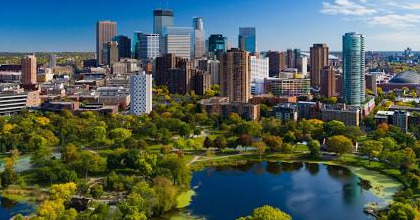
Let's take a closer look at the population, ethnic composition, and median income of Minnesota.
Minnesota is a place where diverse people gather, as vast land and rich nature coexist, and we will unfold that story one by one.
First, the area of Minnesota is about 225,356㎢, which is similar in size to the Korean Peninsula's approximately 223,000㎢. Such a vast land is home to numerous lakes and a rich natural environment, earning it the nickname 'Land of 10,000 Lakes.' If you love nature, this is an attractive feature you would want to see with your own eyes at least once.
The population of Minnesota is known to be around 5,600,000. This number shows a balanced distribution of the overall state population, with both urban and rural areas harmoniously coexisting. In particular, a significant portion of the population is concentrated in the Twin Cities area centered around Minneapolis and St. Paul, adding to the charm of experiencing both urban life and the tranquility of rural living.
Next, let's talk about the ethnic composition. Historically, Minnesota tends to have a majority of white individuals reflecting the characteristics of the northern region. However, in modern times, with the influx of various immigrants, people of African, Asian, and Hispanic descent coexist. This ethnic diversity adds different colors and charms to various fields such as culture, food, and art in Minnesota. The way people with different traditions and cultures respect each other and live together enriches Minnesota even more.
Finally, regarding median income, Minnesota is considered one of the economically stable states in the U.S. According to recent statistics, the median household income in Minnesota is estimated to be around $70,000 to $75,000. This level of median income helps maintain a high quality of life in various areas such as education, healthcare, and cultural activities, providing residents with a foundation to pursue their dreams and goals on a stable living base.
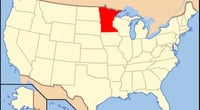
Additionally, Minnesota boasts a unique geographical position. To the north, it borders Manitoba and Ontario in Canada, to the east are Wisconsin and Lake Superior, to the south is Iowa, and to the west are North Dakota and South Dakota. Across Lake Superior, it is also adjacent to Michigan, thus communicating with several states within the U.S.
Minnesota is also the northernmost region among the contiguous U.S. states, excluding Alaska. Thanks to this unique location, it experiences both cold winters and cool summers, and many people love it for the clear skies and vast nature unique to the north.





 ultron78 |
 garlic bread |
 Sugar Cream Door Bulletproof Noodles |
 urbanmint |
 |
| 
 quatspace |
 Minnesota Lakes and Clouds |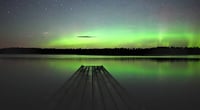
 U.S. Weather Bureau News |
 chiobase |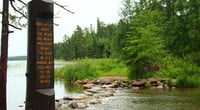
 manchester |
  constant |
  Leapfrog Move |
  vibranto |
  Tora Tora |
  yellowbutter |
  Dolly |
  US Embassy |
  NYC saladbar |
  Finding Superfoods |
  lightyear |
  song bang |
  vexomo |
  Indiana Jones |
  meloncat |
  novapixel |
  mortrix |
  Esther 1983 |
  fortbliss |
  Moscow Kim |