
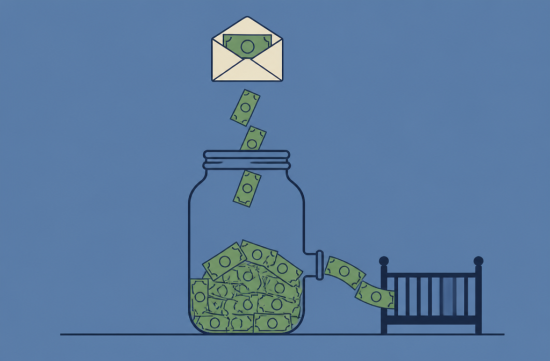
These days, the most common topic during company lunch breaks is Paid Leave. One colleague asked, "If I apply for this, will I really get paid?"
The Minnesota paid leave program started on January 1, 2026, so there are less than three months left in its first year. I've organized some questions I've heard from around me, focusing on the numbers.
First, let's go over the basic structure. This is not a vacation provided by the company, but an insurance program run by the state government. Both the company and the employees pay insurance premiums, and during the leave period, DEED pays a portion of the salary directly.
The insurance premium rate for 2026 is 0.88% of wages. Of this, 0.61% is for the employee's medical leave, and 0.27% is for family care.
The company can deduct up to 50% of this insurance premium from the employee's monthly salary. This means the employee's burden is a maximum of 0.44% of their wages.
If we assume an annual salary of $60,000, the employee's share would be $264 per year, or about $22 per month. It's not as much as you might think, right? I was surprised to see a new item on my pay stub at first, but after calculating, it made sense.
One important point for employers is the small business exemption. If the business has 30 or fewer employees and the average wage is below 150% of the state average, the effective insurance premium rate drops to 0.66%.
In this case, the company's share is 0.22%, and the employee's share is a maximum of 0.44%. For an employee with an annual salary of $60,000, the company's payment would decrease to $132 per year.
If you run a small operation like a Korean restaurant, laundromat, or grocery store, check if you qualify for this exemption. It's a significant amount that you wouldn't want to overlook, assuming it's automatically taken care of.
So, how much time off can employees take? Medical leave for personal illness or childbirth is a maximum of 12 weeks per year.
Family leave for bonding with a newborn or caring for a sick family member is also a maximum of 12 weeks. If both apply, a maximum of 20 weeks can be taken in total per year.
The eligibility requirement is that the employee must have worked in Minnesota and earned a certain amount. As of the start of the program in 2026, this amount is $3,900.
Part-time workers can also qualify as long as they meet this threshold. Surprisingly, many people are unaware of this.
The payment amount is calculated differently based on income brackets. Up to 50% of the state average weekly wage, 90% is covered; for the next bracket, it's 66%, and for the one above that, it's 55%.
The maximum weekly payment in 2026 is $1,423. This means that lower-income individuals receive closer to their original salary, while higher-income individuals hit a cap and see a significant drop in their percentage.
There's also a common misconception. The reason for the leave must last at least 7 days to apply, but this 7 days is not an unpaid waiting period. Once approved, the first 7 days are also compensated retroactively.
Job protection is also important. After 90 days of employment, when returning from leave, the employee must be reinstated to their original position or an equivalent one.
However, employees also have responsibilities. If the leave is planned, they must notify the company at least 30 days in advance, and in emergencies, they should inform as soon as possible.
Applications can be submitted starting 60 days before the leave begins. If you know the date for surgery or childbirth, it's best to apply in advance for peace of mind.
How did the first 6 months go? According to local media reports, applications exceeded 100,000, with medical leave and bonding leave being the most common types approved.
Conversely, there were also a significant number of denials, often due to incomplete documentation, such as missing medical certificates. It's important to gather hospital documents before applying.
Opinions on this program are divided. Business owners express concerns about the burden of insurance premiums and the challenge of finding replacement workers, making it tough for small businesses.
On the other hand, employees feel that those who had to quit due to childbirth or caregiving can now manage to stay employed. Both sides have valid points.
Here's my take. If the employee burden is just a few dozen dollars a month, it's a pretty good deal for insurance that supports several weeks of income when suddenly ill.
However, it's true that the administrative burden has increased for employers, so I wish there were clearer guidance on small business exemptions and support programs.
In summary, here's what to keep in mind. Employees should check the deduction items on their pay stub, confirm eligibility amounts, notify the company 30 days in advance of leave, and prepare documents in advance.
Employers should verify if they qualify for small business exemptions based on employee count and average wage, and start by accurately setting the employee deduction rate.
Since specific conditions can vary, I recommend checking the calculator on pl.mn.gov or DEED guidance for precise calculations. I would start using the calculator as soon as I have a vacation plan.
 Twoxas








 coloradoman |
 Living Economy Information Blog |
 Tomato Health Club blog |
 Banana Style Life |
 crystalo |
 quatspace |
 chiobase |
 U.S. Weather Bureau News |
  Minnesota Lakes and Clouds |
 Minnesota Sonata N |
  milkyotter |
  Zoom Zoom Zoom |
  noraro |
  tervox95 |
  vale vale |
  yentra |
  Golden life |
  andrew park |
  Peter Pan Pet |
  Balan |
  Cali M Law Group |
  neroyo |
  Dreams Come True as Desired |
  Khan Film Blog Production |
  rustley |
  Shim Ramen |
  Cool Beach Freeway |