
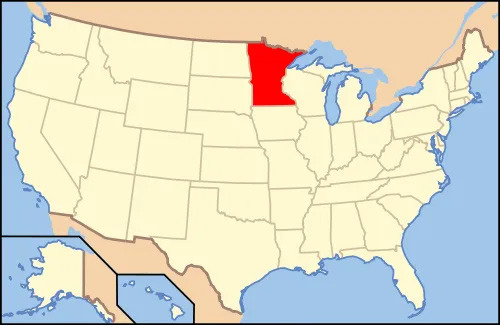
We are going to explore the interesting relationship between Minnesota and Canada.
The two regions have deep geographical, historical, and cultural connections, and we will unravel that story piece by piece.
First, Minnesota shares a border to the north with Canada's Manitoba and Ontario. This long border has served as a bridge connecting each other's histories beyond a simple boundary. From the fur trade and diplomatic negotiations that took place between European powers and indigenous peoples in the past to today's trade, tourism, and environmental conservation, Minnesota and Canada continue to engage in close exchanges across various fields.
Historically, Minnesota and Canada have followed different colonial histories and development paths, but due to their shared natural environment and water resources, they have influenced each other and faced common challenges. For example, Lake Superior and the Great Lakes region are important ecosystems and economic resources for both areas, making cooperation essential for environmental protection and sustainable development.
Additionally, today there is active trade and tourism exchange between Minnesota and Canada. Crossing the border, citizens of both countries can enjoy nature and experience each other's influences in various fields such as culture, art, and food. Minnesota's Twin Cities and several Canadian cities share their unique urban cultures and have established themselves as a key axis of the North American economy.
Minnesota, as the northernmost state in the continental United States, has some areas that are not directly connected to Canada by land but are linked by lakes and waterways, offering a unique border experience. In fact, there are interesting stories about some remote areas where students have to cross the border twice and even go through customs every time they commute, showcasing that Minnesota possesses a special charm that goes beyond being just a state in the U.S.
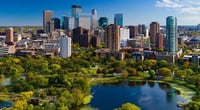
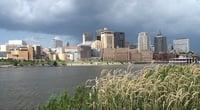
The population of Minnesota is about 5,600,000, with approximately 5,576,606 people living there according to 2017 statistics. The fact that such a large population is concentrated in one state illustrates that Minnesota is a place where urban and rural lifestyles coexist. In particular, a significant portion of the population is concentrated in the Twin Cities area represented by Minneapolis and St. Paul, where modern urban life and vibrant culture blend together.
Along with this, Minnesota also has a fairly strong economic foundation. Recent data indicates that the median household income in Minnesota is reported to be between $70,000 and $75,000. This figure is relatively high compared to other states in the U.S., suggesting that residents live in a relatively stable economic environment.
Moreover, the high median income positively impacts various fields such as education, healthcare, and culture. Thanks to this economic foundation, Minnesota residents maintain a high quality of life and actively participate in various social and cultural activities.





 moo moo |
 ultron78 |
 garlic bread |
 Sugar Cream Door Bulletproof Noodles |
 urbanmint |
 Minnesota Lakes and Clouds |
 quatspace |
 U.S. Weather Bureau News |
 chiobase |
 laro90 |
  MEDBIO American Doctor Blog |
  SWAT TEAM BLK |
  DREAM BIG |
  frostbite |
  330 Forever My Love |
  El Dorado |
  dralix58 |
  Gorama Round |
  Skydiving |
  dreamport |
  Yellow Snowman |
  Toaster Pizza Magic Show |
  velvetnom |
  Anytime Journey |
  Mrs. Duluth |
  jaxter |
  Atlanta Mama |
  Baguette Blog |
  Tan Sol |