
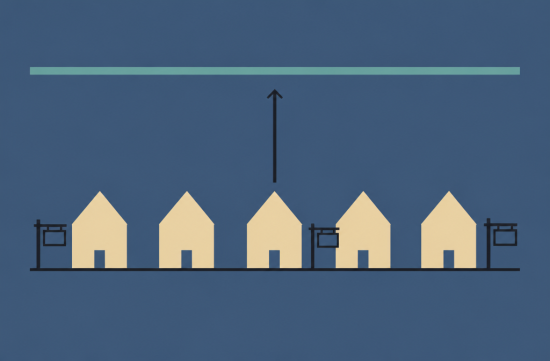
I gathered data to discuss the market in October, but I need to be honest about something first. As of my last check, the official figures for King County in October have not yet been confirmed.
So today, I will summarize based on the most recent verified data from NWMLS for August and the official announcements regarding rent. Once the confirmed figures for October are released, I plan to compare them to see if the direction has changed significantly.
The most common question I hear during consultations these days is this: How much can landlords raise the rent when it's time to renew the lease?
The questions from landlords are the opposite. They ask whether they should sell now that inventory has increased or if it's better to continue renting.
Both questions ultimately lead to answers based on the same numbers: inventory levels, transaction volume, median prices, and the state government's rent cap.
According to the NWMLS August report, there were 7,703 active listings in King County. This is a 30% increase compared to 5,925 listings in the same month last year.
On the other hand, the number of completed transactions in August was 1,791, down 13.6% from last year's 2,073. While there are more homes to choose from, the number of people actually signing contracts has decreased.
The median sale price was $845,000. This is 3.9% lower than July's $879,500 and down 3.4% from last August's $875,000.
I was a bit surprised when I first saw these numbers. This area has long been considered a seller's market, but even the association has started to express that this trend is changing.
Especially when inventory increases while transaction volume decreases, it can lead to longer days on the market for listings. This is why we are seeing more cases where sellers propose price adjustments or closing cost assistance.
However, this does not mean that prices are crashing. It's a period of adjustment where prices fluctuate by a few percentage points each month, and it's more accurate to view it as creating room for negotiation as inventory builds up.
What about rents? According to Realtor.com, the median rent in the Seattle metro area was $1,859 in May 2026, which is 2.1% lower than a year ago.
The September report from Apartment List shows that the median rent in nearby SeaTac was $1,797, down 2.9% year-over-year. However, it did increase by 1.0% over the past month, indicating some stabilization.
In summary, rents have either slightly decreased or remained stable compared to last year. From a tenant's perspective, this is a market that offers a rare opportunity to catch a breath.
Now, let's talk about the rent cap that many are curious about. Under Washington State's HB 1217, annual rent increases are capped at the lower of 7% plus the inflation rate or 10%.
The Department of Commerce announced that the cap for 2026 is 9.683%, reflecting a 2.7% increase in the consumer price index for the Seattle area.
Additionally, the cap that will apply from January 1 to December 31, 2027, has been set at 10%. Those renewing their leases at the beginning of the year should keep this number in mind.
There is a common misunderstanding here. Just because the cap is 10% does not mean landlords are advised to raise rents by that amount; it simply means they cannot exceed that limit.
Also, new leases cannot increase rent during the first 12 months. There are exceptions for new constructions or subsidized housing, so you should check if your property falls under those categories.
The notice period for rent increases is also important. By state law, landlords must provide written notice at least 90 days in advance, and if city ordinances require a longer period, those rules take precedence.
Seattle has its own regulations, so if you receive a notice, it's advisable to verify the dates against the city government's rental guidance page.
What I want to convey to tenants is simple. When the surrounding rents are weak like now, there is room to negotiate the terms of renewal.
Capture screenshots of similar listings in your neighborhood to see how much they are going for. Many people successfully negotiate lower increases or longer lease terms based on this information.
Landlords, on the other hand, should calculate the vacancy period. A month of vacancy can often result in a loss greater than the percentage increase.
It can be more advantageous to slightly lower the increase and secure a long-term tenant rather than raising it to the maximum and risking losing a good tenant.
If you are considering selling, the increase in inventory is a key variable. In a market where listings have increased by 30%, the condition of the home and the response in the first two weeks will determine the outcome more than the price.
Conversely, for tenants looking to buy, this is a time when they have gained negotiating power for the first time in years. However, it's meaningless unless you compare interest rates and monthly payments alongside rent.
If I were in your position, I wouldn't rush. I believe it's fine to wait until the October confirmed figures and year-end transaction trends are available before making a move.
Once the official NWMLS data for October is released, I will revisit and compare it with the figures from August. I hope this serves as a small reference for making decisions based on your individual circumstances.
 NoodleDefense








 B.I.G. Victor |

 Amber H |
 uplifted |
 Dr. Kelso |

 silents |

 Bald Eagle Brothers |

 Bacon King Blog |


 Lifestyle Information Search USA |

 Good Neighborhood, Wealthy District Information |
 strawberry |
 US Regional Information Local News |
 USA Business News |
 Blondee |
 E whisper |
 Potato House |
 freshmint |
 Ansaso |
 Golado |
 babybay |
 honeycom |
 French Macarons |
 Exploring American Life Information |
 Sunshine Blog |
 Community Cross |
 Sayonara H |
 What can make money? |
 Information Search LifeMAN |
 morvex37 |
 neontrail |