

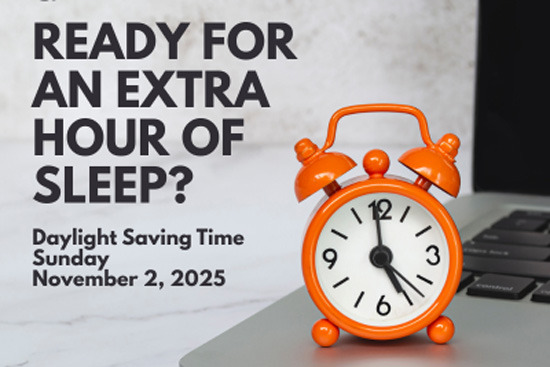
On November 2, at 2 AM on Sunday, Daylight Saving Time ends, and we need to set the clock back to 1 AM.
How long will this continue? It's honestly getting tiresome that a system over 100 years old hasn't been changed yet.
The original purpose of Daylight Saving Time was to "move the clock forward by one hour during the long summer days to save energy."
At that time, electricity was scarce, and energy efficiency was a matter of national survival, so it made sense.
But what about now? The light bulbs we use at home have all switched to energy-saving types like LED, and in the U.S., data centers consume more electricity than ever. It doesn't make sense that the entire nation is still adjusting their clocks based on logic from that time.
Every time we set the clock back in November, tens of millions lose sleep and their rhythms are disrupted. According to scholars, during the first week of Daylight Saving Time, the traffic accident rate increases by up to 17%, and the incidence of heart attacks rises by 10-20% compared to normal. Office workers are dazed, and students lose focus. While some say, "It's nice to get an extra hour of sleep," the truth is that our biological clocks are not that simple.
Especially at the beginning of November, the end of Daylight Saving Time is peak confusion. "Does 2 AM come twice?" "What time is the basis for flight reservations?" "How should server time be adjusted?" IT companies, airlines, and broadcasters sweat every time trying to resolve these time mix-ups. While smartphones change automatically, alarms, CCTV, security systems, and factory equipment still experience errors.
How long should we maintain such a complicated system? In the U.S. Congress, several bills have been discussed to "make Daylight Saving Time permanent." The 'Sunshine Protection Act,' which passed the Senate in 2022, is a notable example.
However, it is still stalled in the House and remains at a standstill. Interestingly, public opinion polls show that more than half of the population supports abolishing or fixing Daylight Saving Time.
Moreover, the justification of "energy savings" is now meaningless. According to a U.S. Department of Energy study, the electricity saved by Daylight Saving Time is only about 0.03% per year. In contrast, the health deterioration, increased accidents, and economic losses due to decreased productivity from sleep deprivation are much greater, leaving little benefit.
Parents particularly dislike this system. Children don't immediately fall asleep just because the clock changes. School start times change, and when mornings are dark, safety issues arise on the way to school. Conversely, in November, the clock goes back, making mornings bright, but afternoons quickly become dark, leading to feelings of depression on the way home. This transition period is especially critical for those who suffer from Seasonal Depression.
When the clock is set back one hour on November 2, people may feel that "the day has gotten longer," but in reality, it's just a repeat of the same confusion and fatigue every year. It's time to say goodbye to this system. The world is already moving digitally, yet we are turning the clock back analogically; is there a more anachronistic scene than this?







 Your Curiosity Resolved |

 coloradoman |
 Jean Claude Bundang Blog |
 Nuchuhan Exploration BLOG |
  Atlanta Mama |
  Baguette Blog |
  US Embassy |
  Korean Mom |
  My NYC |
  moo moo |
  Mr Oh |
  forevergee |
  festival |
  manchester |
  constant |
  Leapfrog Move |
  vibranto |
  Tora Tora |
  yellowbutter |
  Dolly |
  NYC saladbar |
  Finding Superfoods |
  lightyear |
  song bang |