
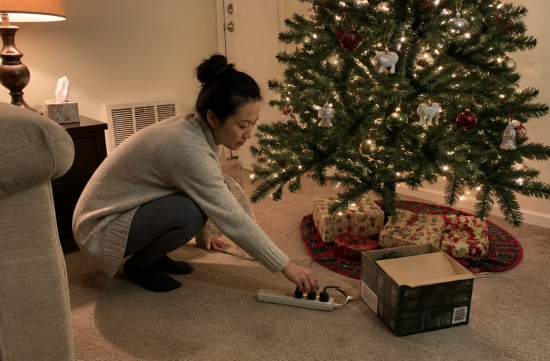
If you fell asleep with the lights on your living room tree plugged in and woke up to the smell of smoke, you might be wondering: will this be covered by insurance?
To put it simply, standard homeowner insurance generally considers fires that start from trees or lights as a compensable event. However, how much you can claim and under what categories is a different matter altogether.
First, let's look at how often these fires actually occur. The latest statistics from the NFPA (National Fire Protection Association) that I checked are averages from 2016 to 2020, reported in December 2022.
During this period, there were an average of 160 home fires related to trees, resulting in 2 deaths, 11 injuries, and direct property damage of $12 million. While the number of incidents may seem low, when you break it down by the damage per incident, it's not a trivial figure.
The causes are also noteworthy. In 44% of cases, electrical wiring or lighting equipment was involved, and 19% of the time, decorative lights were the cause of the fire. This is why it's important to consider both the wiring and the lights when discussing tree fires.
Now, let's move on to insurance. Homeowner insurance isn't just one lump sum; it's divided into different categories. When a fire occurs, typically four sections come into play.
The first is Dwelling, which refers to the house structure itself. This covers the costs for repairing or rebuilding charred walls, ceilings, and floors.
The second is Personal Property, which includes items inside the home. This covers furniture, appliances, clothing, and also tree decorations and wrapped gifts.
The typical limits introduced by Triple-I (Insurance Information Institute) are about 50-70% of the building coverage amount. However, since this is more of a rule of thumb, you should check the numbers on your own policy.
The third is ALE, or Additional Living Expenses. If this term is unfamiliar, think of it as the extra living costs incurred while you can't live in your home. Hotel costs or increased food expenses are common examples.
If you're renting out part of your home, this section can cover lost rental income as well. This is a part that landlords often overlook.
The fourth is Liability, which covers legal responsibilities. If the fire spreads to a neighbor's property or if a guest gets injured and sues, this section will handle it. The limits usually start at around $100,000.
For minor injuries, Medical Payments may be used first. This section pays for medical expenses without determining fault, typically ranging from $1,000 to $5,000.
So where are the pitfalls? The first thing I look at is how items are valued for claims.
ACV stands for Actual Cash Value, which is the current value minus depreciation, while Replacement Cost is the amount it would cost to buy a new item. In simple terms, it's the difference between receiving the resale value of a TV you've used for a few years versus the cost of a new TV.
However, standard insurance often compensates items at ACV. If you want to be reimbursed based on the new value, you'll need to pay a higher premium and add that option. I find this part a bit disappointing every time I look at it.
The second issue is the deductible, which is the amount you must pay out of pocket first. If your deductible is $500 and the damage is $2,000, you'll receive $1,500.
If you've only burned a few strands of lights or a few boxes of decorations, it might not be worth filing a claim. A claim history can also lead to increased premiums, so be sure to calculate it first.
When reviewing your policy in Mississippi, double-check the deductible section. The hurricane deductible applies to damages caused by wind or hail during hurricane periods as per state regulations. You'll need to check the Declarations page, or the first page of your policy, to see what deductible applies to fire damage.
The third issue is the question of negligence, which people are most curious about. Will leaving the lights plugged in while you sleep be covered? The wording varies across different guidance materials.
Lemonade's guidance states that fires caused by accidents are generally covered, but if deemed negligent, coverage may be denied. MoneyGeek explains that gross negligence is excluded. What constitutes gross negligence depends on the terms and the facts of the case.
Insurance company Acuity cites cases where leaving faulty bulbs plugged in overnight could be denied, while Policygenius lists improper installation or bulbs without UL certification as potential denial scenarios. Intentional arson is universally excluded in all materials.
So, it's hard to definitively say, "If it's an accident, you'll definitely be covered," or "If it's negligence, you won't get anything." The exact answer lies in the exclusions of your policy, and it varies based on individual circumstances, so it's best to check with your agent.
If you're a tenant, the situation changes. The landlord's insurance covers the building, but it doesn't cover the tenant's belongings or liability.
Damage to your belongings and any damage caused by your mistakes falls under renters insurance. Therefore, from a landlord's perspective, it's cleaner to include a requirement for tenants to have renters insurance in the lease.
Prevention isn't complicated. Live trees need daily watering, and they should be kept at least 3 feet away from fireplaces or heaters. Use bulbs that have been tested by certified testing agencies, and remember to turn them off when you leave or go to sleep.
These habits not only prevent fires but also strengthen your explanation if a dispute arises. Keeping receipts for bulb purchases or photos of the packaging is also a good idea.
If an accident occurs, check for safety, take photos and videos of the damage, and notify your insurance company immediately.
If your claim is delayed or denied and you don't understand why, you can file a complaint with the Mississippi Insurance Department (MID) Consumer Services. The phone numbers are 601-359-2453 or 800-562-2957, and they advise sending copies of documents rather than originals.
I would recommend checking the first page of your policy before pulling out the tree this weekend. Just confirming whether your item coverage is ACV and what the ALE limit is can make this winter much more comfortable.
 BellGrayCall
 JolieSleepy




 silents |

 Choco Choco Star |
 gentle |
 neapolis |
 moo moo |

 sing sing |
 donutfield |

 rapids |

 As you know, Mississippi |
 citrus pop |
 DO Main TODAY |
 korvex93 |
 tacobunny |
 B.I.G. Victor |
 Conflite Teacher |
 cyvera80 |
 Springs Korea |
 Runner Kim |
 Physical Laws and Science |
 Lansinger |
 honey honey |
 dictionary |
 silverleaf |
 Bany T. |
 Korea Forever |
 wavey |
 Valley Bang |
 Enjoying Samba at Home |
 Goroke Geureoke News |