

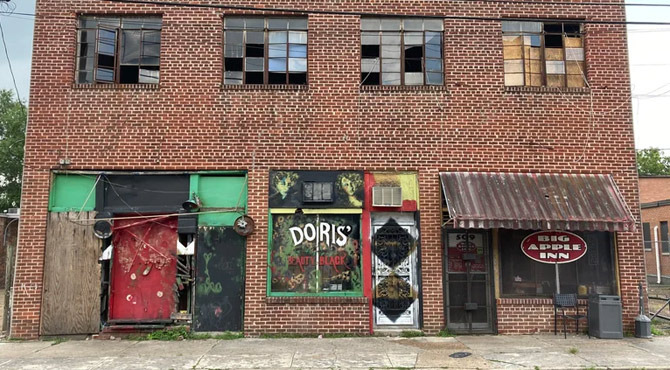
When talking about the Jackson area, an essential aspect is its racial composition and security.
This city is noted for having an overwhelmingly high percentage of Black residents in the southern United States. Recent statistics indicate that about 83% of Jackson's population is African American. This means that almost all of the residents are Black. At one time, it was named one of the 'most dangerous cities' in the U.S. For example, in 2021, there were over 160 homicides, indicating a serious situation. Fortunately, crime rates have been gradually decreasing recently, but they are still higher than the national average.
When combining violent and property crimes, the overall crime rate is about 40 incidents per 1,000 people. Most of these are property crimes, with violent crimes at about 5 incidents per 1,000 people. Particularly, incidents occur more frequently in urban areas, underdeveloped zones, and regions with high poverty rates. In contrast, the state capitol, cultural districts, and newly developed areas in the northeast are relatively safe.
Originally, this area was a small trading post established in the late 18th century by French Canadian trader Louis LeFleur. At that time, it was called 'LeFleur's Bluff,' but in 1821, the Mississippi legislature designated this place as the new capital, changing the city's name to 'Jackson.'
The city's name originates from General Andrew Jackson, a soldier and president of the United States. Since then, Jackson has rapidly grown as the administrative center of the state and established itself as a transportation hub with the arrival of the railroad.
However, the Civil War brought a difficult fate for Jackson for a time. As Mississippi seceded from the Union, it became embroiled in the war, and many parts of the city were burned or destroyed. Reconstruction began after the war, but the city was economically devastated. Nevertheless, Jackson did not give up. Over time, it grew again, especially in the 20th century, becoming a center for blues music and the civil rights movement.Today, Jackson is a city slowly transforming, overcoming its past wounds. The state government building, civil rights museum, historic cathedrals, and old cafes coexist, and along the riverbank, walking paths and art spaces are emerging.
Police forces are being increased, and programs collaborating with the community are expanding. In fact, reports indicate that by 2024, the number of homicides has been reduced to half compared to the previous year. Of course, it cannot be said to be perfect, but it is clear that things are gradually improving.
If you plan to travel or stay in Jackson, it is advisable to avoid secluded alleys or old residential areas at night, although it is relatively safe during the day. Instead, the art galleries, cathedrals, state capitol, and university areas in the city center are lively and populated, providing a sense of security.
Ultimately, Jackson is a center of Black culture and simultaneously a place that realistically showcases the social issues faced by American cities. Observing the path Jackson has taken and its current transformation, one can feel that Jackson is a city with a vivid story in the history of the American South.






 frostingline |
 Certified Authentication Blog Page |
 Deep South Mississippi |

 forevergee |
  festival |
  manchester |
  constant |
  Leapfrog Move |
  vibranto |
  Tora Tora |
  yellowbutter |
  Dolly |
  US Embassy |
  NYC saladbar |
  Finding Superfoods |
  lightyear |
  song bang |
  vexomo |
  Indiana Jones |
  meloncat |
  novapixel |
  mortrix |
  Esther 1983 |