
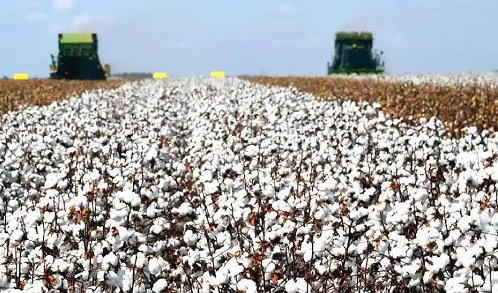
Mississippi is a representative cotton-producing state in the southern United States, where historically, cotton cultivation has played a significant role in the state's economy. The vast plains of the Mississippi River basin are known as traditional cotton farming areas.
Mississippi ranks third in the nation for cotton production.
Before the Civil War, Mississippi thrived on cotton farming, but suffered significant damage during the war. After the war, it faced economic difficulties due to being left out of the benefits of industrialization.
Currently, the cotton industry in Mississippi does not hold as much economic significance as it once did, but it still plays an important role in the agricultural sector. However, it is difficult to find the latest statistics on specific sales figures or production volumes in publicly available data. This is because agricultural production and sales fluctuate annually due to various factors such as climate conditions, market demand, and policy changes.
The cotton industry in Mississippi continues to contribute to the local economy, particularly affecting employment and income in rural areas. However, due to industrial diversification and changes in the global market, the relative importance of the cotton industry is decreasing.
The cotton industry in Mississippi has historically held an important position and continues to play a certain role in the agricultural sector.
Mississippi plays a pivotal role in the U.S. cotton industry, ranking third in the nation for cotton and cottonseed production. The state's extensive agricultural resources and favorable growing conditions contribute significantly to its prominence in this sector.
2022 Cotton Production Highlights
- Number of Farms: 780 cotton farms actively contributed to the state's cotton output.
- Production Volume: A total of 1.13 million bales of cotton were harvested in 2022. Each bale weighs approximately 480 pounds, underscoring the substantial scale of production.
- Economic Impact: Cotton and cottonseed are crucial to Mississippi's agricultural economy, supporting local farmers, processing facilities, and related industries.
Factors Contributing to Success
Ideal Growing Conditions:
Mississippi's warm climate, long growing season, and fertile soil—especially in the Mississippi Delta—create optimal conditions for cotton cultivation.Advanced Farming Practices:
Farmers in Mississippi employ modern agricultural techniques, including precision farming and efficient irrigation, to maximize yield and resource efficiency.Support Infrastructure:
The state benefits from established transportation networks and proximity to major markets, making it easier to process and export cotton.
Broader Economic Importance
- Mississippi's cotton production not only drives the state's agricultural revenue but also supports related industries like ginning, textile manufacturing, and seed processing.
- Cottonseed, a byproduct of cotton production, is used for livestock feed and oil production, further diversifying the economic benefits.
National and Global Role
Mississippi's robust cotton industry positions the state as a key player in both national and international markets. Cotton from Mississippi is exported worldwide, contributing to the U.S.'s reputation as a leading global supplier of high-quality cotton.
Mississippi's strong performance in cotton production highlights its agricultural legacy and its ongoing importance in the U.S. farming economy.







 frostingline |
  Certified Authentication Blog Page |
 Good World Good Thoughts |

 Lansinger |
 Deep South Mississippi |
  Tonky |
  viroma |
  cookie |
  Live and that's it |
  Alright Twain |
  eatontown blog |
  HAWAII Korean Church News |
  Amore |
  linex |
  Balancework |
  laro90 |
  MEDBIO American Doctor Blog |
  SWAT TEAM BLK |
  DREAM BIG |
  frostbite |
  330 Forever My Love |
  El Dorado |
  dralix58 |
  Gorama Round |
  Skydiving |