
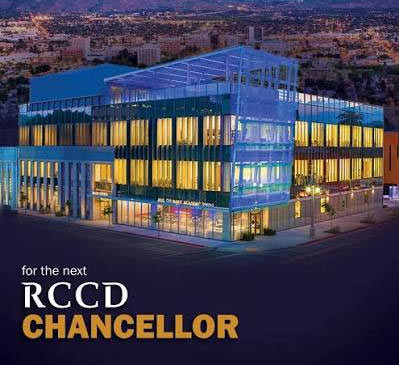
When looking into American colleges, many Korean parents often focus solely on four-year universities from the start.
Some people think of community colleges as small schools for students who struggle academically. However, when you take a closer look at Riverside City College, commonly referred to as RCC, your perspective may change.
RCC opened its doors in 1916. With over a century of history, it has a longer legacy than many universities. The student population is quite substantial. Every year, numerous students take classes both online and in-person, and the college offers degree and certificate programs in over 70 fields. From business and liberal arts to biology and vocational training, the options are diverse. Some people are surprised by the size of the college, thinking it would be a small school.
From a parent's perspective, the most pressing concern is, of course, the cost. For students recognized as California residents, the current basic tuition is $46 per unit. If you calculate that a typical full-time student takes about 30 units per year, the basic tuition would be approximately $1,380. If a student completes 60 units over two years, the total would be around $2,760.
Of course, this is not the only expense. There are student fees, various campus costs, and textbook expenses. If a student moves away from home, rent, food, and transportation costs can add up significantly. Additionally, non-resident students or international students face additional tuition fees, so you can't just rely on the $46 figure for calculations.
On the other hand, California resident students may qualify for financial aid, including FAFSA and the California College Promise Grant. For eligible low-income students, the burden of tuition can be significantly reduced. Therefore, if a student lives in Riverside and attends RCC, the cost difference compared to living in a four-year university dormitory can be quite substantial.
So, what happens after studying at RCC for two years is crucial. One of the college's significant roles is facilitating transfers to four-year universities. Historical data shows that over 2,000 students transfer to four-year universities each year, with many going to Southern California schools like CSU San Bernardino, UC Riverside, CSU Fullerton, and Cal Poly Pomona.
Especially for Korean families living in Riverside, starting at RCC and then transferring to UCR is worth considering. However, it is not the same as entering UCR directly from the start. Each university has specific course and GPA requirements, and competition varies depending on the desired major.
That's why RCC has a Transfer Center. Students can get advice on which courses to take and what to prepare for transferring to CSU or UC. If aiming for UC, it's essential to check whether the school and major allow for transfer guarantee programs like TAG. It's not as simple as taking any two years of courses and then asking to be sent to UCR. It's important to set goals for the target university and major from the beginning and align courses accordingly.
For students who have recently immigrated and still find English challenging, community college is one option. It allows them to adapt to the American college system and build their grades at a relatively low cost before transitioning to a four-year university.
Ultimately, when you do the math, the path from RCC to transferring to UC or CSU after two years is surprisingly realistic. While entering a prestigious four-year university from the start is a good path, it is not the only answer. Considering the costs associated with obtaining a college degree, effectively utilizing community college can be a smart strategy for college advancement in the U.S.
 MissouriKing
 JellyJoy

 Ari Songhan American Immigration Life |
 Bearded Strawberry Smoothie |
 Heart Ticker |
 Duck Duck Go |
 Arong and Darong |
 Finding Superfoods |
 Purple Moons, |

 torvik |
  charger |
  holy cheese |
  Pleasant K |
  Rolling Joy Life |
  lidus |
  French Macarons |
  Central Intelligence Agency Deputy Director |
  ATL Power 1 |
  MP Forever |
  Soy Angelino |
  San Jose Pop |
  Pronunciation Yo |
  hamooo |
  Entip |
  Yavrix 92 |
  cherry cherry |
  Coastal city |
  There Are Such Things in the World |
  Mazinger Z Rocket Punch |