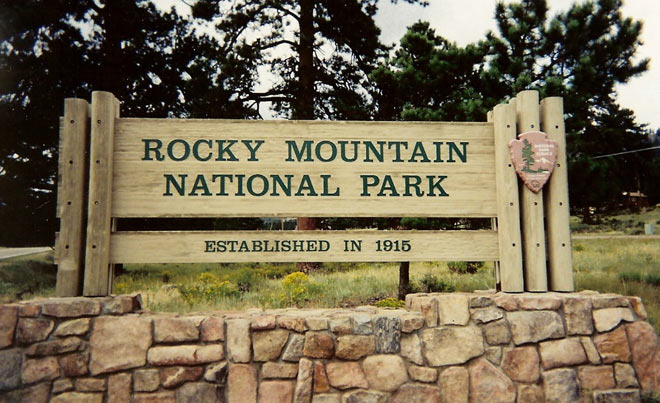
Rocky Mountain National Park is located about two hours north of Denver. It is considered one of the representative national parks of the United States.
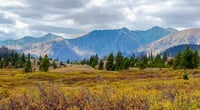
As the name suggests, it encompasses the heart of the Rocky Mountains, showcasing a magnificent landscape where rugged mountains, meadows, clear lakes, and deep valleys come together. The park covers an area of about 1,000 square kilometers, and due to the varying altitudes ranging from 2,300 meters to 4,300 meters, the seasons and weather can change several times a day, making it a mysterious place.
The park's signature road is 'Trail Ridge Road.' This road crosses altitudes of over 3,700 meters and is known as one of the highest paved roads in North America. In summer, visitors can drive to the summit along the snow-melted road, where clouds brush past and endless mountains and forests can be seen below. However, this road is closed from October to May due to heavy snowfall. Therefore, this amazing road can only be traversed during the short summer period.
True to its mountainous terrain, Rocky Mountain National Park hosts a variety of ecosystems. At lower elevations, there are coniferous forests, while the mid-elevations are filled with aspens and wildflowers, and at high altitudes, small shrubs and mosses shaped by the wind grow. Especially in summer, thousands of species of wildflowers bloom, coloring the alpine meadows known as the 'Alpine Garden.' Wildlife such as mountain goats, elk, bears, and prairie dogs roam freely above.
If you're lucky, you might see a herd of elk grazing by the roadside, their size and majesty are truly overwhelming. In autumn, the sound of these elk bugling during mating season echoes throughout the mountains. Visitors refer to this sound as the 'trumpet of nature.' There are over 150 lakes of various sizes within the park.
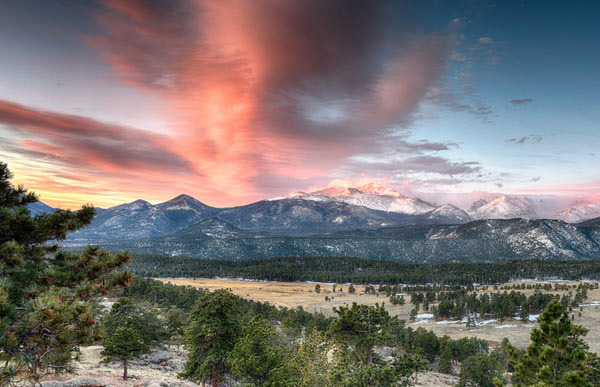
The highlight of Rocky Mountain National Park is undoubtedly Bear Lake. A short trail from the parking lot leads to this lake, where the surrounding peaks are perfectly reflected on the mirror-like surface, leaving visitors breathless. Arriving early in the morning, one can see mist gently rising from the water, and the peaceful lakeside is filled only with the sounds of birds, creating a sense of tranquility as if time has stopped.
Walking a bit further from Bear Lake leads to Emerald Lake and Dream Lake. True to their names, each lake displays shades of green and blue, showcasing a fantastic landscape that changes color depending on the angle of sunlight. In summer, this path is popular for hiking, while in winter, it transforms into a different world with snow-covered lakes and frozen waterfalls, combined with a clear sky, resembling a painting.
Another charm of Rocky Mountain National Park is the night sky. At high altitudes, the air is clear, and the city lights are almost non-existent, making the starlight particularly vivid. At night, countless stars adorn the sky, and the Milky Way flows distinctly, creating a spectacular scene. This place is referred to as 'the best stargazing spot on Earth' by astronomy enthusiasts. Throughout the park, there are campgrounds where travelers can pitch tents, enjoy a campfire, and gaze at the star-filled sky.
However, the weather in Rocky Mountain National Park can be calm in the morning but can change rapidly in the afternoon, bringing sudden thunderstorms or snowstorms, and the thin air at high altitudes can cause altitude sickness. Therefore, it is essential to always check the weather forecast and bring enough water and warm clothing when visiting.
Rocky Mountain National Park is not just a beautiful tourist destination; it is a place where nature reminds humanity of balance and harmony. Mountains, forests, water, and wind coexist without intruding on each other, creating a single order. Many who visit this place say, "Seeing the Rocky Mountains is simply feeling that the Earth is alive."
#rocky mountain national park
#bear lake
#emerald lake
#hiking
#wildlife
#nature
#camping
#star gazing
#colorado





 Your Curiosity Resolved |
 LIZ Legal Information Blog |
 coloradoman |
 Jean Claude Bundang Blog |
  Tonky |
  viroma |
  cookie |
  Live and that's it |
  Alright Twain |
  eatontown blog |
  HAWAII Korean Church News |
  Amore |
  linex |
  Balancework |
  laro90 |
  MEDBIO American Doctor Blog |
  SWAT TEAM BLK |
  DREAM BIG |
  frostbite |
  330 Forever My Love |
  El Dorado |
  dralix58 |
  Gorama Round |
  Skydiving |