
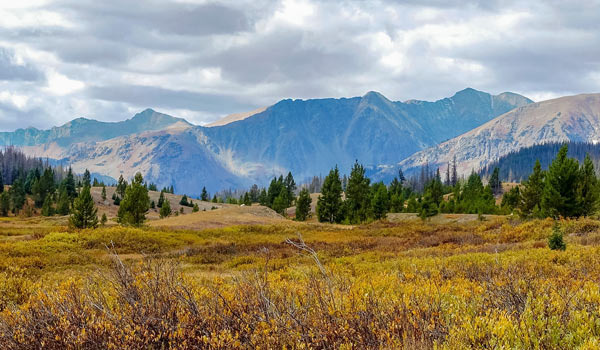
The Rocky Mountain region, which runs through the center of Colorado, is one of the most majestic mountain ranges in the western United States, yet it has a surprisingly low population density. Most people think of large cities like Denver or Boulder, but in reality, there are very few people living in the high-altitude areas within and around this mountain range.
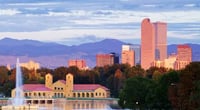
The reason is that habitable land is limited. At elevations well above 2,000 meters, the air is thin, winters are long, and the agricultural or industrial base is weak, which naturally leads to a sparse population. Colorado's total area is about 270,000 square kilometers, making it the eighth largest state in the U.S., but its population is around 5.9 million, which is average. However, most of this population is concentrated in the eastern plains areas like Denver, Colorado Springs, Fort Collins, and Boulder.
As you head west, entering the Rocky Mountain region where the mountains truly begin, the population density drops sharply.
For example, Denver County has a population density of about 1,800 people per square kilometer, while in the western counties inside the Rocky Mountains, there are many areas with fewer than 10 people.
El Paso County, which includes Pikes Peak, has a large population, but areas like Park County and Gunnison County to the west have only a few thousand residents spread over vast lands. These areas are mostly made up of mountains, valleys, and national forests, and are utilized more for tourism, trekking, hunting, and fishing rather than residential purposes.
Thus, there is a unique seasonal population structure where the population suddenly increases in the summer and becomes sparse again in the winter. The low population density in the Rocky Mountain region is not solely due to environmental factors. The economic structure has also played a significant role. In the past, mining towns thrived due to gold and silver mining, but after the mid-20th century, many areas became ghost towns as mines closed.
Now, the tourism industry and weekend cabin culture have become central, with many places having more visitors from outside than actual residents. For example, areas like Aspen, Breckenridge, and Vail have a resident population of only a few thousand, but during the winter ski season, tens of thousands flock there daily. On the surface, they appear to be bustling towns, but most of the people are short-term visitors and tourists.
The Colorado government is currently investing in infrastructure in these mountainous areas to alleviate this regional imbalance, but large-scale development is difficult due to geographical limitations. Instead, policies are being adjusted to maintain ecological protection and tourism balance.
Nevertheless, the low population means that the nature in this region is very well preserved. In mountain towns, stars are clearly visible, and at night, instead of the noise of the city, only the sounds of wind and water can be heard. Thus, the low population density in the Rocky Mountain region serves not as an inconvenience but rather as a mechanism to preserve the purity of nature.
This is why many say that just a two to three-hour drive from Denver can lead to a completely different world.
While the population density is low, the depth of space is vast. The number of people encountered on the roads winding through the mountains is few, but instead, the lives of each individual are more vividly seen; this seems to be the essence of Colorado's Rocky Mountains.





 Your Curiosity Resolved |
 coloradoman |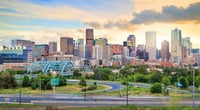
 Jean Claude Bundang Blog |
 Nuchuhan Exploration BLOG |
  US Embassy |
  Korean Mom |
  My NYC |
  moo moo |
  Mr Oh |
  forevergee |
  festival |
  manchester |
  constant |
  Leapfrog Move |
  vibranto |
  Tora Tora |
  yellowbutter |
  Dolly |
  NYC saladbar |
  Finding Superfoods |
  lightyear |
  song bang |
  vexomo |
  Indiana Jones |