

When looking for a home in Fort Worth, the first thing to consider before rent is property taxes and HOA fees, which are the homeowner association fees. New townhouses or condos often have higher management fees due to the many community amenities, which means that the costs for facilities like pools, gyms, and security at the entrance are added to the monthly fees.
In numbers, over 35,600 apartments have been built in Fort Worth in the last 10 years, and the Dallas-Fort Worth metro area is projected to rank second in the nation for new apartment supply in 2025, following New York. The average rent for new apartments is around $2,200, and according to RentCafe data from April 2026, the average rent for a new three-bedroom apartment is $2,011, while in North Fort Worth, it is slightly higher at $2,071. In contrast, the overall average rent in Fort Worth is $1,265, with studios at $1,149 and the overall average for three-bedrooms at $1,970, showing a significant gap between new and existing properties.
To simplify property taxes, Texas offers a Homestead Exemption that deducts at least $100,000 from the taxable value for school district taxes, allowing homeowners to save about $1,300 to $1,500 annually. However, new homes often have their first-year tax bill based only on the land value, resulting in a lower assessment, but from the second year, when the building is fully completed, taxes can increase by 40 to 60 percent. It's important to consider that if you rely solely on the estimated taxes provided by builders for budgeting, the actual total tax in the first year could be an additional $2,000 to $4,000.
When comparing HOA fees, the differences are also clear. Some new townhouses have monthly HOA fees as low as $67, while new communities in special development districts known as MUD or PID can have effective property tax rates as high as 2.8 percent and HOA fees around $175, leading to an additional monthly cost of $1,225 on top of the mortgage principal and interest. In these districts, new residents share the costs of infrastructure like roads and water systems, which can make taxes feel heavier initially.
Existing properties often do not fall under these special districts, resulting in a simpler tax structure and generally larger square footage compared to new builds. However, if a property is over 20 to 30 years old, it may soon require significant repairs like roof or plumbing replacements, which can incur substantial costs. When comparing the two options, new constructions have uncertain initial taxes and HOA fees but offer strong management and warranties, while existing properties have predictable cost structures but come with the risk of aging repairs.
When considering school districts, areas preferred by Korean families often have a mix of new and existing properties, so it's advisable to check the assigned schools for any listings of interest using ratings from GreatSchools or Niche. For families moving from out of state, it's important to note that while Texas has no state income tax, it has high property tax rates, and that MUD or PID districts may incur additional taxes, which can be easily overlooked if judged by the standards of their previous state.
From an investment perspective, new townhouses have high initial purchase prices and tax burdens but steady rental demand, while existing properties have lower purchase prices but come with the risk of major repairs. According to Freddie Mac, the 30-year fixed mortgage rate is around 6.69 percent as of early August 2026, so it's wise to calculate total expenses by combining monthly payments, property taxes, and HOA fees based on this rate before purchasing. Since it cannot be assumed that property values will continue to rise, it's also important to look at vacancy rates by area. For families newly settling from Korea, the convenience of immediate occupancy in new townhouses is appealing, but it's crucial to verify whether the property is in a MUD or PID district directly in the listing to avoid surprises when receiving tax bills later.
Ultimately, comparing new and existing properties based on the total housing costs, including property taxes and HOA fees, seems to be a more accurate method for budgeting. This is not investment or legal advice, and it is recommended to consult with real estate and tax professionals before finalizing any contracts.
 PopcornLeap
 StrawbHill







 cheesepup |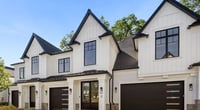
 breezem |
 yentra |
 virex |
 vexon87 |
 jaxter |
 sunny flower |
 HVAC will prosper |
 chilli chilli |
 Springs Korea |
  nixon |
  mini hometown |
  Gleeee |
  MacMorningBlog |
  ASURA |
  Elastico |
  shaket |
  vionoo |
  chocolate |
  Whisper |
  Star Voyager |
  InDiGo |
  Rocky Mountains |
  Whoever It Is, I Don't Know |
  Why Not Me |
  Plastic Rose |
  Rice Shop Uncle BLOG |
  Victory 1988 |
  Gook Rule |