

In a world where AI like ChatGPT is causing quite a stir, people are becoming anxious whenever the topic of jobs comes up.
Accountants, translators, designers, and even developers are all hearing that AI might take over their roles.
However, amidst this trend, one profession that is considered to have a solid outlook is aviation maintenance.
Airplanes still need to carry people and fly in the sky, and the ultimate responsibility for their safety ultimately lies with humans.
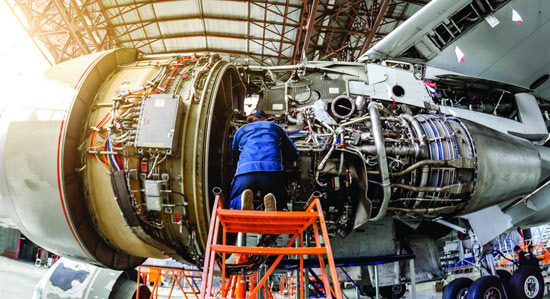
No matter how much AI analyzes manuals and predicts potential failures, the actual tasks of opening the aircraft, replacing parts, repairing, and signing off on checklists are done by FAA-certified mechanics. This is not just a technical issue but a legal one, making it an area that cannot be pushed solely by the speed of automation.
Especially at major hub airports like DFW, the situation is even clearer. It is the largest hub for American Airlines, and with passenger planes, cargo planes, and maintenance bases all concentrated there, there is always a need for personnel.
To work as an aviation mechanic at DFW, the starting path is almost set. First, you must complete an A&P certification program at an FAA-certified aviation maintenance school. In the Dallas-Fort Worth area, there are community colleges like Tarrant County College that offer aviation maintenance programs, which have relatively low tuition costs and provide hands-on training. It usually takes about 18 to 24 months, and upon completion, you can obtain your Airframe and Powerplant licenses through the FAA exam.
The next step is to enter the field as an intern or in a junior position. There are many opportunities around DFW, including the American Airlines maintenance base, MRO companies, and business jet maintenance firms, so it is not uncommon to connect directly after graduation.
Initially, you may start with night shifts or simple tasks, but all of this accumulates as experience. Looking at the structure of the aviation industry, the demand remains steady. Not only passenger planes but also cargo planes, military aircraft, helicopters, and business jets all require maintenance.
Cargo airlines like Amazon, UPS, and FedEx have actually grown even more since COVID, and as older aircraft become more prevalent, the need for maintenance personnel increases. Additionally, there is a serious aging issue among aviation mechanics. As baby boomer mechanics retire, the vacancies are rapidly increasing, and AI cannot fill these gaps immediately. The income is also better than expected.
Based on DFW, as you accumulate licenses and experience, it is possible to achieve stable middle-class income or higher, and airlines with unions have relatively clear working conditions and wage tables.
Of course, there are downsides. You must endure shift work, night shifts, working in hot hangars in the summer and cold ones in the winter, and physical fatigue is certainly a factor. But conversely, this physical reality is also the reason why AI cannot easily replace these jobs.
This is because it is a profession that involves taking responsibility in the actual field, not just ending at the keyboard.
When looking at DFW airport, aviation maintenance is a profession with a relatively clear starting path and steady demand. While it may not be glamorous, it is a skilled trade with a low likelihood of disappearing, making it a realistic choice in an era of AI anxiety.
I believe the value of skilled trades that involve manual work and signing off on tasks is likely to become even more solid in the future.





 coloradoman |
 Living Economy Information Blog |
 Tomato Health Club blog |
 Banana Style Life |
 crystalo |
 horse |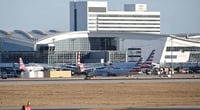
 MBTI Detective Agency |
 kevin Kim |
 Dala Dala |
 jaxter |
  Korean Mom |
  My NYC |
  moo moo |
  Mr Oh |
  forevergee |
  festival |
  manchester |
  constant |
  Leapfrog Move |
  vibranto |
  Tora Tora |
  yellowbutter |
  Dolly |
  US Embassy |
  NYC saladbar |
  Finding Superfoods |
  lightyear |
  song bang |
  vexomo |
  Indiana Jones |