
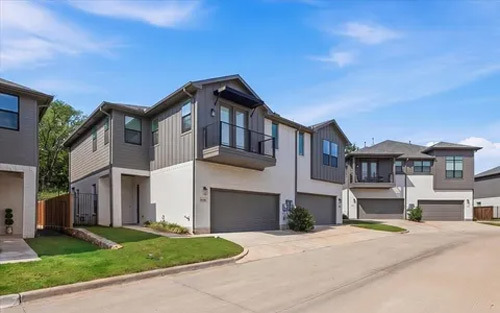
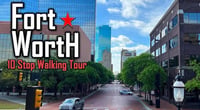
As someone who has observed the Fort Worth real estate market for over a decade, I find the current market trends fascinating.
After the pandemic, we experienced a surge, followed by a sharp increase in interest rates from the Federal Reserve, leading to a cold correction period. Now, it feels like the market has entered a "cautiously stable plateau."
According to recent data from the real estate information platform Redfin, the median home price in Fort Worth is around $338,800 (approximately 339K). This represents a slight decline of about 0.05% compared to the same time last year, indicating that the market is not crashing but rather gently stabilizing and landing smoothly.
Looking at regional variations is even more interesting. Areas near downtown, such as Near Southside and the West 7th Corridor, have maintained solid prices or even experienced slight increases due to active redevelopment and infrastructure expansion.
In contrast, newly developed areas on the outskirts have seen a significant influx of supply, giving buyers more room to negotiate prices and incentives. Currently, the average days on market is between 55 and 57 days, with an average of about two offers per listing. Compared to just 1-2 years ago, when dozens of offers were flooding in for a single home, creating a panic buying situation, it is clear that buyers now have a favorable environment to take the lead.
The median price per square foot is $175, reflecting a decrease of about 1.7% from last year. This figure is significant because it allows investors and homeowners to secure slightly larger and more comfortable living spaces within the same budget.
Particularly, new developments in Keller and Aledo, which are popular among the Korean community due to their good school districts, offer lower costs per square foot compared to the city center while still enjoying the benefits of new construction. This makes them worth considering for maximizing budget efficiency.
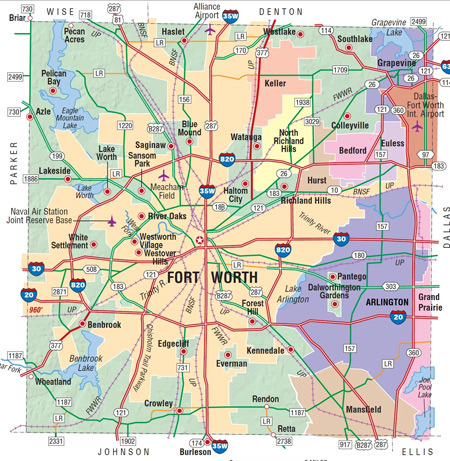
It is also important to touch on the status of the Korean community in Fort Worth for Korean buyers.
In Tarrant County, which includes Fort Worth, it is estimated that around 4,000 to 5,000 Koreans currently reside.
Compared to the large Korean towns in nearby Dallas, Carrollton, and Frisco, the Korean population here is relatively small. However, with a large Korean supermarket just a 30-40 minute drive away in downtown Dallas, and significantly lower housing prices along with excellent value for money, there is a steady trend of young working couples and retirees moving to the suburban new towns of Fort Worth to escape the complexities of big cities.
The outlook for the Fort Worth real estate market this year is cautiously positive. Local experts predict that existing home sales could increase by at least 2% to as much as 14% depending on future interest rate trends. Most encouraging is the steady increase in housing inventory, which has broadened the choices available to buyers.
Of course, the still-high mortgage rates remain the biggest variable, but Fort Worth continues to be seen as having a lower barrier to entry compared to downtown Dallas, and it maintains excellent housing value relative to the cost of living compared to the Texas average.
In conclusion, for buyers looking to purchase a home now, there is no need to rush in this market. Competition has decreased, and inventory is ample. Buyers now have the luxury of calmly comparing and analyzing listings in their desired neighborhoods, allowing them to confidently request seller concessions or price reductions.
As long as the strong economic growth and continuous population influx in Texas support it, the long-term upward trend of the Fort Worth real estate market is unlikely to change easily. If approached strategically, now may actually be a good opportunity.
 BeanWave
 MintStar
 sunsetvibemaker1953
 CloudPoint





 moo moo |
 ultron78 |
 garlic bread |

 urbanmint |
  horse |
 kevin Kim |
 Whoever It Is, I Don't Know |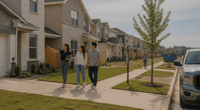
 jaxter |
 mariashin |
  Sunshine Blog |
  Minnesota Small Business |
  Strawberry Pancake Warrior |
  amolayo |
  korvon |
  Que Buena |
  virexo |
  silverpath |
  Komet Park |
  reliable |
  vexo90 |
  As Always Today |
  veltar87 |
  United States National Administrative Organization Stories |
  springwaltz |
  dense |
  Tiger Milk Foam Research Institute |
  Oreore Mushroom |
  optimistic |
  Good Good |