
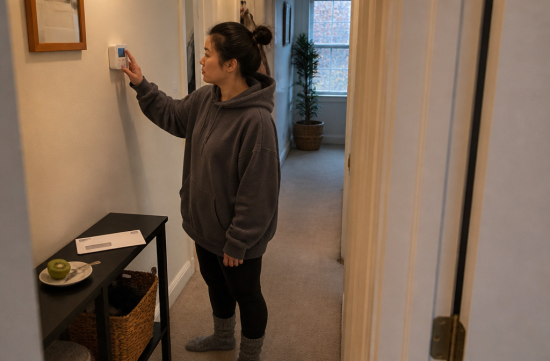
Last night, I finally turned on the heater properly for the first time. Wrapped in a blanket, I was eating half a kiwi with a spoon when suddenly, I remembered the bill from February, and my spoon stopped.
At that time, I couldn't believe my eyes when I saw the gas bill. So, this winter, I decided to be a bit smarter and looked into why the rates are going up.
The first thing to know is the item called "adjustment charges." BGE requested the Maryland Public Service Commission (PSC) to recover the difference because they spent more money in 2023 than planned.
The requested amount was $152.3 million. The PSC cut this down by about half last December.
According to the commission, BGE's request was about double the combined approved adjustment amounts from the previous two years. They believed that giving the full amount would make the rates unaffordable.
The problem is that even though the amount was reduced, the remaining balance will still be added to our bills. The gas adjustment charge started applying from February 2026.
The PSC estimates that the average burden for residential gas customers will be about $1.95 per month. And this will continue until the end of 2027.
This means that this winter and next winter, this charge will keep coming. It may seem like just over $2 a month, but when you think about it lasting nearly two years, it feels a bit annoying.
The Maryland Office of People's Counsel (OPC) summarized that this adjustment charge adds 3.5 cents per therm of gas. Since it's based on usage, homes that use more heating will pay more.
Additionally, the basic delivery charge has also increased. Starting January 1 of this year, BGE's gas delivery charge went up by 4.2 cents per therm to 94 cents.
According to OPC data, as of October, the gas delivery charge is $0.9733 per therm. It honestly feels a bit unfair that the delivery cost is much higher than the actual gas price.
You can't ignore the supply price either. According to OPC, BGE's gas supply cost was about 45 cents per therm for the winter of 2024, but it rose to 62 cents by early this winter.
With delivery charges, adjustment charges, and supply costs all moving together, winter bills keep growing like a pop song chorus. So, what can we do about it?
The first option is budget billing. This method divides your annual usage into similar monthly payments, reducing the shock of a big bill in winter.
The total amount doesn't decrease, but for freelancers like me with fluctuating incomes, just knowing how much I'll pay each month is a relief.
The second option is state energy assistance. You can apply through the Maryland Department of Human Services' OHEP, and for this season, which runs from July 2026 to June next year, the assistance has increased by up to 32%.
The eligibility criteria have also expanded, and the application process has become simpler. If you thought you wouldn't qualify last year, it's worth checking again this year.
By the way, depending on the program, signing up for budget billing can be optional or mandatory. Be sure to ask OHEP and BGE which applies to you.
Starting in January next year, a tiered rate discount will automatically apply to low-income households that apply for assistance through OHEP. Personally, I think this is a really good decision.
When energy costs rise, the first to feel the pinch are households that are already struggling. Everyone faces rate increases, but the ability to cope varies, so I hope these safety nets become stronger.
By the way, the winter crisis assistance window will be open from November 1 to March 31 next year. If your bills are starting to pile up, it's best to contact BGE about payment extensions or installment payments before you fall behind.
The third option is to compare gas suppliers. The PSC also mentioned shopping for suppliers as a way to reduce high winter gas prices this year.
However, you need to carefully review the contract terms. Some plans may be cheap for the first few months but then jump to variable rates, so I will check whether it's a fixed rate and what the cancellation fees are.
Finally, it's about sealing up heat leaks in your home. Applying weather stripping to window gaps, slightly closing vents in unused rooms, and lowering the temperature a bit while sleeping can make a difference.
The EmPOWER charge on BGE bills funds these energy efficiency programs. Since it's money you're already paying, it's beneficial to check BGE's site for free inspections or rebates.
These days, when I hang out with friends, we talk about heating costs as much as we do about concert ticket prices. Everyone laughs while discussing it, but the conclusion is always the same: the more you know, the less you pay.
Today, I set the thermostat to 68 degrees during the day and pulled out a thick hoodie. I feel a bit cute, like a fox in its winter coat.
The adjustment charges are something I can't control, which is frustrating. But budget billing, energy assistance, supplier comparisons, and sealing heat leaks are all things I can do right now.
The kiwi skin may be sour, but the inside is sweet. I hope this winter's bill is less sour than what I've prepared for.
 LeaveOnAvg



 Grow Your Gut Bacteria Well |

 choi family |
 content |

 Carolina border |

 Que Buena |

 Potato House |

 creamcat |

 honeypot |


 MBTI Detective Agency |
 ShyShy dating |
 hihihi |
 kiwifox |
 Silent Sea |
 Masa Masa |
 dewyo |
 summita |
 coconutpath |
 moonlight |
 Dolly |
 Curry Dragon |
 secure |
 tredon |
 Eldorado 88 |
 donggul donggul |
 korvix |
 Noodle Zin |
 Forever Tiger Teacher |
 strongman |