

If a household is considering buying a home as their rental agreement expires, the first question that comes to mind is which option is more advantageous with the current budget: FHA or conventional loans? Savoy provides a relatively clear answer to this question.
So, what are the actual market prices? According to Redfin, the median sale price in Savoy in June 2026 is $409,950, with the average sale price around $400,028. It's also worth noting that the median price of $399,900 in March of the same year represents a 14.9 percent increase compared to the previous year. Within Champaign County, Savoy is considered a neighborhood with relatively high prices.
In this price range, FHA loans are a good fit. Illinois does not have any counties designated as high-cost areas, so the FHA loan limit of $541,287 applies to Champaign County as well. If a home priced at $409,950 is purchased with a 3.5 percent down payment, the loan amount would be approximately $395,600, comfortably within the limit. For first-time homebuyers, the fact that a credit score of 580 or higher allows access with this down payment is attractive. If the credit score is between 500 and 579, the down payment must be increased to 10 percent, so it's advisable to check your credit score range before starting consultations.
When would a conventional loan be better in this area? If the credit score exceeds 680 and a down payment of more than 10 percent can be prepared, switching to a conventional loan may be more advantageous in the long run. The national conforming loan limit in 2026 is $832,750, which is far from Savoy's sale prices, making jumbo loans almost unnecessary in this market. If the goal is to eliminate PMI, a conventional loan with a 20 percent down payment is the answer, while FHA is suitable for reducing initial cash burdens.
What about investors looking for rental income? The proximity to the University of Illinois Urbana-Champaign campus is a clear advantage, as there is consistent rental demand during the academic year. However, the risk of vacancies during breaks and the unique management burdens associated with student tenants should also be considered. Instead of definitively predicting the yield of specific properties, it's safer to research local rental prices and vacancy rates.
Questions about USDA loans often arise as well. According to USDA guidelines, the population must be under 10,000 and not within a metropolitan area. Savoy has a population of about 9,260 but is classified entirely as an urban area and falls within the Champaign-Urbana metropolitan area, so it is not eligible for USDA loans. Conditions may differ in other outskirts of Champaign County, so it's best to check specific properties on the USDA website for individual addresses.
Due to its geographical location near the University of Illinois Urbana-Champaign, Savoy has steady rental demand along with its school district. While school district ratings can be referenced from GreatSchools and state education department data, it's important to verify the assigned school for the specific address before purchasing, as boundaries often change. Families moving from other states should also factor in that property tax levels in Illinois are relatively high. Especially for those relocating from states with lower property taxes, failing to include taxes in monthly payment calculations can lead to underestimating the actual burden.
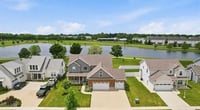
When comparing Savoy with neighboring Champaign and Urbana, there are clear differences in sale prices and inventory levels by area. Savoy, which primarily features new constructions, has the advantage of relatively lower management burdens, while the older neighborhoods nearby often offer larger spaces within the same budget. It's practical to compare not only monthly payments but also maintenance costs.
Ultimately, in Savoy, the ability to make a down payment and the credit score determine the choice between FHA and conventional loans. This article is not investment or legal advice, and it is recommended to consult with a loan officer and experts before making any actual contracts.
 RunWhatcha
 MaskMan





 |
| 
 Premium Gas Camp |
 CA Real Estate |
 cheesepup |
 breezem |
 Smile Face |
 Plastic Rose |
 golfmaster |
 Sammy Beach |
  Bliss O |
  blue ocean |
  greenlight |
  Watanaka Karametibaksa |
  castle |
  xelton52 |
  carefree |
  vrixen73 |
  AZ Road Master |
  Victory 1988 |
  summita |
  business lim |
  Colorado Lee |
  Make My Day |
  Fros Pro |
  lioness |
  La Bean |
  American History This and That |
  Monte Sori |