

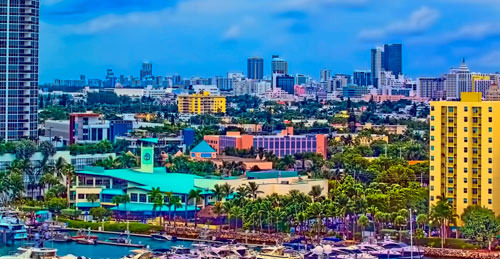
The rent for a one-bedroom apartment in downtown Miami has been over $1,500 for several years now.
Miami's cost of living index is 128, which is 28% higher than the national average of 100.
Housing costs make up the largest portion of Miami's living expenses. According to data from Zillow and RentCafe, the average rent for a one-bedroom in Miami-Dade County is estimated to be between $1,200 and $1,800, with popular areas like Coconut Grove, Brickell, and Miami Beach being significantly higher.
The median price for single-family homes is also approaching levels similar to those in New York and Los Angeles.
It is analyzed that the influx of high-income migrants from New York and California after the pandemic has significantly boosted the Miami real estate market.
Grocery costs are higher than expected, estimated at around $1,100 to $1,400 per month for a family of four, and can increase further if shopping at organic markets or Whole Foods.
Fortunately, Miami has Korean markets and Asian supermarkets located in the Koreatown and Kendall areas, making access to Korean ingredients relatively good. There are also many Korean restaurants, so dining options are not bad.
Transportation costs in Miami are relatively manageable due to the development of public transport, but most Korean households tend to rely heavily on personal vehicles. While there is MetroRail and MetroBus, coverage is limited, making it difficult to live without a car in many areas. Monthly fuel, insurance, and maintenance costs can add up, and car insurance tends to be higher than the national average due to Florida's characteristics.
Utility costs are significantly high due to the hot and humid climate year-round, with electricity bills potentially reaching high amounts in the summer, and an average monthly estimate of around that level. Water and sewer costs are similar to the Florida average, with total utility expenses estimated to be around that amount per month.
The COL of 128 indicates that living costs are not just 28% higher than average, but that the pressure of living expenses significantly impacts the middle class. According to Numbeo data, Miami is among the top 15-20% of high-cost metropolitan areas in the U.S. Compared to other Florida cities like Tampa (105) or Orlando (105), it is nearly 25% more expensive.
For Korean households, Miami offers the appeal of community infrastructure and a warm climate, but a sufficient income level to support the high cost of living, particularly housing costs, is necessary. According to the BLS Consumer Expenditure Survey, it is estimated that a family of four would need an annual pre-tax income of over $100,000 to maintain a middle-class lifestyle in Miami.
Starting with renting rather than purchasing real estate and assessing the local market and price trends before deciding on long-term settlement seems to be a more realistic approach.
 OceanPeak79
 DokdoRoxy
 MisoRadio
 RamenIsLaw







 Smile Face |
 Helpful Life Stories |
 Casa Mia |
 Study Abroad Life Know-How Tips |
 pravix22 |
 Florida King |
 Komet Park |
 My Miami Stories |
 Victory 1988 |
 Cap Com |
  nixxon |
  kevin Kim |
  beerdreamer |
  Kims Spring |
  White bunny |
  Kansas City Representative Singer |
  shadow 007 |
  sun walker |
  Choco Choco Star |
  midnight blue |
  honeypot |
  summer |
  adventure77 |
  flexible |
  Shintongbangtong Shin Naerin James Park |
  truepixel |
  Kathy's Blog |
  Hae Naem |
  quatspace |