
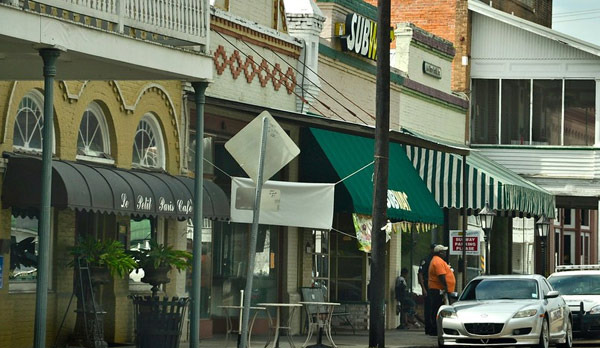
Louisiana is commonly known for its Southern culture represented by jazz, Creole cuisine, the Mississippi River, and New Orleans, but the footprints of Koreans are also significant. Although smaller in scale compared to California or Texas, it is a region where they have quietly put down roots and continue their lives and businesses in their own way.
According to the 2020 U.S. Census, the Korean population in Louisiana is around 5,500, with estimates exceeding 6,000. The numbers may be small, but they have steadily increased since the 1980s, with more than half concentrated in New Orleans and Baton Rouge.
In the early days of Korean immigration, Louisiana was primarily made up of students and professionals. Korean students began arriving in the 1970s and 1980s, centered around prestigious universities like Tulane University and Louisiana State University (LSU), and many settled down as doctors, pharmacists, engineers, and professors. In the 1990s, Korean businesses focused on small enterprises like restaurants, laundries, gas stations, and liquor stores began to grow significantly.
In New Orleans, the proportion of Korean businesses differs slightly from other states. There are many convenience stores, gas stations, and liquor stores operated by Koreans. This is because Korean owners seized this market early on, aligning with the Southern 'corner store' culture. For example, in areas near the outskirts of the city or along River Road, small stores run by Korean families have been passed down through generations. After COVID-19, second-generation Koreans have also begun to digitalize or franchise their businesses.
On the other hand, Baton Rouge has a more active Korean community centered around professionals and students. LSU has over 300 Korean students and staff, and there are Korean-owned establishments like restaurants, cafes, and academies around the campus. Especially in recent years, with the rising popularity of Korean food and K-culture, 'K-BBQ' restaurants and Korean fried chicken specialty shops have increased, broadening the local customer base.
When discussing the Korean economy in Louisiana, one cannot overlook the construction and real estate sectors. After Hurricane Katrina (2005), many Korean technicians and contractors entered the recovery process, and some have grown into local subcontractors or home remodeling businesses. Additionally, with the activation of ports and logistics near New Orleans, many Koreans have entered the trucking and warehouse management industries. Although they may not be as visible as large communities in other states, they play a crucial role in quietly supporting the local economy.
Korean churches serve as the center of the Korean community in Louisiana. There are about ten churches in major cities like New Orleans, Baton Rouge, and Lafayette, which act as community centers. They function as spaces for the early immigrant generation to exchange information and for the second generation to learn language and identity. Recently, the Korean Association has also become more active. The Louisiana Korean Association conducts cultural events, Korean Language Day celebrations, and scholarships, serving as a bridge connecting the community.
From a business perspective, Louisiana has relatively lower taxes and real estate costs compared to other states, and the barriers to entry for businesses are lower. Particularly, New Orleans and Baton Rouge have developed tourism, food and beverage, and logistics industries, providing many entrepreneurial opportunities. In fact, recently, first-and-a-half-generation Koreans have been starting new types of businesses like coffee shops, dessert cafes, and food trucks. There is also a clear trend of second-generation Koreans taking over stores started by the first generation and transforming them into modern brands.
Of course, there are challenges. The Southern administrative system's leisurely pace, high insurance costs, and frequent natural disasters (especially hurricanes) can be burdensome for Korean entrepreneurs. However, even in such an environment, Koreans have consistently maintained their presence through their unique diligence and networks. Louisiana may be small in scale, but it is a Korean community where family-centered business culture and settled life blend well.




 Certified Authentication Blog Page |
 ORAVEZIN Oppa |
 melon90 |
 White bunny |
 Korean Mom |
  My NYC |
  moo moo |
  Mr Oh |
  forevergee |
  festival |
  manchester |
  constant |
  Leapfrog Move |
  vibranto |
  Tora Tora |
  yellowbutter |
  Dolly |
  US Embassy |
  NYC saladbar |
  Finding Superfoods |
  lightyear |
  song bang |
  vexomo |
  Indiana Jones |