
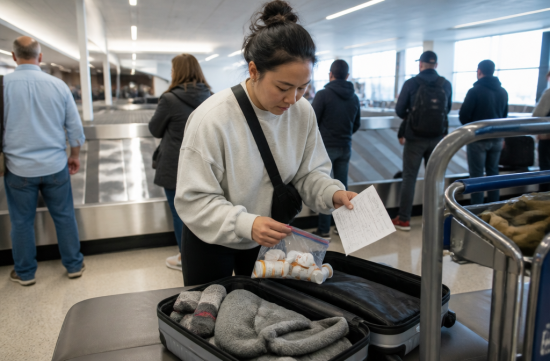
Every time I return from Korea, it seems like one side of my suitcase is always filled with medications. Cold medicine, digestive aids, pain relief patches, and even herbal medicine pouches.
But this fall, I think I need to pack a little differently. The Consular Section of the Embassy of the Republic of Korea in the U.S. issued a notice on August 31 regarding the importation of medications into the U.S.
The key point is simple. Even if the medication was legally prescribed or purchased at a pharmacy in Korea, it may be restricted under U.S. law.
Medications entering the U.S. are subject to both FDA and CBP regulations. If they contain controlled substances like narcotics, DEA regulations apply as well.
So, before you leave, it's important not just to check the product names but also to verify the exact ingredients and dosages, as the embassy advises. Korean product names can be difficult for U.S. officials to recognize.
Imagine this scenario at the airport: an officer pulls out your medications from your bag and asks what they are, but you only have Korean labels, making it hard to explain.
The most basic requirement is to keep the medications in their original containers. CBP advises bringing medications in their original containers with the prescription information printed on them.
If you bring just pills in a ziplock bag without the original containers, there's no way to explain what they are. If you don't have the original container, you should also bring a copy of the prescription or a doctor's note.
It's best to have prescriptions or notes in English. If they include the patient's name, ingredient names, dosages, purpose of use, and doctor's information, they serve as the most reliable documentation.
Quantity is also important. CBP advises not to bring more than a 90-day supply based on general guidelines.
Buying a year's worth of medication just because it's cheaper in Korea does not comply with this guideline. The FDA's personal import policy is not intended to encourage bulk purchases but is an exception for personal medical needs.
What you really need to be cautious about are controlled substances. The ingredients listed in the embassy's notice include many names that might be more familiar than you think.
There are ADHD medications like methylphenidate, sleep aids like zolpidem, anti-anxiety medications like alprazolam and lorazepam, and diazepam. Pain relievers like tramadol and codeine, as well as appetite suppressants like phentermine, are also included.
For medications containing these ingredients, you are allowed to carry a maximum of 50 doses for personal use. You must also have an English prescription or doctor's note.
According to DEA guidelines, controlled substances must be in their original containers and must be declared to customs officials. I was surprised to learn that 50 is a relatively small number.
Additionally, substances that cannot be legally prescribed in the U.S. cannot be brought in, even for personal use. Some medications that are common in Korea may not be approved in the U.S., so be sure to check the ingredients.
You also can't overlook herbal medicine. There are many accounts of people who found it easier to bring herbal medicine when they obtained an English prescription from their herbalist.
However, herbal medicine often contains plant or animal ingredients, which may fall under agricultural or animal-related categories on the customs declaration form. If you're unsure, it's much better to declare it than to hide it.
Speaking of declarations, if you have medications with you, the principle is to be honest when entering the country.
Ultimately, whether you can bring them in is determined by the CBP and relevant authorities on-site. Even if you have all the paperwork, it means you may still be subject to additional checks based on the officer's judgment.
Reports from Korean media have mentioned that medications in question have been confiscated, and there's a possibility of being subjected to secondary inspections on your next entry. You really want to avoid spending hours at the airport over a single bottle of medication.
So, I'm planning to change the order in which I pack this time. I'll take out all the medications I plan to bring and write down the ingredient names one by one.
Then I'll check for any controlled substances, and if there are any, I'll reduce them to within the 50-dose limit. I'll also make sure the remaining medications fit within the 90-day supply.
I'll keep the medications in their original containers or bags, and I'll put the English prescriptions in my carry-on bag separately. If I put them in checked luggage, I won't be able to access them when I need them.
It's also a good idea to keep even light medications like cold medicine or digestive aids in their original packaging. Mixing them in loose form can lead to unnecessary explanations.
This might feel a bit cumbersome for someone experiencing it for the first time. However, once you organize it once, it will be quick for your next visit.
Personally, I wish this kind of guidance had come out earlier and more frequently. I think it's important that information reaches everyone equally to prevent anyone from having their medications confiscated due to ignorance.
And if you're considering changing your medications or substituting them with U.S. medications, don't make that decision on your own. It's safest to consult with a doctor or pharmacist first.
Since regulations can change, be sure to check the CBP and FDA websites, as well as embassy announcements, right before you depart. I plan to review them again before my next trip.
If you organize even a single medication bag in your suitcase ahead of time, you'll be able to walk out of customs much more easily.
 Wave70


 nixxon |
 LIZ Legal Information Blog |
 Karina's Blog |
 Jimbeam 88 |
 Taco Bell Candy Note Blog |
 mini hometown |
 King County |
 forward |

 kingdom |
 harvest |
  Washington Monument |
  Forever Young |
  crystalx |
  Spaghetti Flying Religion |
  lunarpath |
  Another Eden Channel BLOG |
  sprinkletop |
  bongo |
  savannah choi |
  Successful Manager Kim's Team |
  crystalo |
  Canvas Pro Blog |
  Time Management Enthusiast |
  Cap Com |
  kevin Kim |
  beerdreamer |
  Kims Spring |
  White bunny |
  Kansas City Representative Singer |