

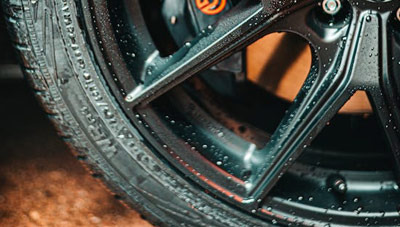
Many people equip their cars with low aspect ratio tires to enhance aesthetics or driving performance.
Commonly referred to as 'low profile tires', they provide a sporty appearance due to the reduced gap between the wheel and tire, and improve handling. However, low profile tires have relatively lower shock absorption capabilities and require more careful maintenance.
Here is some useful information and maintenance tips for low profile tires, as well as how to handle a flat tire.
What are Low Profile Tires?
- Aspect Ratio: The ratio of the tire's sidewall height to its width expressed as a percentage (%).
- Example: In 225/40R18, '40' is the aspect ratio, and the lower the number, the thinner the sidewall, hence the term "low profile".
Features
- Sporty Driving Feel
- The thinner sidewall allows for quicker response during cornering and stable handling.
- Stylish Appearance
- The wheels appear larger, giving the car a sportier and more sophisticated image.
- Reduced Shock Absorption
- The lower the aspect ratio, the more direct the road shocks are transmitted, resulting in a stiffer ride.
- Increased Road Noise
- Noise and vibrations may feel more pronounced compared to regular tires.
Maintenance Tips
Regular Air Pressure Checks
- Low profile tires are sensitive to changes in air pressure. If the pressure is too low, the wheel is directly exposed to road shocks, and if too high, ride comfort decreases.
- Always check the appropriate air pressure before long trips or monthly.
Check Wheel Condition
- Due to the thinner sidewall, shocks are easily transmitted to the wheel, increasing the risk of deformation or damage.
- Even small potholes can transmit significant shocks, so check for wheel deformation if you experience any impact while driving.
Balanced Driving Habits
- Sudden starts, abrupt stops, and fast passes over speed bumps put excessive load on the tires and wheels.
- Since low profile tires absorb less shock than regular tires, it is important to pass over bumps and uneven surfaces slowly.
Regular Tire Rotation
- To maintain even wear between the front and rear tires, regular rotation is important.
- Low aspect ratios can lead to uneven wear, so do not miss the timing for rotation along with air pressure checks.
Use Genuine Tires and Parts
- With low aspect ratios, the strength and durability of the tire itself become crucial.
- For safety, it is recommended to use genuine tires from brands and wheels that meet specifications.
How to Respond to a Flat Tire
Ensure Vehicle Safety
- If you have a flat tire, first turn on your hazard lights and move the vehicle to a safe area if possible. If on a highway, move outside the guardrail to prevent secondary accidents.
Check the Location of the Flat
- Low profile tires have thinner sidewalls, making them more susceptible to side damage. If the sidewall is damaged, replacement is often necessary instead of repair, so it is important to check whether the damage is on the tread or sidewall.
Use Emergency Kit or Spare Tire
- Many modern vehicles come with a tire repair kit instead of a spare tire.
- Use the emergency repair kit (sealant + compressor) for a temporary fix, and head to the nearest repair shop for proper repairs.
- If you have installed a spare tire (not the same size as the original), avoid high-speed driving and head to the repair shop quickly.
Consider Using Run-Flat Tires
- Some low profile tires have run-flat capabilities, allowing you to drive a certain distance even after a flat.
- If your vehicle is equipped with run-flat tires, follow the driver's manual for specified speed and distance before heading to the repair shop for replacement.
Visit a Repair Shop
- A flat tire cannot be resolved by merely sealing the surface; the wheel's deformation and internal damage must also be checked.
- Low profile tires can sustain internal structural damage upon impact, so a professional inspection is essential.
Low profile tires offer great design and excellent handling, but they require careful maintenance and attention. Regular air pressure checks, safe driving habits, and periodic inspections can help you enjoy low profile tires without major issues. If you do experience a flat, prioritize safety above all and seek a repair shop quickly after taking emergency measures.







 Toaster Pizza Magic Show |
 US Embassy |
 fortbliss |
 Folding Instructions |
 yentra |
 neroyo |
 celion78 |
 Say IT Now |
 US Legal Consultation on Trials |
  laro90 |
  MEDBIO American Doctor Blog |
  SWAT TEAM BLK |
  DREAM BIG |
  frostbite |
  330 Forever My Love |
  El Dorado |
  dralix58 |
  Gorama Round |
  Skydiving |
  dreamport |
  Yellow Snowman |
  velvetnom |
  Anytime Journey |
  Mrs. Duluth |
  jaxter |
  Atlanta Mama |
  Baguette Blog |
  Tan Sol |