
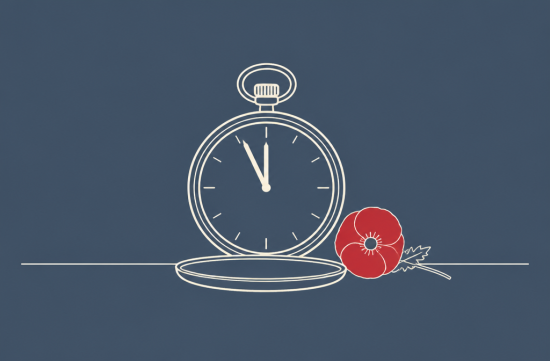
As November arrives, there is one date that stands out on the calendar: November 11, Veterans Day.
It's a day that is often remembered only through supermarket discount flyers or bank holiday notices, but this date is associated with a very specific time. At 11 AM on November 11, 1918, the gunfire on the Western Front of World War I ceased.
With three matching numbers, it seems almost as if someone planned it that way. In fact, stories have circulated for a long time that the time was chosen because of its symbolism.
However, the signing of the armistice did not occur at 11 AM. That morning, around 5 AM, in a train carriage set up in the Compiègne Forest in France, Allied Supreme Commander Ferdinand Foch and the German delegation signed the documents.
The recorded signing times vary slightly, with some sources stating 5 AM and others 5:10 AM. What is certain is that there was nearly a six-hour gap between the signing and its enforcement.
This six-hour gap always weighs on my mind. Both sides' command knew the war was ending, yet fighting continued on the front lines during that time.
Records indicate that many soldiers fell during that interval. One name has remained known to this day.
Sergeant Henry Gunther from Baltimore. Most accounts state that he was shot while charging toward a German machine gun nest at 10:59 AM, just one minute before the armistice took effect.
The National Archives records the time as 10:58 AM. Whether it was one minute or two, the fact remains that if he had just stayed down a little longer, he could have returned home.
General John J. Pershing, commander of the American Expeditionary Forces, officially recorded him as the last American soldier to die in World War I the next day. Historians have differing interpretations of why he stood up at that moment.
Every time I read this part, I reflect on the meaning of perseverance. Sometimes, the last few minutes before the end can be the longest and most dangerous.
There are similarities in work and life's challenges. I have seen many instances where people stumble just when they feel they are almost there.
Exactly one year after the gunfire ceased, on November 11, 1919, President Woodrow Wilson declared this day the first Armistice Day.
Initially, it was a day to honor World War I veterans. In May 1938, it became a federal holiday.
The name changed due to the subsequent wars. As many more veterans emerged from World War II and the Korean War, it became clear that a name honoring only World War I veterans was no longer appropriate.
Raymond Weeks, a World War II Navy veteran from Birmingham, Alabama, started a parade for all veterans in his hometown in 1947. He is often referred to as the father of Veterans Day.
In 1954, a bill introduced by Congressman Edward Rees from Kansas was passed. When President Eisenhower signed the amendment on June 1, the word Armistice was changed to Veterans.
As a Korean American, it resonates with me that Korean War veterans are included in this name. Without that war, our lives today would be very different.
Interestingly, this date was once altered. Under the Uniform Holiday Bill passed in 1968, Veterans Day was moved to the fourth Monday in October, and it was first observed that way on October 25, 1971.
The intention was to create a long weekend, but the response was not favorable. Many states insisted on keeping the original date, and veterans' organizations opposed the change.
Ultimately, in 1975, a law signed by President Ford restored Veterans Day to November 11 starting in 1978. This confirmed that the significance of that day and time outweighed convenience.
I find this aspect very American. Even when choosing convenience, people return to their roots when faced with the weight of memory.
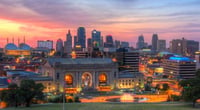
The place where this story feels most vivid is the Liberty Memorial on a hill in Kansas City, now the National World War I Museum.
On November 1, 1921, the dedication ceremony for this site brought together Foch, General Pershing, and commanders from Britain, Italy, and Belgium. Then, on November 11, 1926, President Coolidge officially dedicated the memorial.
Standing beneath the tower and looking down at the city, the wind can be quite cold. Yet, if you stand there for a moment, your cluttered thoughts strangely settle.
This year, Veterans Day falls on a Wednesday, so many people will be working. How about taking a moment at 11 AM to pause and be silent for just one minute?
If there are any elders around you with military experience, a brief greeting would be nice. Such small gestures often leave a more lasting impression than grand events.
The 11 AM that marked the end of gunfire was a time created by those who persevered until the end. We too should try to endure our last minute a little more thoughtfully and a little more firmly in our own challenges.
 goldenvalleytraveler1919
 sunsetdreamrider1974






 xylora |

 Tan Zoo |

 hot chocolate |

 Chichiki Chicago Train |
 Noodle Noodle |

 dravion |

 Ansaso |
 keltrio |

 Iri Jori Missouri |

 fonix |
 MacMorningBlog |
 Encyclopedia of New York and Surrounding Areas |
 romeo JU |
 Folding Instructions |
 See It |
 memorabilia |
 H Leader |
 Carolina border |
 linex |
 Victory 1988 |
 washington mom |
 Deep South Mississippi |
 moomoon |
 premium |
 hexora |
 jammybear |
 chiobase |
 jondol |