
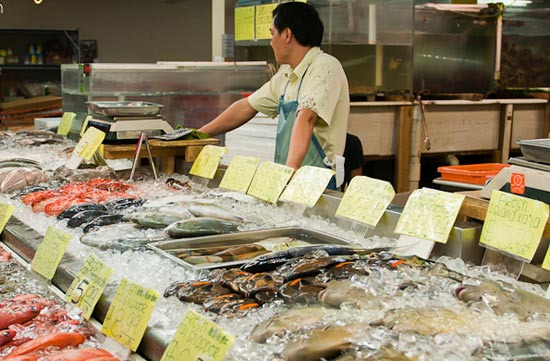
When you go to Hawaii, one significant difference from the mainland United States is the number of people who enjoy seafood. Here, people naturally seek fish more than meat, and seafood occupies a large portion in supermarkets, making fish dishes a staple not only on everyday tables but also at parties.
Among them, the representative fish that is especially loved locally are Ahi and Mahi-mahi. These are not just fish that tourists hear the name of and pass by; they symbolize Hawaii's food culture and pride.
First, Ahi refers to a group of tuna species centered around yellowfin tuna, and in Hawaii, Ahi is as common an ingredient as kimchi is in Korea. It is popular in sushi restaurants, but Hawaiians prefer to enjoy it in the form of Poke, which is eaten raw.
Ahi Poke is conceptually similar to a fresh tuna salad, where the flavor is strongly enhanced with just soy sauce, sesame oil, onions, green onions, and a sprinkle of pepper. Its rich yet clean taste makes it a versatile ingredient that anyone, from children to adults, can enjoy without any dislikes. For Koreans, it strongly evokes the feeling of being a 'rice thief.' In fact, one of the first seafood items to sell out at Costco is Ahi Poke.
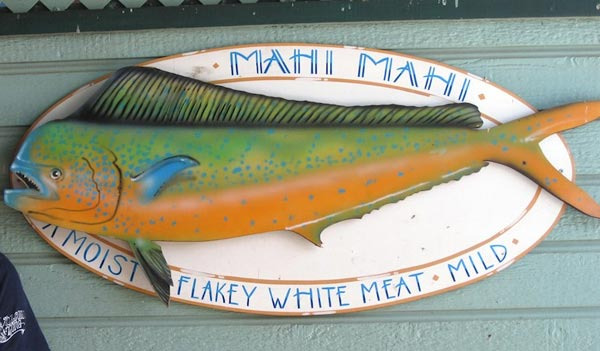
On the other hand, Mahi-mahi may be a somewhat unfamiliar fish to Koreans.
Due to its name, some may mistakenly think, 'Is it whale meat?' but it is not related at all; it is a species close to white-fleshed fish called Mahi-mahi. Its flesh is firm and has little fishy smell, making it versatile for grilling, burgers, and tacos.
Especially, Hawaiian-style fish tacos or Mahi-mahi burgers are dishes that travelers find hard to forget after trying them once. When grilled, the flesh is firm and bouncy, providing a satisfying chew, and when fried, it does not absorb much oil, giving a clean taste. Thus, it is a fish that is consistently loved locally as it is easily approachable even for those who find fish daunting.
In addition to these two fish, Hawaii has various local species that appear on the table. The fish called Ono is characterized by its light umami and mildness, and when grilled like a steak, its unique umami flavor comes alive.
Also, Opa is a large red-fleshed fish that offers a texture reminiscent of a cross between tuna and salmon, treated as a premium menu item in restaurants. Although it may look unfamiliar, many fish leave you wondering, 'Why hasn't this flavor been known until now?' once you taste them.
The charm of Hawaiian fish is not just in their taste. The way they are caught is deeply connected to local culture, where freshness is a source of pride. Local fishermen set out early in the morning to catch fish that go directly to supermarkets or poke specialty shops, and it is common for the fish to be sold out on the same day they are caught. The strong cycle of 'consuming local species locally' ensures that freshness and the local economy thrive together.
The popular fish in Hawaii is not just a seafood menu but a culture that is woven into people's lives, eating habits, and landscapes. When you order a plate of fish at a tourist restaurant during your travels, it is not just a dish; it is food that embodies the local sea, fishermen, and life, making it even more special. Therefore, when you go to Hawaii, it is said that you truly experience Hawaii only when you eat the fish given by the sea, not just look at the ocean.








 victoria 68 |
 Hawaii Tourist Information |

 TEX MEX STAR |
 Vacation on Hawaii |
  US Embassy |
  Korean Mom |
  My NYC |
  moo moo |
  Mr Oh |
  forevergee |
  festival |
  manchester |
  constant |
  Leapfrog Move |
  vibranto |
  Tora Tora |
  yellowbutter |
  Dolly |
  NYC saladbar |
  Finding Superfoods |
  lightyear |
  song bang |
  vexomo |
  Indiana Jones |