

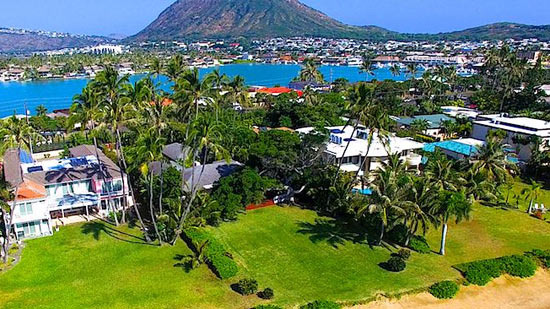
After living in Hawaii for a long time, you naturally start hearing the question, "Where is the real wealthy neighborhood?"
Most people judge Hawaii based solely on Waikiki, but when you look at actual home prices and living conditions, the story changes.
This island has a limited amount of land, so what ultimately influences prices is simple: Is there an ocean view? Is it quiet? How accessible is it to the city?
Once these three conditions are met, home prices rise sharply. Oahu fits this background well.
When talking about wealthy neighborhoods, you can't skip Kahala. Kahala is the neighborhood in Oahu that has the strongest 'old money' vibe.
It's just about a 10-minute drive from Waikiki, but the atmosphere is completely different. There are almost no tourists, and the streets are quiet. Especially, Kahala Avenue feels like a different world.
Homes right by the ocean are generally priced at over $5 million by today's standards, and prime locations easily exceed $10 million.
According to Zillow, the median price of single-family homes in Kahala is around $2 million to $2.5 million, but the actual experience feels much higher.
This is because the properties available for sale are limited. This is not a neighborhood where homes are put up for sale; it's a neighborhood that changes hands as generations pass.
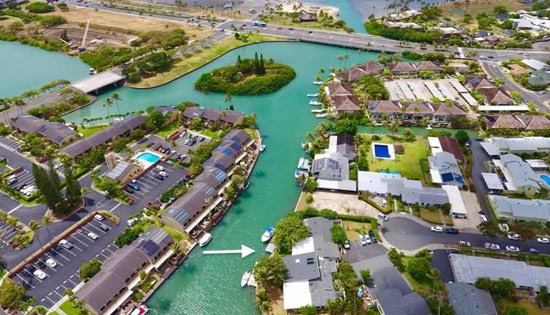
Next is Hawaii Kai. This place feels completely different. While Kahala is a traditional upscale residential area, Hawaii Kai is a lifestyle-oriented wealthy neighborhood.
Designed around a marina, homes with boats are common. This structure is hard to find on the mainland U.S. A home that allows direct access to the ocean
adds a premium on its own. The median price for single-family homes is around $1.5 million to $1.8 million, but properties along the marina can easily go for over $3 million.
Condos are also not cheap. It's common for condos with good views to exceed $1 million. However, there are clear downsides.
Commuting to downtown can be quite stressful due to traffic. Therefore, many people in this neighborhood choose "quality of life over commuting."
Manoa Valley is another area to consider. Living here, you might wonder, "Is it really Hawaii with this much rain?" because the weather is different.
With mountains at its back, it rains often and is frequently foggy. However, the greenery is overwhelming.
The University of Hawaii at Manoa campus is right next door, leading to a high proportion of professionals like professors, researchers, and doctors.
The median home price is around $1.2 million to $1.8 million, but due to the large lots and many older homes, prices can vary significantly depending on renovations.
Personally, I see it as a neighborhood chosen by those who want to live quietly for a long time.
And you can't forget about the area around Diamond Head. The Diamond Head area itself is premium real estate.
It's close to Waikiki and right by the ocean. Especially, the coastline known as Gold Coast is one of the rarest locations in Oahu.
It's common for a condo to exceed $2 million, and single-family homes rarely come on the market.
The characteristic here is not just that it's expensive, but that "there are no substitutes." This is the key factor driving up real estate prices.
Areas like Kaimuki, Kapahulu, and parts of Kakaako have also seen significant increases in recent years.
Especially Kakaako has a strong emerging wealthy neighborhood feel due to concentrated condo development. However, it's closer to being a "new high-income residential area" than a traditional wealthy neighborhood.
Oahu fundamentally has a shortage of land, so it continues to build upward in this manner.
In summary, Kahala represents tradition and stability, Hawaii Kai represents lifestyle, Manoa represents nature and academia, and Diamond Head represents scarcity.
If you understand these aspects well, you can almost read the entire Oahu real estate market. In reality, after living here for a long time, homes on this island are not just living spaces; "the location itself is an asset."
However, one downside of living in Hawaii is the time difference with the mainland U.S. Especially for those on the East Coast, there is a 5-6 hour difference, which often leads to mismatched work or call timings.
When you wake up in the morning, it's often already afternoon on the mainland, and important meetings can be scheduled for early morning or even before dawn.
The second downside is the cost of living. Due to the island structure, most goods are brought in from outside, leading to generally higher prices for groceries, dining, and housing compared to the U.S. average.
Especially, the burden of fresh food and dining out can feel significant. Ultimately, life can feel less like 'leisure' and more like 'how well can you endure high costs.'





 moo moo |
 ultron78 |
 garlic bread |
 Sugar Cream Door Bulletproof Noodles |
 urbanmint |
 HAWAII Korean Church News |
 victoria 68 |
 Hawaii Tourist Information |

 TEX MEX STAR |
  apricotla |
  Soy Angelino |
  nati8 |
  NE Hodori Preik |
  washington mom |
  celtics |
  Balancework |
  round1 |
  Way to easy |
  musicque |
  road98 |
  Churros Train Conductor |
  gleeful |
  Burbank Lee |
  Olivia's Blog |
  Bushing Around Life |
  Active |
  Cherokee Rose |
  Kor. Master |
  Holey Moley |