

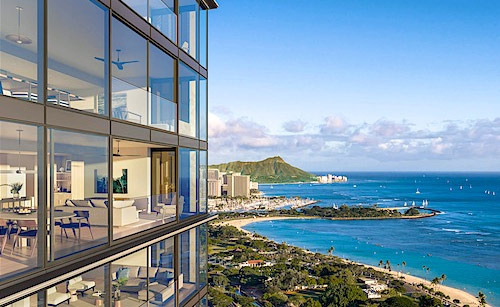
When you start to take an interest in Hawaii real estate, you might think, "Wouldn't it be nice to buy a condo near Waikiki and run it as an Airbnb?"
However, when you actually look into it, you realize that the market is much more complicated than you expected.
One of my acquaintances bought a condo in Oahu a few years ago and started running short-term rentals, but now he is experiencing more stress due to regulatory challenges.
This means that Hawaii real estate is not a market you can approach simply because there are many tourists.
First of all, the prices are not easy to handle. As of 2025, the median price for single-family homes in Oahu is around $1.11 million.
When you add property taxes, HOA fees, and insurance premiums, the holding costs are significant. In particular, insurance premiums have risen sharply in recent years, increasing the burden on investors.
Many people approach this market only looking at short-term rental profits, but the reality is different than they think.
During peak seasons, you can expect high booking rates, but during off-peak times, vacancies can increase significantly.
Even if you make good profits during the winter and summer tourist seasons, how to survive the rest of the year is more important.
Above all, the biggest variable in recent years has been regulation. In 2024, the governor of Hawaii signed Bill SB2919, giving each county the authority to regulate short-term rentals more strictly. This is a reflection of public opinion that tourist housing is encroaching on the living spaces of local residents.
In Oahu, areas where short-term rentals are allowed and not allowed are already clearly defined. Except for resort areas and some permitted zones, short-term rentals of less than 30 days are virtually impossible, and some residential areas have regulations requiring rentals of 90 days or more.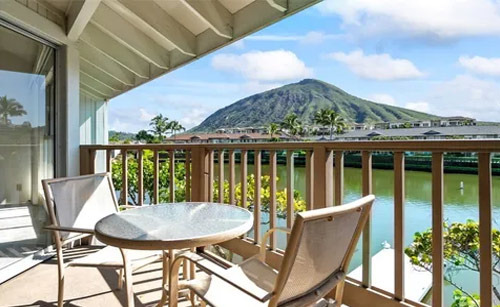
The problem is that the prices of properties in areas where short-term rentals are legally allowed already reflect a significant premium.
Investors are aware of this value. Condos in good locations have high purchase prices, and when you subtract management fees, cleaning costs, Airbnb fees, and maintenance costs, the actual net profit is often lower than expected.
Recently, the atmosphere of regulation has been tightening even more. In 2025, taxes related to accommodation and vacation rentals were also increased to fund climate change response resources. The more tourists in an area, the greater the tax and regulatory burden.
Personally, I believe that approaching Hawaii real estate as a "dream vacation spot" is likely to lead to disappointment. This is not a market to decide on based solely on pictures of ocean views. Instead, you should first consider whether it can be converted to long-term rentals, what the HOA regulations are, and whether there is a possibility of further tightening regulations in the future.
Especially in a situation where various regions in Hawaii are considering policies to reduce short-term rentals to expand housing supply, this is even more critical. In fact, some areas are pushing for policies to reduce short-term rentals by thousands.
Ultimately, the key to investing in Hawaii real estate is calculating vacancy rates rather than enjoying a beautiful ocean view, and cash flow is more important than palm tree scenery.Rather than thinking, "There are many tourists, so it should work out," I believe it is much safer to first calculate, "Can I survive if short-term rentals are restricted?"
Data often beats dreams, and Hawaii real estate is particularly close to that reality.
 SkyBreeze
 Uptown





 neapolis |
 moo moo |
 ultron78 |
 garlic bread |
 Sugar Cream Door Bulletproof Noodles |
 Hawaii Tourist Information |
 HAWAII Korean Church News |


 ASURA |
  rapids |
  Softember |
  mykiwi blog |
  Maria Mom |
  Watch for possible danger |
  northpeak |
  Far East Movement |
  Light of the World |
  mariashin |
  lavender |
  Bridgo |
  Tamfa Fan |
  Sunny Sunday |
  mini hometown |
  torvia |
  Chichiki Chicago Train |
  Univ Student |
  See It |
  Con Cheese |