
These days, the morning air in Denver has changed significantly. When you open the window, you can feel the chill on your nose, and by the time you leave work, the sun has already set.
This time of year, everyone tends to open the Xcel app and sigh. There's a number this year that we can't just overlook.
This is about the 2026-27 Winter Fuels Outlook released by the U.S. Energy Information Administration (EIA) on October 6. While heating costs for natural gas are expected to decrease nationwide, the West is marked as an exception.
The EIA predicts that heating degree days, a measure of heating demand in the West, will increase by 25% compared to last winter. In simple terms, this means they are anticipating a significantly colder winter than last year.
Interestingly, the price of gas itself is expected to decrease. The forecast for residential natural gas prices in the West is $15.10 per 1,000 cubic feet, which is 8% lower than last winter.
However, the weather will negate that effect. The projected winter natural gas expenditure for West households is expected to rise by 7% to an average of $590.
The national average is projected to decrease by 9% to $640, which honestly feels a bit unfair. The unit price has dropped, but we'll have to use more.
For homes that use electric heating, there's not much comfort either. The EIA predicts that expenditures for electric heating households will increase by 4% on average nationwide.
Of course, this is just a forecast. Actual conditions can vary greatly, and the EIA advises viewing this as a rough guide comparing regions.
Still, the trend is clear. So today, I'll outline what you can do before the bills arrive.
The first step is the easiest and costs nothing: adjusting your thermostat settings. The U.S. Department of Energy (energy.gov) recommends lowering the temperature by 7-10 degrees Fahrenheit for 8 hours a day to save up to 10% on heating and cooling costs annually.
The key is to target the times when you're sleeping or away from home. It's not about shivering while you're awake.
Xcel has also recommended similar guidelines every winter. They suggest setting the temperature to around 65-70 degrees when you're home and 58 degrees when you're away.
However, there are exceptions. The Department of Energy notes that systems like steam heating or radiant floor heating, which take several hours to respond, may not be suitable for setbacks.
If you have a heat pump, be cautious about lowering the temperature too much, as it may trigger auxiliary electric heaters. Check the manual or consult your installation company first, as this can vary by equipment.
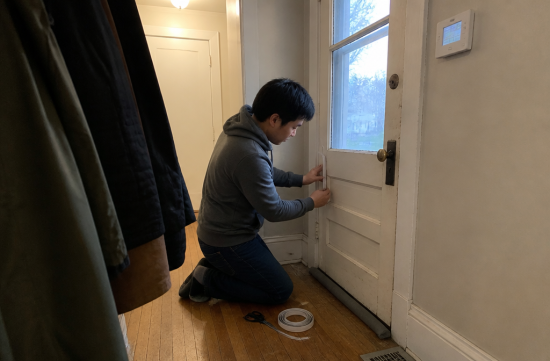
The second step is to stop heat leaks. Denver's dry and windy conditions mean that heat escaping through door gaps and window frames can be significant.
The Colorado Public Utilities Commission (PUC) has stated that improving insulation in walls, crawl spaces, floors, and ducts is one of the fastest and most efficient ways to reduce energy costs. It can potentially lower your monthly bill by up to 10%.
If major renovations feel overwhelming, you can start with weatherstripping tape and a draft stopper for under the door. You can find these for just a few dollars at places like Home Depot.
If you live in an older home, check the condition of the attic insulation. If it's compressed or has gaps, heat is escaping through those areas.
The third step is to take advantage of rebates. Xcel runs programs that offer rebates for high-efficiency furnaces or insulation work.
The amounts and conditions change every year, so be sure to check the Xcel website before starting any work. You can also use the Colorado Energy Savings Navigator introduced by the PUC to find available benefits all at once.
The fourth step, which is really important, is to apply for the state government heating assistance program, LEAP, if you meet the income criteria.
Applications for the 2026-27 season will start on November 1 and continue until April 30, 2027. Eligibility is based on households earning 60% or less of the state median income.
You can apply through the Colorado PEAK website or by calling 1-866-HEAT-HELP. For the most accurate information, check the income guidelines directly on the Colorado Department of Human Services (CDHS) LEAP page.
I've always felt that these programs are less known than they should be. Many people skip them because they're intimidated by the English paperwork or wonder if they qualify.
Lowering your home temperature excessively during a cold winter due to heating costs can lead to health issues. These safety nets are there for a reason, so don't hesitate to use them.
In summary, start by adjusting your thermostat schedule today, and this weekend, seal those door gaps.
Check for rebates before any work, and if you qualify, apply for LEAP right away. If I were you, I'd make sure to finish adjusting the thermostat and sealing the door gaps within this week.
No one knows for sure how cold this winter will be. However, having your home prepared in advance will definitely help when you open your January bill.
 Valley74






 Grow Your Gut Bacteria Well |

 choi family |
 content |

 Carolina border |
 Que Buena |

 Your Curiosity Resolved |

 COLO COLO |

 Jean Claude Bundang Blog |


 Univ Student |
 Good Hotels |
 heartwarming |
 Blogging with a Heart Like the Sun |
 peace |
 The Bread Lover Runs on Bread |
 yogurt 1 |
 Macon Boy |
 Joyce 77 |
 The Yellow |
 bluebird |
 Epoca News |
 Samttugi Grasshopper Noodle |
 kansan55 |
 Skyline |
 Investment Information News Update |
 diamondo |
 Fairfax Fox |
 kuku 100 |
 US Embassy |
 Kims Spring |