
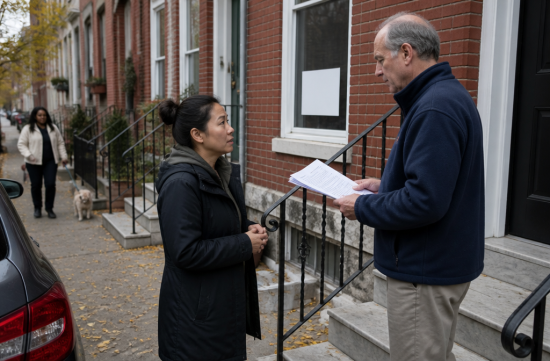
As November approaches, both those receiving lease renewal notices and landlords looking to fill vacant units before winter are pondering the same question: which way is the Philadelphia market leaning?
First, let's clarify the reference point. At the time of writing this article, the official figures for October have not yet been fully released, so I will base my comments on the most recent confirmed data: September sales, August rents, and early November interest rates.
Looking at sales, according to Redfin, the median sale price in Philadelphia for the three months leading up to September was around $279,000, which is a 4.6% increase from a year ago.
However, it would be misleading to conclude that the market is hot based solely on price. The time it took for homes to sell during the same period was 53 days, longer than last year's 49 days.
In September, the number of transactions was 3,560, down from 3,674 in the same month last year. Prices are holding steady, but the pace of sales is slowing; that's how I interpret the situation.
The primary factor behind this trend is, of course, interest rates. According to Freddie Mac's weekly survey, the average 30-year fixed rate was 7.24% on October 29 and 7.18% on November 5.
It's good news that rates have decreased for three consecutive weeks. However, compared to the same time last year when rates were at 6.22%, they are still nearly a full percentage point higher.
This difference means that even for the same loan amount, the monthly payment can vary significantly. Many potential buyers are stepping back after crunching the numbers.
The rental side of things has a slightly different atmosphere. As of August, the median asking rent in the Philadelphia metropolitan area was $1,772, which is a 0.3% decrease from a year ago.
What's noteworthy is not just the numbers but the conditions. Over a third of rental listings during the same period were offering incentives such as one month free or waived fees.
According to Costa Bodo, downtown apartment rents recorded their first monthly decline of the year in August. This is interpreted as a seasonal shift following the peak rental season.
However, negotiating isn't easy everywhere. Reports indicate that in popular neighborhoods with high demand, landlords have already started to reduce the incentives they offer.
So, the primary concern for tenants is likely this: Should I accept the renewal offer now, or should I look for another place?
When you lay out both options side by side, the answer becomes clearer. Renewing saves on moving costs and time but leaves little room for negotiating the increase.
On the other hand, searching for a new place can be cumbersome, but newer large complexes are more likely to offer winter incentives. The off-season is traditionally a time that favors tenants.
If I were a tenant receiving a renewal notice, I would capture two or three asking prices for similar units nearby. I would use that as leverage to negotiate the increase or ask for one month free.
There's one more change this month that you should be aware of. A package of tenant protection laws passed by the city council and signed by Mayor Parker in May went into effect on November 1.
This package, commonly referred to as the Safe Healthy Homes law, centers around the Rental Suitability Certificate. If requested by a tenant, landlords must provide this certificate within ten days.
If a landlord rents without a valid rental license and this certificate, tenants have grounds to sue for a refund of rent paid during that time.
Philadelphia has always required a rental license to legally proceed with eviction. There are also separate procedures that must be followed before a tenant can face eviction proceedings.
From the landlord's perspective, this does increase their burden. The landlord association HAPCO has filed a lawsuit challenging the law's passage, so some provisions may change based on future court rulings.
However, rather than waiting for the outcome of the lawsuit, it's better to get your paperwork in order now. I recommend checking the license expiration date, any unresolved L&I violations, and the certificate issuance date all at once.
There are some nuances in the deadlines and procedures that can vary in interpretation. It's safest to verify directly with the city's Fair Housing Commission and L&I official pages, and if there are disputes, consult with local tenant advisory organizations or attorneys.
For those looking to buy a home, I would say that there's no urgent reason to rush or to delay in this market. With properties staying on the market longer, there's room to request price adjustments or closing cost assistance.
Conversely, for sellers, if there's no response within the first 2-3 weeks, it's realistic to reconsider the price. The 53-day average is quicker than it seems.
In summary, while prices are holding steady, transactions are slowing down, and the rental market is benefiting from off-season incentives. Additionally, new tenant protection regulations have been introduced starting in November.
Once the official figures for October are released, I will reassess whether this trend continues. If I were in the position of a tenant, I would focus on negotiating, while landlords should prioritize organizing their paperwork this winter.
 DailyGear







 B.I.G. Victor |

 Amber H |
 uplifted |
 Dr. Kelso |

 silents |

 DelphiaMo |

 laughing |

 Northeastern |

 Texas Migration Story |

 whimsical |
 Good Hotels |
 heartwarming |
 Blogging with a Heart Like the Sun |
 peace |
 The Bread Lover Runs on Bread |
 yogurt 1 |
 Macon Boy |
 Joyce 77 |
 The Yellow |
 bluebird |
 Epoca News |
 Samttugi Grasshopper Noodle |
 kansan55 |
 Skyline |
 Investment Information News Update |
 diamondo |
 Fairfax Fox |
 kuku 100 |
 US Embassy |
 Kims Spring |