

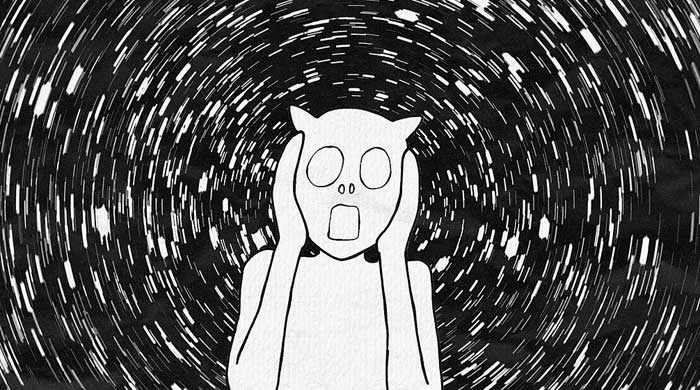
Panic disorder is more common in the U.S. than one might think.
According to mental health statistics, about 4-5% of the adult population in the U.S. is estimated to experience panic disorder at least once in their lifetime.
It goes beyond simply feeling anxious or tense; it involves experiencing sudden, intense fear and physical symptoms without any apparent reason. Typically, the heart races, breathing becomes difficult, hands and feet tremble, and cold sweat pours down, accompanied by an overwhelming fear of 'possibly dying right now.'
When these attacks recur, the anxiety of not knowing when they will strike again can lead to avoidance of going out or specific places, significantly restricting daily life. Especially in a fast-paced and competitive environment like American society, the trend of receiving a panic disorder diagnosis is increasing.
According to the DSM-5 criteria published by the American Psychiatric Association, panic disorder is defined as 'the occurrence of unexpected panic attacks that are recurrent, followed by a fear of having more attacks or worrying about the consequences of the attacks (e.g., heart attack, being treated like a crazy person).'
Attacks peak within minutes and are accompanied by various physical symptoms.
Interestingly, it is often difficult to distinguish this from a heart attack or respiratory issues, leading many first-time sufferers to rush to the emergency room. However, tests reveal no physical abnormalities, and a diagnosis of a mental health issue is ultimately made.
So, what is the difference between PTSD (Post-Traumatic Stress Disorder) and panic disorder? Both conditions primarily feature anxiety as a symptom, but their backgrounds and manifestations differ significantly.
PTSD is, quite literally, a condition that arises after experiencing a 'traumatic event.' After life-threatening experiences such as war, sexual violence, serious accidents, or natural disasters, the memories resurface persistently, leading to avoidance and hyperarousal symptoms that disrupt daily life. For example, a veteran may freeze at the sound of gunfire, or a traffic accident victim may experience flashbacks in similar situations.
In contrast, panic disorder can begin suddenly without any clear traumatic experience.
It is influenced by a combination of factors such as the brain's anxiety system, physiological responses, genetic factors, and life stressors. Thus, PTSD is classified as a 'trauma disorder following a specific event,' while panic disorder is categorized as an 'anxiety disorder that arises unpredictably.'
The manifestations of symptoms also differ slightly. PTSD patients repeatedly recall past traumatic memories, suffer from flashbacks and nightmares, avoid related places or situations, and remain in a constant state of tension, reacting excessively to minor stimuli.
Conversely, panic disorder patients primarily experience sudden physical attacks and reduce their range of activities due to the fear of another attack. In simple terms, PTSD is a condition where 'the shadow of past events' dominates the present, while panic disorder is a condition where 'the fear of potential future attacks' governs the present.
In American society, both conditions incur significant social costs. PTSD is particularly common among vulnerable groups such as veterans, victims of sexual violence, immigrants, and refugees. In fact, reports indicate that about 10-20% of military personnel who served in the Iraq and Afghanistan wars have been diagnosed with PTSD.
Panic disorder is not limited to specific groups and appears across the general adult population, being reported more frequently in women. Both conditions, if not properly treated, can lead to depression, substance abuse, and increased risk of suicide.
There are also differences in treatment methods. Panic disorder is effectively treated with medications such as antidepressants or anxiolytics, along with cognitive-behavioral therapy (CBT), particularly through 'exposure therapy' that gradually exposes patients to situations related to panic attacks to reduce fear.
PTSD also involves medication treatment, but the core of therapy is safely recalling and reprocessing traumatic memories.
Techniques such as 'Eye Movement Desensitization and Reprocessing (EMDR)' and trauma-focused cognitive-behavioral therapy are commonly utilized.
In summary, panic disorder is common enough that about 1 in 20 adults in the U.S. experience it, while PTSD is a condition that develops after specific traumatic experiences, indicating a fundamental difference in causes.
Panic disorder is characterized by unpredictable attacks and the fear associated with them, while PTSD is centered on the trauma of past events affecting the present.
Both conditions are frequently found in modern life and have significant social repercussions, but with early diagnosis and appropriate treatment, they can be effectively managed.





 Tora Tora |
 neroyo |
 nivex85 |
 Old English |
 nixxon |
 Your Curiosity Resolved |

 coloradoman |
 Jean Claude Bundang Blog |
 Nuchuhan Exploration BLOG |
  US Embassy |
  Korean Mom |
  My NYC |
  moo moo |
  Mr Oh |
  forevergee |
  festival |
  manchester |
  constant |
  Leapfrog Move |
  vibranto |
  yellowbutter |
  Dolly |
  NYC saladbar |
  Finding Superfoods |
  lightyear |
  song bang |
  vexomo |
  Indiana Jones |