

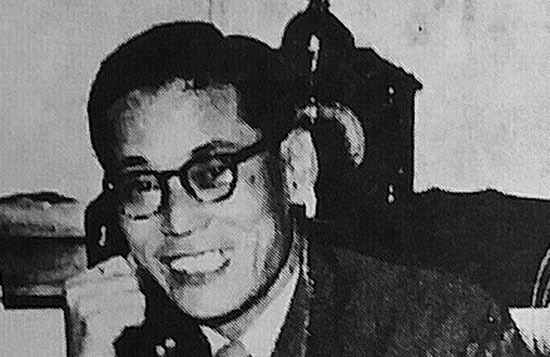
Every time I hear about Samsung's incredible growth and success lately, I feel a strange emotion.
In particular, the stories about the founder of Samsung, Lee Byung-chul, during the war are frequently mentioned online.
When Lee Byung-chul lost everything in Seoul during the Korean War and moved to Daegu, it is said that the manager, Lee Chang-up, handed him 300 million won, which became a stepping stone for his comeback. It's a touching story that feels like a testament to how trust can save a business.
However, after living abroad for a long time, I started to think about one thing.
I believe it is necessary to calmly consider whether this story is a historical fact or a corporate myth that has developed over time.
First, the situation during the war is confirmed by records. After the outbreak of the war in 1950, it is true that Lee Byung-chul lost most of his business base in Seoul and fled to Daegu. He then moved to Busan, rebuilt Samsung Sanghoe, and established Cheil Jedang in 1953 and Cheil Industries in 1954, successfully reconstructing his business. This flow is consistently confirmed in Samsung's official history and various biographies.
It is also known that Chosun Brewery in Daegu continued to operate during the war, and that local personnel and management maintained the business. In other words, it was not a complete restart from nothing; some business foundation and cash flow remained.
The issue lies in the core part known as the '300 million won transfer.' While the story that Lee Chang-up handed over a large sum of money has been passed down, specific amounts or dramatic scenes are not clearly confirmed in Samsung's official records or major biographies.
Additionally, in the early 1950s, 300 million won was an enormous amount for an individual to hold and transfer. It is difficult to simply convert it to current value, but considering the economic scale of that time, many evaluations suggest that it is not realistic. It seems reasonable to agree that 300 million won would be valued much higher today.
In corporate history, symbolic stories are often created.
The structure of a founder's crisis, organizational loyalty, and dramatic reversals is effective in explaining corporate culture and management philosophy.
In Samsung's case, this story has been widely cited as an example of the management philosophy that "people are the greatest asset."
Regardless of its truth, it can be seen as a symbolic story that highlights the importance of organization and trust.
In summary, it is a clear fact that Lee Byung-chul successfully rebuilt his business in Daegu and Busan based on existing organizations and business foundations after the war. However, the specific details of Lee Chang-up handing over exactly 300 million won should be viewed more as a legend with emphasized symbolic meaning rather than a historical fact.
Watching the Korean community doing business in the U.S., I feel that while systems and capital are important, if the organization and people can endure in a crisis, the business can rise again.
I believe the reason this story continues to be told is ultimately because of that message.
Whether it is a legend or a fact, one thing is clear: the last asset that saves a business is ultimately its people.






 Korean Mom |
 novapixel |
 Peter Pan Pet |
 horse |
 Sunset Oregon |
 Round and Round Children's Song Kingdom |
 Spaghetti Flying Religion |

 Information on All Regions of the United States |
  Anytime Journey |
  Mrs. Duluth |
  jaxter |
  Atlanta Mama |
  Baguette Blog |
  US Embassy |
  My NYC |
  moo moo |
  Mr Oh |
  forevergee |
  festival |
  manchester |
  constant |
  Leapfrog Move |
  vibranto |
  Tora Tora |
  yellowbutter |
  Dolly |
  NYC saladbar |